Roosterfish in Cabo San Lucas
Apr–Oct
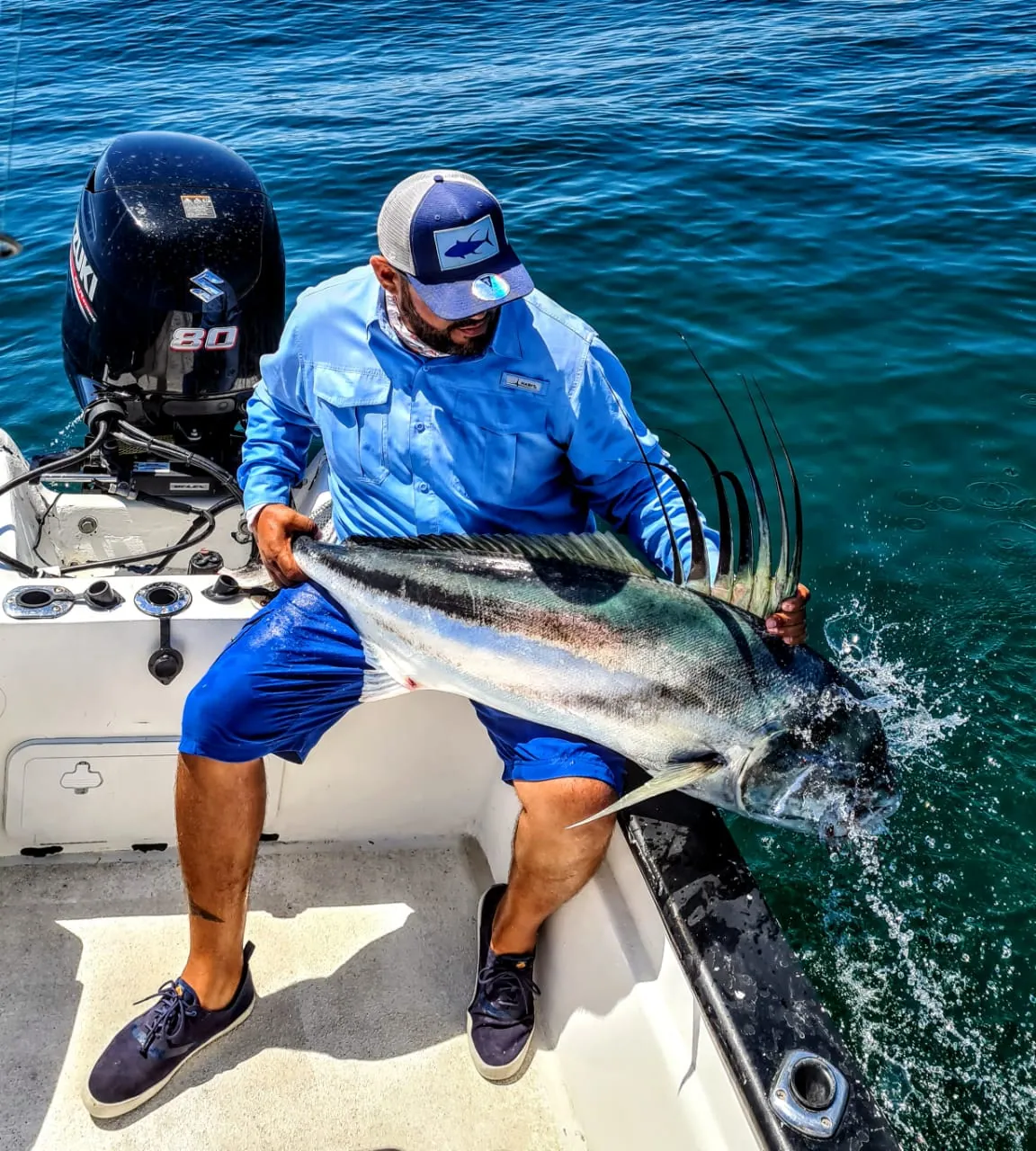
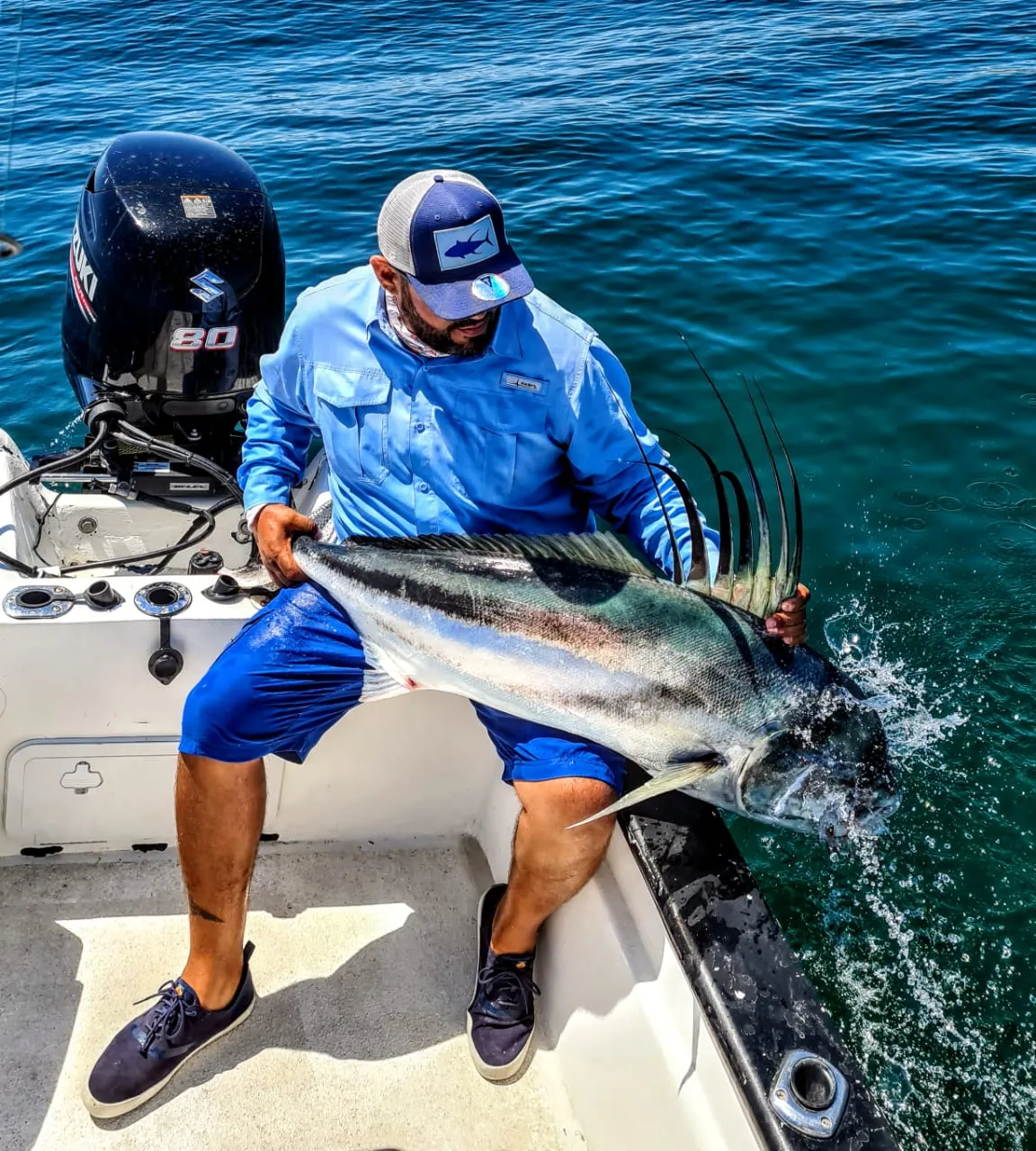
Roosterfish are the inshore trophy of Baja — a catch-and-release fish with a comb of dorsal spines that lights up as it chases bait through the surf line. We run the beaches from the panga or the 28ft walkaround with live mullet, sight-casting to cruising fish in gin-clear water.
Book nowAverage size
20–60 lbs
Best months
April – October
How we fish
Sight-casting live mullet along the beaches
Boats
25ft panga, 28ft inshore boats
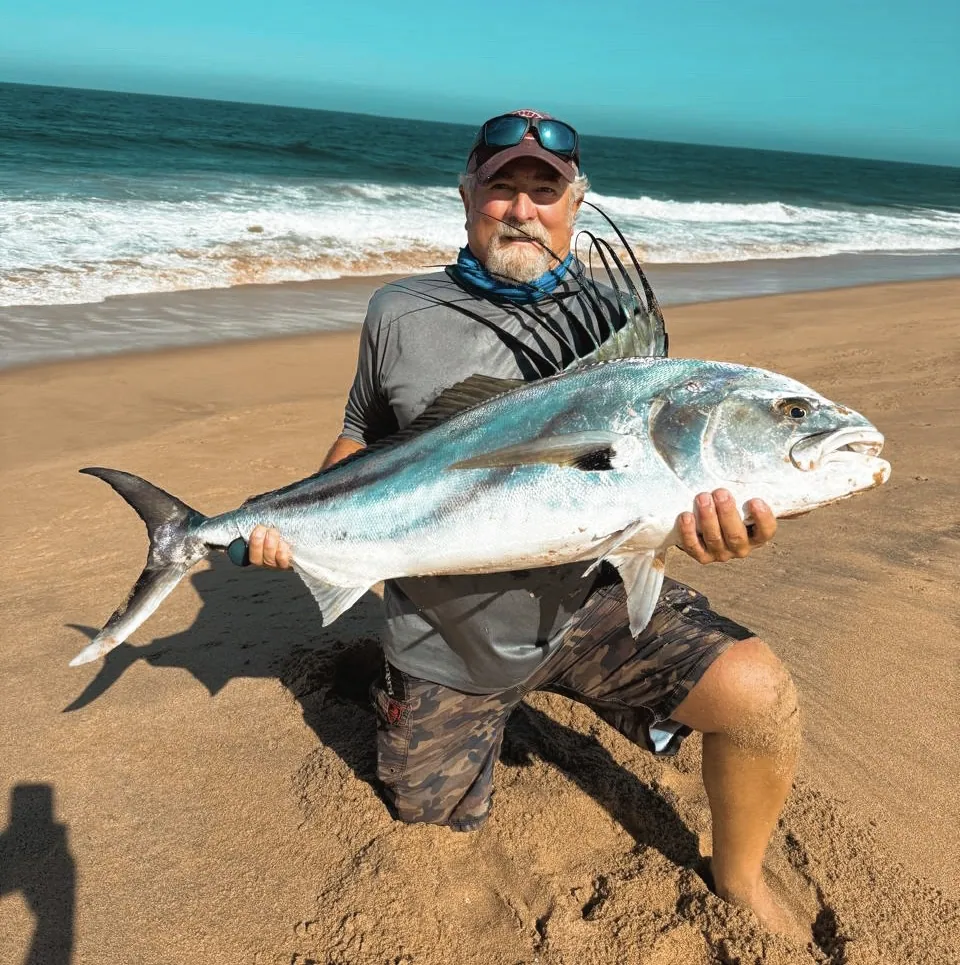
You can also catch roosterfish without a boat — our guided surf fishing trips in Cabo San Lucas work the beaches where they feed at first light.
Why anglers travel to Cabo for roosterfish
Roosterfish (pez gallo) live nowhere else on earth but the eastern Pacific, and the beaches on either side of Cabo San Lucas hold one of the densest populations anywhere. They cannot be farmed, they are not a food fish for us, and they have no offshore equivalent: everything happens in ten to thirty feet of clear water, close enough to the sand that you watch the whole eat.
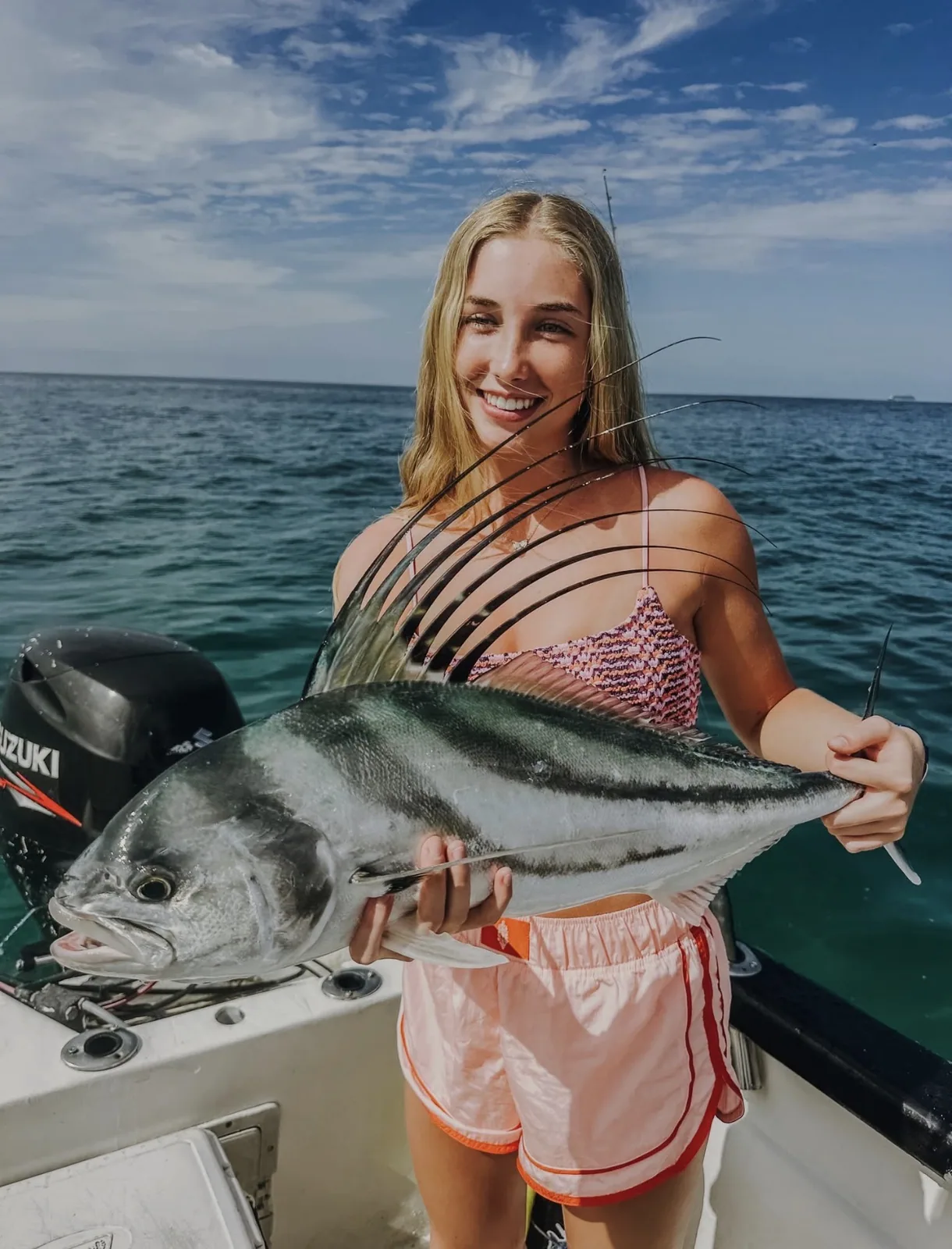
What hooks people is the hunt. A rooster shows first as a dark shadow shouldering through the swell, then the comb comes up — seven black dorsal spines fanned wide — and it accelerates on your bait like nothing else inshore. Big fish frequently refuse twice, drop back, and come again. When one commits, the first run is straight down the beach and you had better have line.
Every roosterfish we catch goes back. They grow slowly, they taste poor, and a released 60-pounder is worth more to the next boat than it is on the dock. We fight them fast on adequate tackle, keep them in the water for the photo, and revive them alongside before they swim off.
Best roosterfish spots around Cabo San Lucas
Roosterfish follow bait, so the spot changes with the swell, the water temperature and where the mullet schools sit that week. These are the stretches we run most often, and the reason we pick each one:
- Solmar and the Pacific side — the closest rooster water to the marina, best on calm mornings when the swell lays down and mullet stack in the shorebreak.
- Migriño and Los Cerritos — long sand beaches up the Pacific coast with structure at both ends; a good run when the Cortez side is dirty after a south wind.
- The Corridor: Chileno, Santa María and Palmilla — rock and reef edges between sand pockets. Fish hold tight to the rocks here and eat right at the boat.
- Punta Gorda and the beach north of San José del Cabo — a shallow, sandy shelf where you can idle for a mile at a time sight-hunting cruisers.
- The East Cape: La Ribera, Punta Arena and Cabo Pulmo — the trophy run. Longer drive or a longer boat ride, but the biggest fish of the season usually come from here.
- The bait grounds themselves — we often stop at the inshore mullet schools first, and roosters are frequently already working the edges of them.
Roosterfish season in Cabo: month by month
You can catch a roosterfish in Cabo San Lucas in any month, but numbers and average size track water temperature. Below is what we actually see on the beaches through the year.
January – March
Slow, but possible
Water drops to 70–73°F and most roosters push south or sit deep. We still find schoolies of 10–20 lbs on the Corridor rocks on warm, calm days, and this is prime sierra and jack season on the same beaches.
April
The season opens
Water crosses 74–76°F and the first solid fish show on the Pacific side and at Punta Gorda. Numbers are modest but average size is already good — 25–45 lb fish are normal.
May
Strong and consistent
One of our favourite months. Bait is thick, mornings are calm, and multiple shots per trip is the norm. Trophy fish start appearing on the East Cape.
June – July
Peak trophy window
Water at 80–84°F and the biggest fish of the year are on the beach. This is when we see 50–80 lb roosters, most often at first light around La Ribera, Punta Arena and Migriño. Book early.
August – September
Peak numbers, hot and humid
The most roosterfish per trip of any period, with plenty of 20–40 lb fish and steady action. Watch the hurricane season forecast; a passing storm can shut the beach down for a few days and then switch it back on.
October
Last of the good water
Water still 82–84°F early in the month and fish are feeding hard before the cool-down. Excellent combination trips — roosterfish at dawn, dorado and tuna after 10am.
November – December
Winding down
Water slides back through the mid-70s and roosters thin out. Fish are still caught on calm mornings, but this is when we shift the inshore focus to jacks, sierra, snapper and cabrilla — and offshore to striped marlin.
How we fish for roosterfish
Almost all of our roosterfish are caught sight-casting live bait from a panga or the 28ft walkaround. We catch fresh mullet in a cast net at first light, then run the beach slowly, standing up, looking for shadows, nervous water and bait spraying. When a fish is spotted the bait goes out ahead of it — never on top of it — and you let the mullet swim.
The bite is deliberate. A rooster will track the bait with its comb down, then flare it and eat. You do not strike on the flash: you drop the rod tip, let the fish turn with the bait, and come tight on weight. Setting too early is how most first-timers lose the biggest fish of their trip.
When the water is off-colour or fish are scattered we switch to casting: a large surface popper or stickbait worked fast keeps the rod in your hands and calls fish up from the rocks. Fly anglers do well on the East Cape with a hooked-and-teased bait — we tease a fish in on a hookless mullet, pull it away, and the fly lands where the bait was.
- Live mullet, sight-cast on a free line — the primary technique, no weight, no wire.
- Live caballito or sardina when mullet are scarce, fished the same way.
- Surface poppers and 6–8 in stickbaits for blind-casting rock edges and dirty water.
- Bait-and-switch teasing for fly rods, best on the calm East Cape mornings.
- Slow-trolled live bait along the beach when the fish are moving and not showing.
Prefer a fly rod? We also run fly fishing for roosterfish in Cabo, sight-casting from the panga along the beaches and toward the East Cape when conditions allow.
Roosterfish gear and tackle
We provide all tackle, and it is rigged for the fish we expect that day. If you prefer to bring your own, this is what works on our beaches:
- Rod: 7–8 ft medium-heavy spinning rod with a fast tip for live bait; 8 ft heavy popping rod if you plan to throw plugs all day.
- Reel: 6000–10000 class sealed spinning reel with at least 20 lbs of smooth drag — roosters make long, hot first runs.
- Line: 50–65 lb braid. Capacity matters more than strength; 300 yards minimum.
- Leader: 40–80 lb fluorocarbon, 4–6 ft. No wire — roosters have no cutting teeth and wire kills the bite in clear water.
- Hooks: 5/0–8/0 live-bait circle hooks pinned through the nose of the mullet. Circles hook them in the corner and make the release clean.
- Plugs: 4–7 in poppers and sinking stickbaits in mullet, sardine and bone patterns, with upgraded single hooks for easier release.
- You: polarized sunglasses (you cannot sight-hunt without them), a long-sleeve sun shirt, reef-safe sunblock and a hat that stays on in the wind.
What a guided roosterfish trip looks like
We leave the marina before sunrise, because the first two hours of light are the best roosterfish window of the day. The crew throws the cast net for mullet on the way, then we work the beaches — usually two or three stretches over a half day — with everyone standing and looking.
Half-day inshore trips run 5–6 hours and are the most common roosterfish booking; full days let us reach the East Cape or combine the beach with a run offshore for dorado and tuna. Our 25ft panga is the sharpest inshore tool, and the 28ft Hydra-Sports walkaround adds shade and range for families.
Included: captain and mate, all rods, terminal tackle and live bait, drinking water, ice, beers, Gatorade and burritos or sandwiches, plus two Mexican fishing licences (additional licences are $25 each). No hidden fees, and multi-day discounts are available.
Book a roosterfish trip
Tell us your dates and we will put you on the right boat and the right beach for the conditions that week. All tackle, live bait and two fishing licences included.
Check availabilityRoosterfish fishing FAQs
- What is the best time of year for roosterfish in Cabo San Lucas?
- June through September is the peak, with July and August giving the best mix of numbers and size. The season really runs April to October; the biggest fish of the year usually come in June and July at first light.
- How big do roosterfish get in Cabo?
- Most fish we catch run 20–60 lbs. Trophy fish of 60–80 lbs show every peak season, and roosterfish over 100 lbs exist in Baja, though they are rare. Small schoolies of 8–20 lbs are common all summer.
- Can you keep a roosterfish?
- We release every roosterfish. They are poor eating, slow growing, and worth far more alive to the fishery. Our crews revive each fish boatside before it swims off.
- Which boat is best for a roosterfish trip?
- The 25ft panga is the best inshore tool — shallow, quiet and quick to reposition on a cruising fish. The 28ft Hydra-Sports walkaround adds shade, a head and more range, which families and East Cape trips prefer.
- Can you catch roosterfish from the beach in Los Cabos?
- Yes. Roosterfish are one of the main targets on our guided surf fishing trips, usually taken on large stickbaits and poppers at first light. Boat trips produce more and bigger fish, but a beach rooster on a plug is hard to beat.
- Do I need a Mexican fishing licence for roosterfish?
- Yes, every angler on board needs a CONAPESCA licence. Two licences are included with your charter and extras are $25 each — we handle the paperwork before you arrive.
- How long is a roosterfish trip?
- Half-day trips of 5–6 hours cover the Cabo San Lucas and Corridor beaches and are the most common booking. Full days let us reach the East Cape or combine inshore roosterfish at dawn with offshore fishing later.
Roosterfish photo gallery
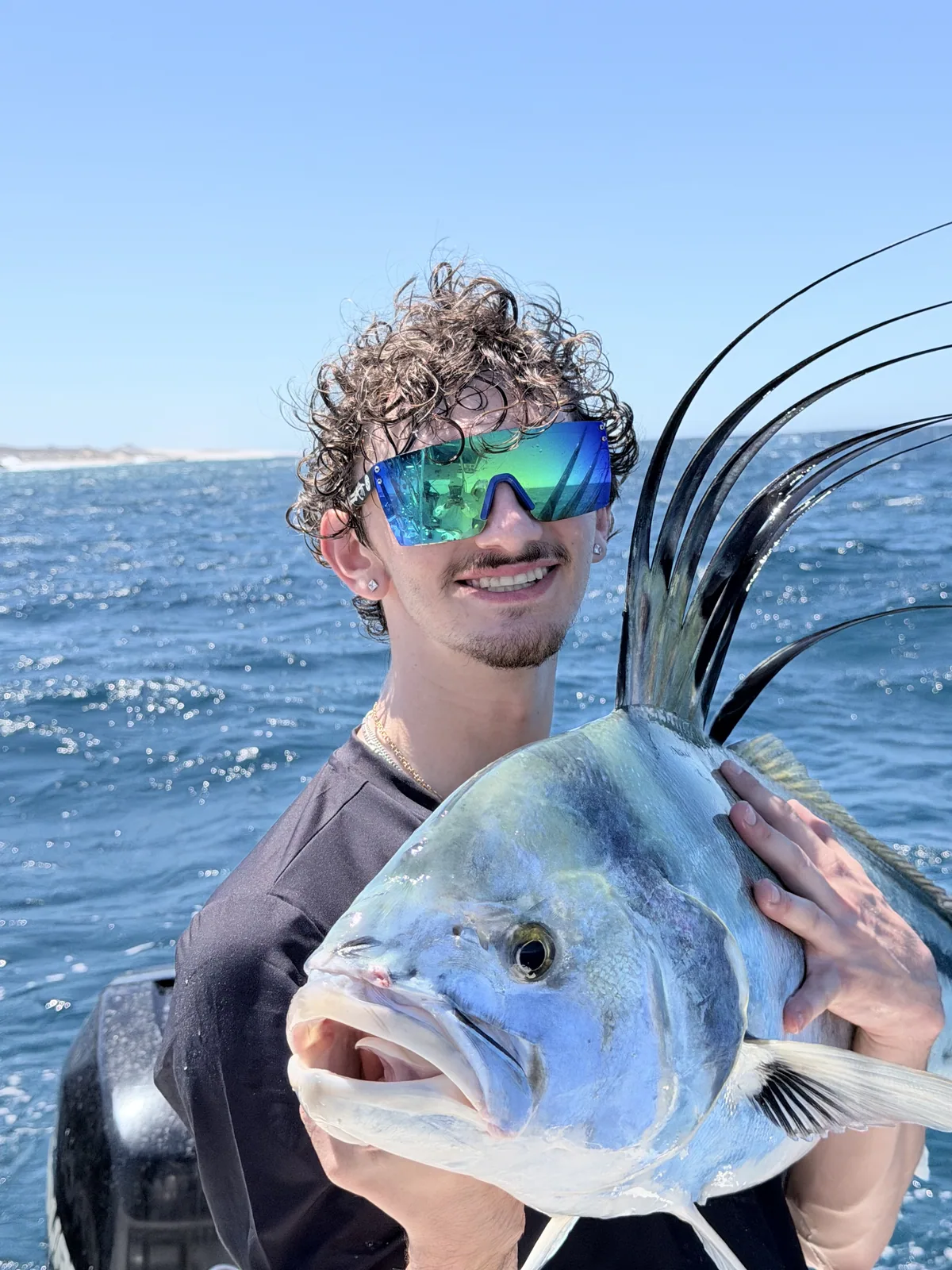
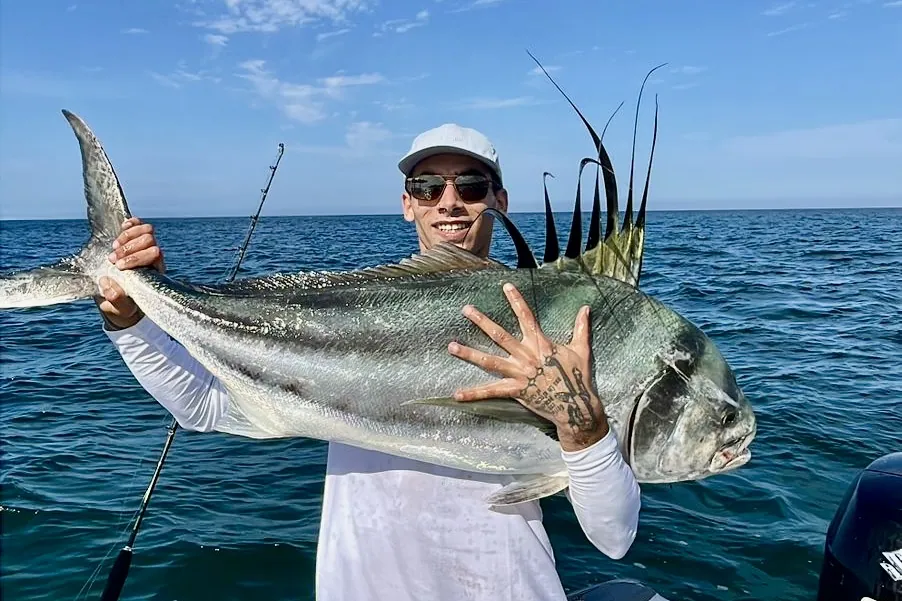
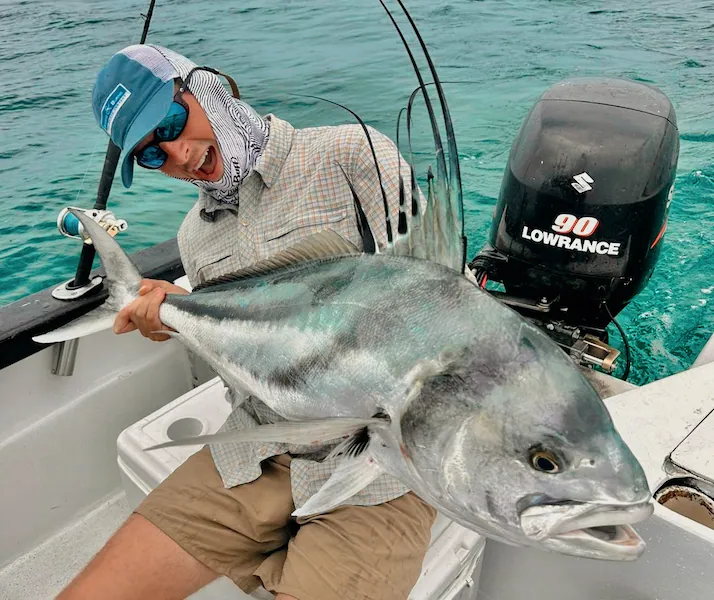
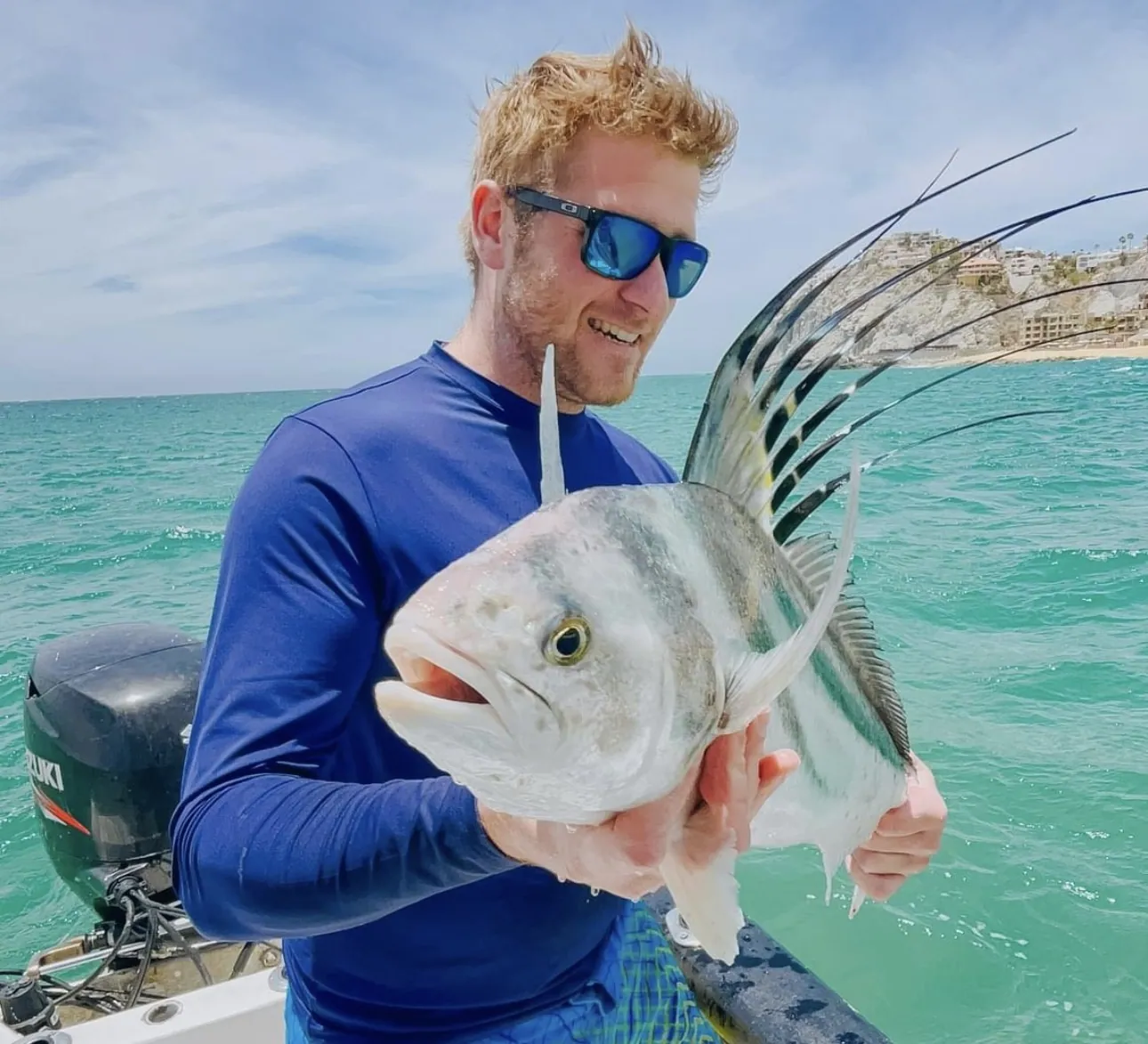
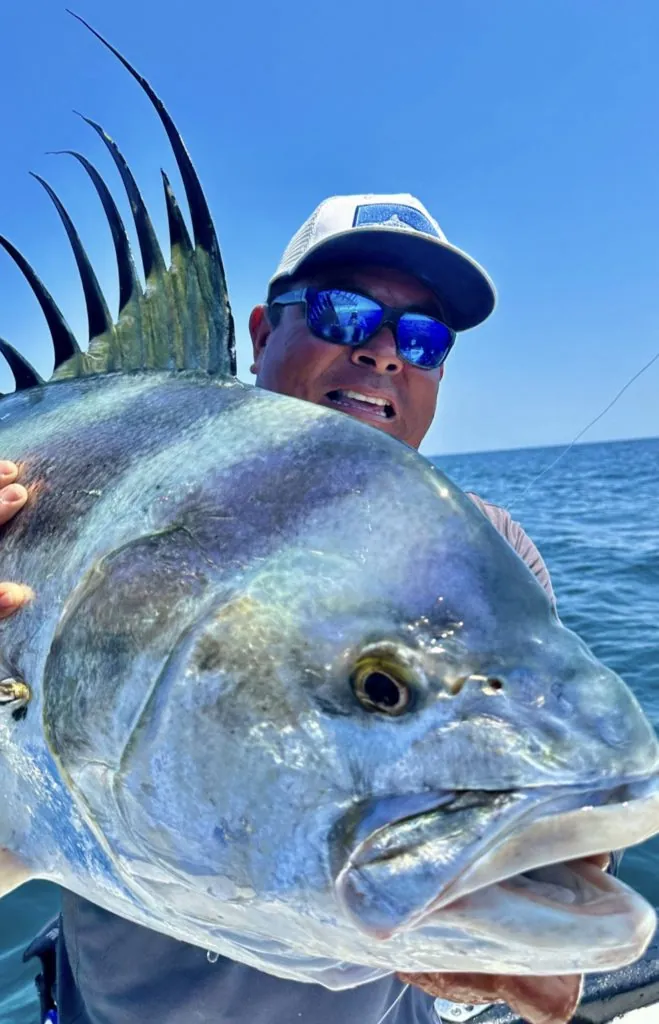
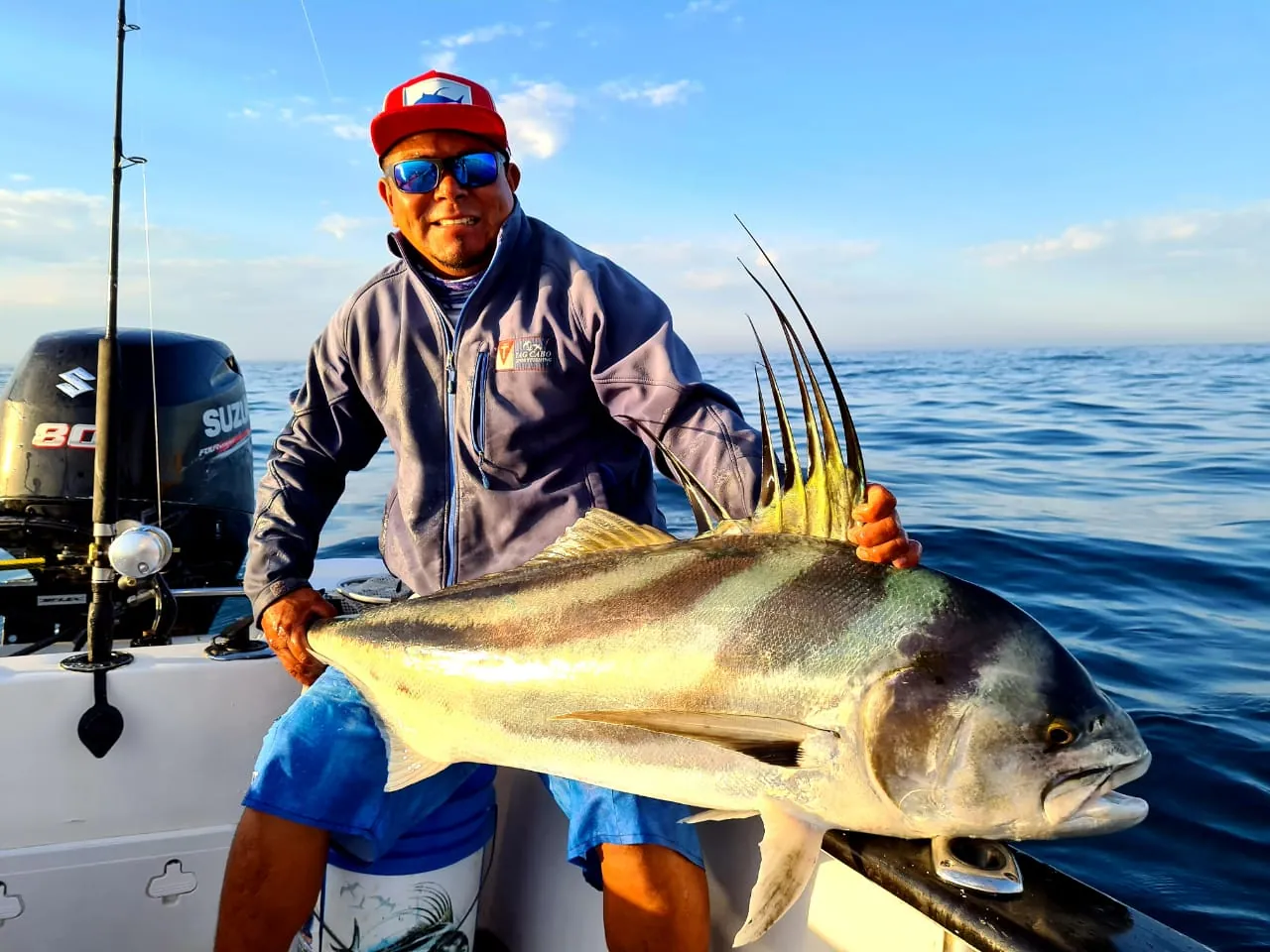
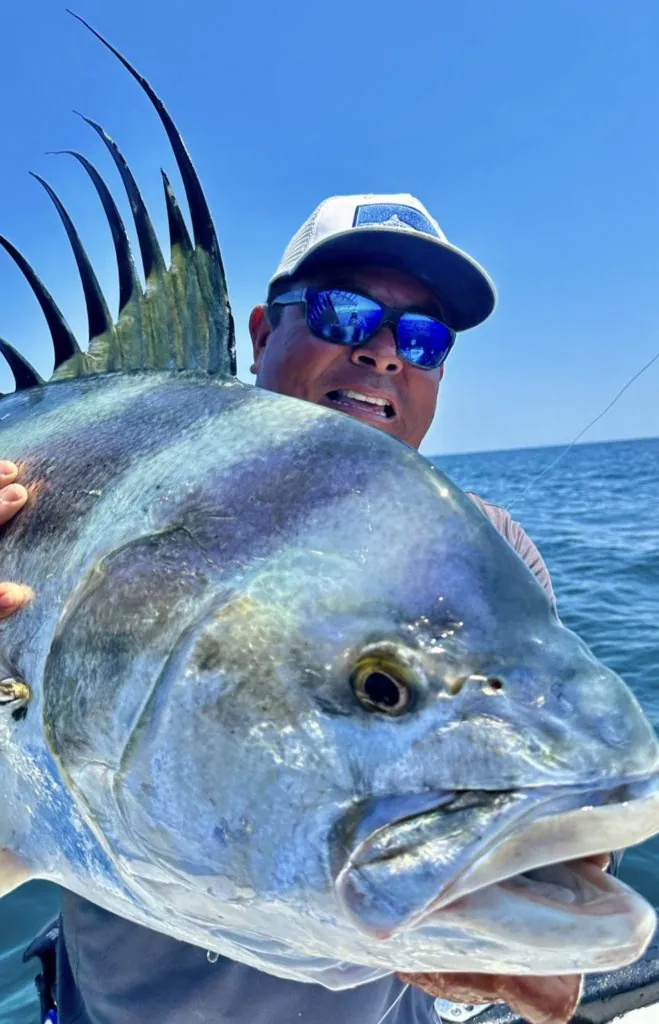
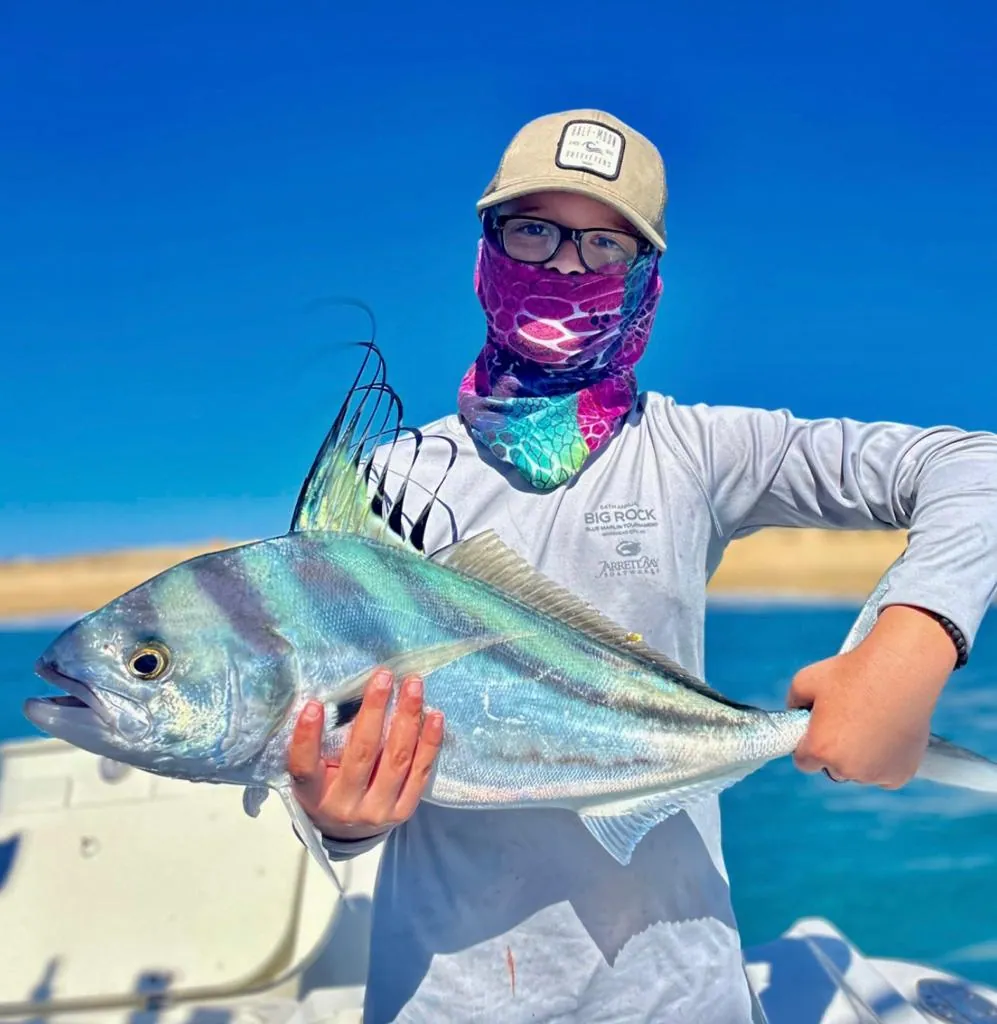
Roosterfish articles
Feb 17, 2026 · 3 min read
The Right Fly Fishing Gear for Roosterfish
The Right Fly Fishing Gear for Roosterfish in Los Cabos & La Ribera.
Oct 3, 2025 · 2 min read
Cabo Roosterfish Guide:
Cabo Roosterfish Guide: The roosterfish is a symbol of Baja’s inshore waters and one of the most thrilling species you can catch in Cabo.
May 24, 2025 · 3 min read
Inshore Fishing in Cabo: Roosterfish, Snapper & Grouper
Inshore Fishing in Cabo San Lucas. Our local guides know where the fish are, and our fleet includes pangas, center consoles, and kayaks equipped for action.
Jul 27, 2024 · 4 min read
Best Water Temperature for Roosterfish
Best Water Temperature for Roosterfish. By targeting these fish in their optimal temperature range, you can...
Feb 17, 2024 · 4 min read
The Best Roosterfish Fishing Spots in the World
The Best Roosterfish Fishing Spots in the World. Thriving in the warm waters of the Eastern Pacific, these powerful game fish offer an...
Oct 9, 2023 · 2 min read
Things I Wish I Knew When Fishing for Roosterfish
Things I Wish I Knew When Fishing for Roosterfish
Sep 22, 2023 · 2 min read
Roosterfish at Sunset: The Summer Mullet Dance in Cabo San Lucas
Roosterfish at Sunset The Summer Mullet Dance in Cabo San Lucas. Responsible fishing practices ensure that the dance of the mullets and the chase of the roosterfish and jack crevalle remain a part of Cabo’s legacy.
Jan 19, 2023 · 2 min read
10 Techniques to catch roosterfish
1. Live bait fishing: Live bait, such as caballito or mullet, can be used to target roosterfish. 2. Drift fishing with live bait or lures can be an effective way to cover a large area and find roosterfish.
Dec 2, 2022 · 3 min read
How to Catch Roosterfish When You Go to Cabo San Lucas for Fishing?
To increase your chances of fishing Roosterfish, try the bait and switch technique. It can help you produce outstanding strikes.
Jun 3, 2022 · 3 min read
Roosterfish fishing guides in cabo San Lucas
Roosterfish are often found over sandy bottoms, and tend to follow schools of baitfish around specially mullets
May 18, 2021 · 3 min read
Fishing for roosterfish in Cabo San Lucas
Fishing for roosterfish in Cabo san Lucas. The most prominent feature of this specie is its rooster comb—the 7 long spines on the dorsal fin.