Yellowfin Tuna Fishing in Cabo San Lucas
Peak Jul–Dec
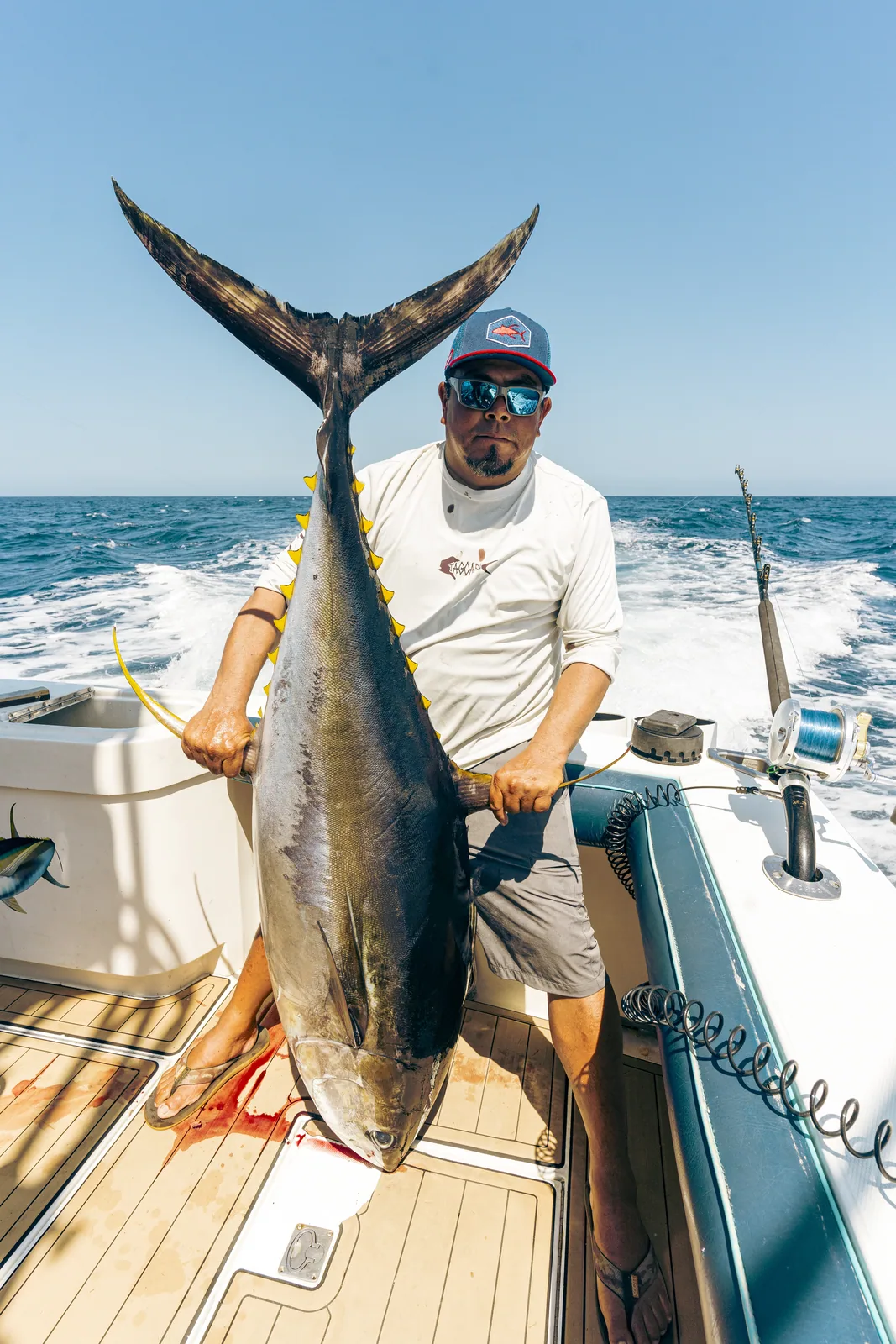
Yellowfin tuna show up under porpoise schools and on the offshore banks from summer into the winter. Football-sized fish keep everyone bent all day; the cows over 200 lbs come from long runs, kite baits and patience. It is the hardest-pulling fish you can hook in Los Cabos, and the best sashimi you will ever eat.
Book nowAverage size
20–80 lbs, cows 200 lbs+
Best months
July – December
How we fish
Kite fishing, live bait, cedar plugs on porpoise
Boats
Offshore fleet, 35ft and up
Why anglers come to Cabo for yellowfin tuna
Yellowfin is the fish that hurts. A striped marlin jumps and gives you a show; a yellowfin tuna goes straight down and stays there, and the last thirty feet of a 150 lb fish can take longer than the first three hundred yards. Anglers who have caught everything else in Los Cabos still book days specifically for tuna because nothing offshore pulls like one.
Cabo San Lucas sits at the corner where the Pacific meets the Sea of Cortez, and the banks off both sides — Golden Gate, San Jaime, the 95 and the 1150 — sit in blue water within reach of a day trip. Porpoise schools push bait to the surface here through the warm months, and yellowfin travel underneath them. Find the porpoise, find the tuna.
Then there is the table. Yellowfin is the one fish almost every guest takes back to the dock, and the marina restaurants will cook your catch the same afternoon. Sashimi on the boat with soy and lime while the crew keeps trolling is a Cabo tradition for a reason.
Best yellowfin tuna spots around Cabo San Lucas
Tuna move, so we run to where the temperature break, the bait and the birds are that week. These are the grounds we work most:
- Golden Gate Bank — 20 miles up the Pacific side; consistent summer and fall yellowfin, often mixed with striped marlin and dorado.
- San Jaime Bank — a little further out and usually holding bigger fish; a strong option when the Gate is crowded.
- The 95 Spot and the 1150 — deep offshore structure to the southeast where the cows show up in late summer and fall.
- The porpoise grounds — no fixed position; we run and look for boiling schools of spinner porpoise, which is where the biggest fish of the season come from.
- The Cortez side toward Los Frailes — a good call when a north wind flattens the inside and the Pacific is rough.
- Temperature and colour breaks — a two-degree edge with clean blue water on one side is worth more than any named bank.
Yellowfin tuna season in Cabo: month by month
You can catch yellowfin in Cabo San Lucas in almost any month, but size and numbers track water temperature and the porpoise schools. Here is what we see through the year.
January – March
Quiet offshore
Water drops into the low 70s and most yellowfin push south. Occasional football fish on the banks, but this is striped marlin season — tuna are a bonus, not the target.
April – May
First schools return
Water crosses 74–77°F and the first porpoise schools show on the Pacific banks. Fish of 15–40 lbs, with the odd bigger one, and far less boat traffic than summer.
June
Season ramps up
Warm water pushes in and yellowfin spread across the Golden Gate and San Jaime. Steady football-tuna action and the first cows of the year start appearing under the porpoise.
July – August
Peak numbers
Water 82–86°F and tuna almost everywhere offshore. Multiple fish per trip is normal, mixed with dorado and blue marlin. Hot, humid, and the best all-round offshore fishing of the year.
September – October
Peak cow season
The biggest yellowfin of the year. Kite baits on the offshore porpoise schools produce fish of 150–250 lbs and better. Watch the hurricane forecast and book early — this is our busiest tuna window.
November – December
Still strong, cooling down
Water eases back into the high 70s but good tuna keep showing on the banks into December, now alongside the returning striped marlin. Excellent combination trips.
How we fish for yellowfin tuna
Most days start by loading live caballito or sardina before sunrise, then running offshore and looking. Birds, porpoise and floating debris are the three things the crew scans for. When we find a school we ease alongside — never through it — and put baits out on the edge.
Kite fishing is our edge on the big fish. A live bait dangling from the kite splashes on the surface with no leader in the water, and cows that refuse everything else will eat it. It is a visual bite: you watch the fish come up, the bait scatter, and only then do you come tight.
On travelling schools we troll cedar plugs and small feathers at speed until one goes off, then throw live bait into the wash to hold the school. Football tuna will chew all day on light spinning gear, which is where most first-timers get hooked on the fishery.
- Kite fishing with live caballito or skipjack for cows over 150 lbs.
- Live bait on a free line, no weight, drifted into the porpoise school.
- Cedar plugs, feathers and small skirted lures trolled at 6–8 knots to find fish.
- Vertical jigging and surface poppers when the school is up and boiling.
- Chunking on the drift when the fish are deep and will not come up.
Yellowfin tuna gear and tackle
All tackle is included and rigged for the size class we expect. If you bring your own, this is what handles Cabo yellowfin:
- Rods: 6.5–7 ft 30–50 lb stand-up rods for bait and troll; an 8 ft popping rod if you want to throw plugs at breaking fish.
- Reels: 6000–14000 class spinning or a 30–50 class two-speed lever drag for cows, with 300+ yards of capacity.
- Line: 50–80 lb braid with a topshot of 40–60 lb mono. Cows justify 100 lb.
- Leader: 40–80 lb fluorocarbon. Tuna are leader-shy in the clear blue water — lighter fluoro gets more bites.
- Hooks: 3/0–7/0 live-bait circle hooks matched to the bait, sharpened before every drift.
- Lures: cedar plugs, feather jigs in zucchini and Mexican flag, 150–250 g vertical jigs, and 5–6 in surface poppers.
- You: a fighting belt if you own one, gloves, polarized sunglasses, sun shirt and plenty of water. A cow tuna is a full-body workout.
What a guided yellowfin tuna trip looks like
Tuna days are longer than marlin days. We leave the marina before first light, load bait, and run — sometimes 20 miles, sometimes 60 if the porpoise are down south. Full-day and extended trips are the right call; a half day rarely gives enough water to hunt schools properly.
The offshore fleet from 35 ft up handles these runs comfortably, with the larger Hatteras and Cabo Express boats best for the long days chasing cows. Your crew cleans, bags and ices the catch on the way in, and can send you to a marina restaurant that cooks it that evening.
Included: captain and mate, all rods and terminal tackle, live bait, drinking water, ice, beers, Gatorade and burritos or sandwiches, plus two Mexican fishing licences (additional licences are $25 each). No hidden fees, and multi-day discounts are available.
Book a yellowfin tuna trip
Tell us your dates and we will put you on the right boat and the right beach for the conditions that week. All tackle, live bait and two fishing licences included.
Check availabilityYellowfin Tuna fishing FAQs
- What is the best time of year for yellowfin tuna in Cabo San Lucas?
- July through December is the season, with September and October the peak for large fish. Summer gives the most fish per trip; early fall gives the best shot at a cow over 150 lbs.
- How big do yellowfin tuna get in Cabo?
- Most fish run 20–80 lbs. Cows of 150–250 lbs show every fall under the porpoise schools, and Baja has produced yellowfin over 300 lbs.
- Can I keep and eat my yellowfin tuna?
- Yes. Yellowfin is excellent eating and the crew bleeds, cleans, bags and ices your fish on board. Marina restaurants will cook your catch the same day, and we can arrange vacuum packing to travel.
- Which boat is best for a tuna trip?
- The offshore fleet from 35 ft up. Tuna trips can mean long runs, so the 35ft and 45ft Cabo Express and the Hatteras boats are the comfortable choices for a full day of hunting porpoise schools.
- How long is a yellowfin tuna trip?
- Full days of 8–10 hours are standard, and extended trips are worth it when the fish are far offshore. A half day can produce tuna close in during peak season but leaves little room to search.
- What is kite fishing and why do you use it?
- A kite holds a live bait splashing on the surface with no leader visible in the water. Big, wary yellowfin that ignore a normal bait will eat off the kite — it is the single most effective method we have for cows.
- Do I need a Mexican fishing licence?
- Yes, every angler aboard needs a CONAPESCA licence. Two are included with your charter and extras are $25 each; we handle the paperwork before you arrive.
Yellowfin Tuna photo gallery
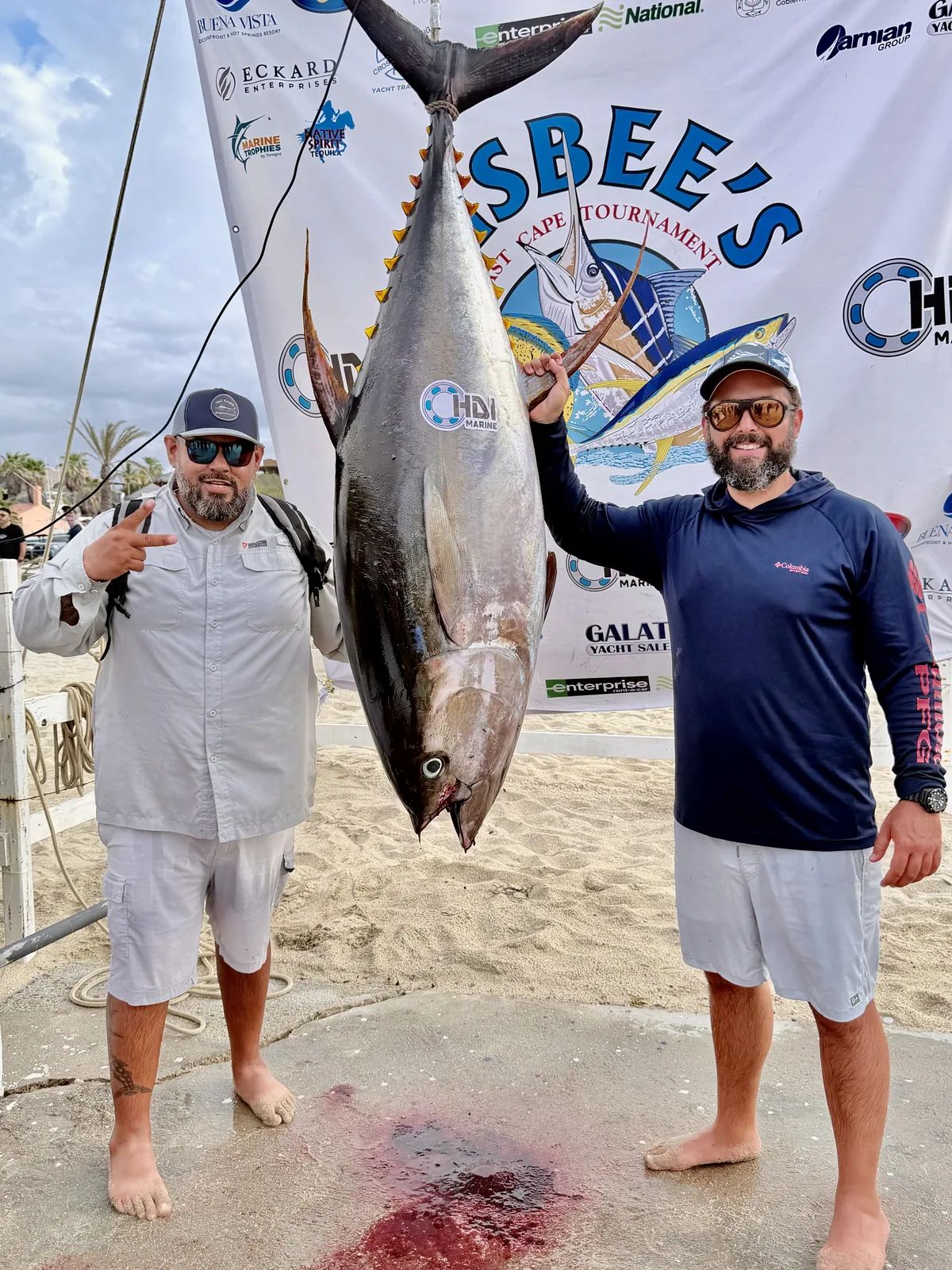
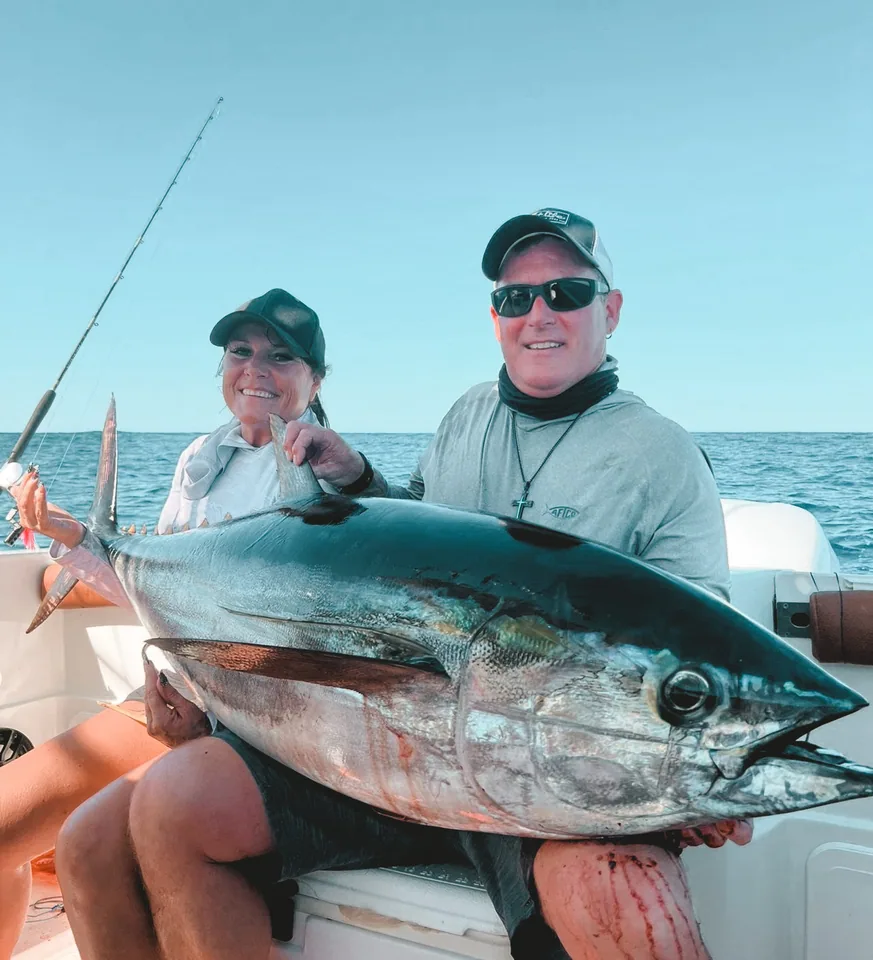
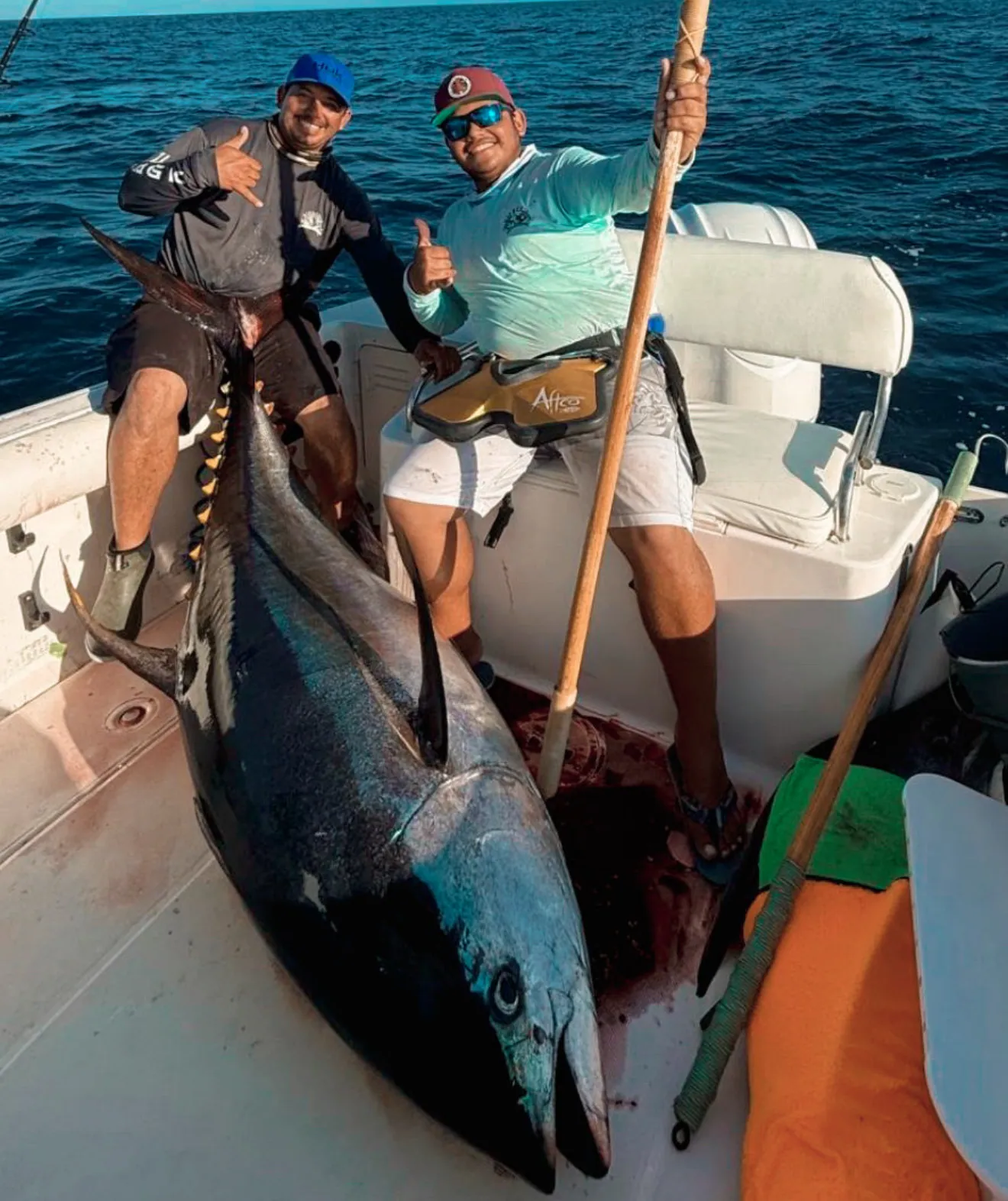
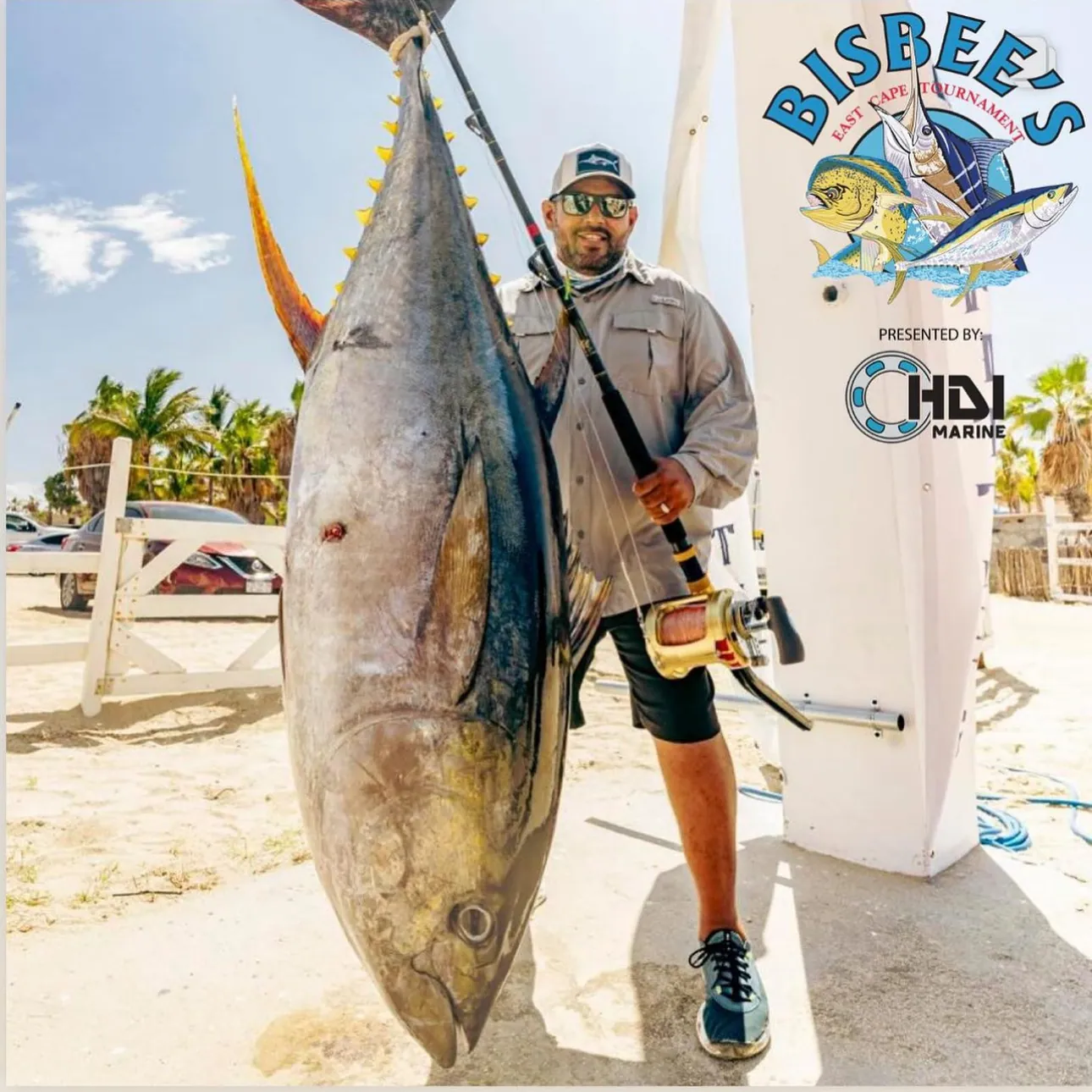
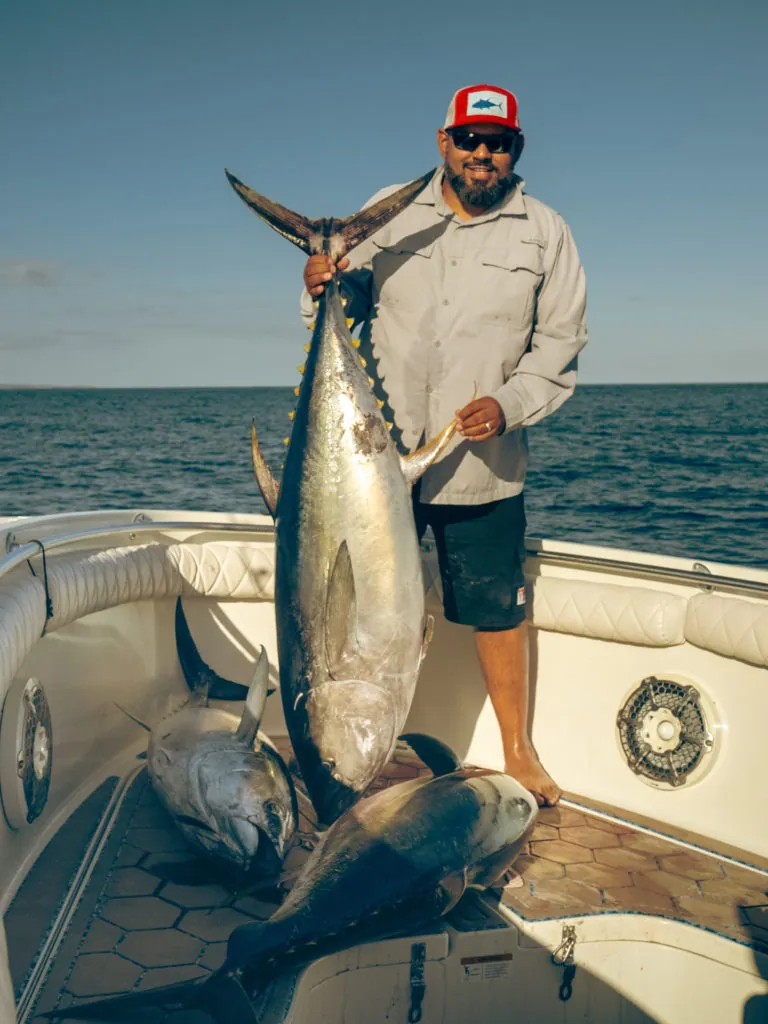
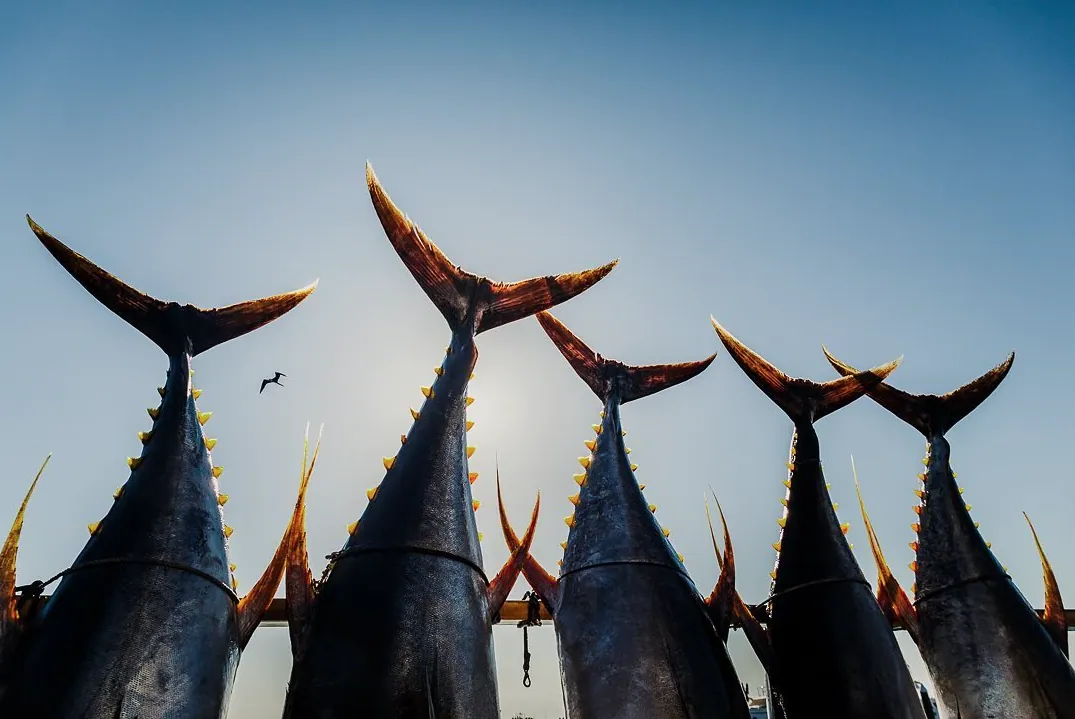
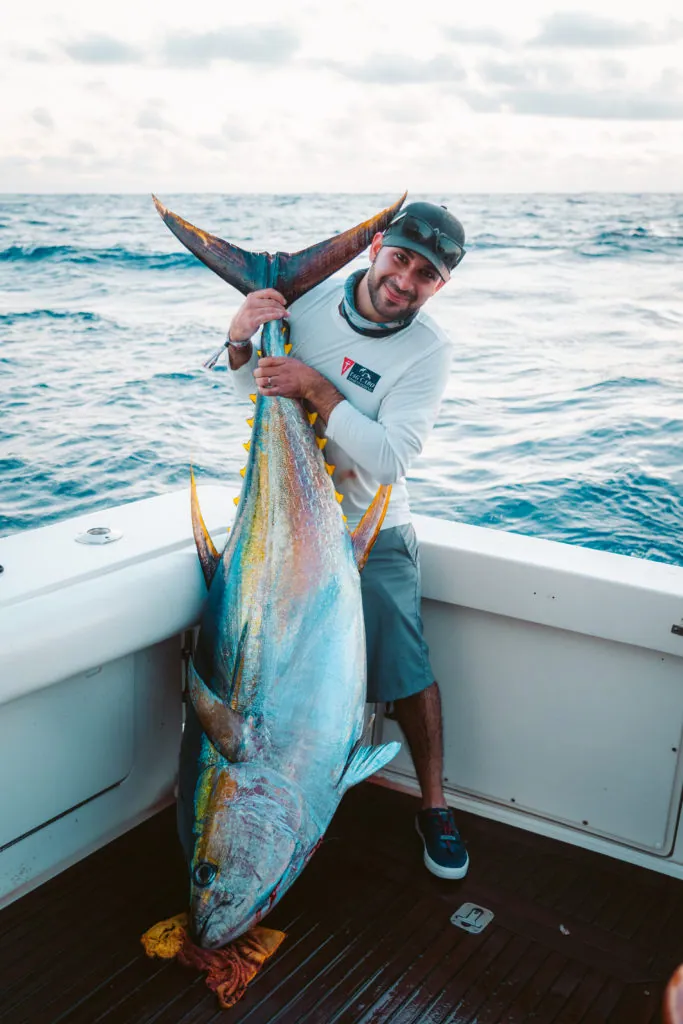
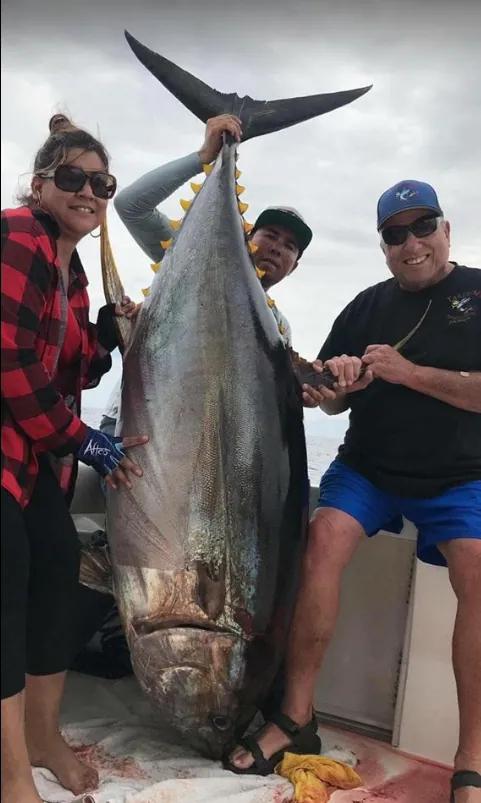
Yellowfin Tuna articles
Oct 21, 2025 · 2 min read
Massive 328-Lb Yellowfin Tuna Caught in San José del Cabo
Massive 328-Lb Yellowfin Tuna Caught in San José del Cabo. Landing a fish of this size on a center console is no small feat — and that’s..
Apr 4, 2025 · 3 min read
The Ultimate Destination for Trophy Yellowfin Tuna Fishing
Islas Marías The Ultimate Destination for Trophy Yellowfin Tuna Fishing. Our fishing expeditions to the Islas Marías depart from Vallarta..
Sep 23, 2024 · 2 min read
A Cabo Guide to Big Yellowfin Tuna
A Cabo Guide to Big Yellowfin Tuna. With the right preparation and a strategic approach, you'll be well on your way to reeling in the tuna...
Jan 7, 2024 · 8 min read
If You Want to Catch Yellowfin Tuna in Cabo, Do This
Yellowfin Tuna in Cabo. Cabo San Lucas is renowned for its rich marine life, and yellowfin tuna are among the top catches in this area
Dec 27, 2023 · 4 min read
Top Destinations for Yellowfin Tuna Fishing
Top Destinations for Yellowfin Tuna Fishing. In this blog, we explore the world's top destinations for yellowfin tuna fishing.
Dec 22, 2023 · 2 min read
Yellowfin Tuna Fishing at Punta Gorda
Yellowfin Tuna Fishing at Punta Gorda. This technique for catching yellowfin tuna is both challenging and rewarding
Aug 21, 2023 · 3 min read
Increasing Your Success Rate for Yellowfin Tunas in Cabo San Lucas
Yellowfin Tunas in Cabo San Lucas. With the right tools and strategies, you can enhance your chances of landing the majestic yellowfin tuna in this world-class fishing destination.
Apr 5, 2023 · 4 min read
Mastering Water Temperatures on the SatFish App for Yellowfin Tuna Success in Cabo San Lucas
Mastering Water Temperatures on the SatFish App / Yellowfin tuna are highly sensitive to water temperature, preferring a range between 75°F and 86°F (20°C to 30°C)
Aug 23, 2021 · 2 min read
How to target yellowfin tunas out from Cabo San Lucas.
How to target yellowfin tunas out from Cabo San Lucas. Knowledgeable captains have countless yellowfin tuna fishing spots in Cabo San Lucas, and since the fish migrate through our local banks all summer, you might find them anywhere on a given day. But the fish return to certain places like clockwor
Sep 24, 2020 · 2 min read
Going after big yellowfin tunas in Cabo San Lucas
The first thing we do is get all of our gear ready the day before like helium balloon, juming fish, binoculars, live bait and our secret lures.
Apr 24, 2018 · 2 min read
The big yellowfin tunas are in town!
295 Yellowfin tuna we caught on board or 45 foot Cabo flybridge Tailchaser.On April 22, 2018 Captain Julian set out to target yellowfin tunas since our Tag Cabo Sportfishing team has been doing great with tunas that are around 25 to 100 pounds.