Striped Marlin Fishing in Cabo San Lucas
Year-round · peak Nov–Mar
Striped marlin are why Cabo San Lucas is called the Marlin Capital of the World. They feed on the Golden Gate and San Jaime banks all year, and from late fall through spring they stack up on bait balls within an easy run of the marina. We find them with the SIMRAD SY50 omni sonar, then feed them live caballito or mackerel — a sight-fishing game that beats blind trolling every time.
Book nowAverage size
120–250 lbs
Best months
Year-round — multiple fish per boat per day November – March
How we fish
Pitching live bait, sonar hunting, teasers and lures, plus rigged bait
Boats
Every boat in the fleet — even the 25ft panga
Why anglers travel to Cabo for striped marlin
Cabo San Lucas is the only place on earth where you can catch a striped marlin every month of the year. The fish never fully leave — they thin out in the summer heat and stack up again as the water cools — and from late fall through spring they gather on the banks in numbers that make multiple releases per boat, per day a realistic expectation, not a lucky day.
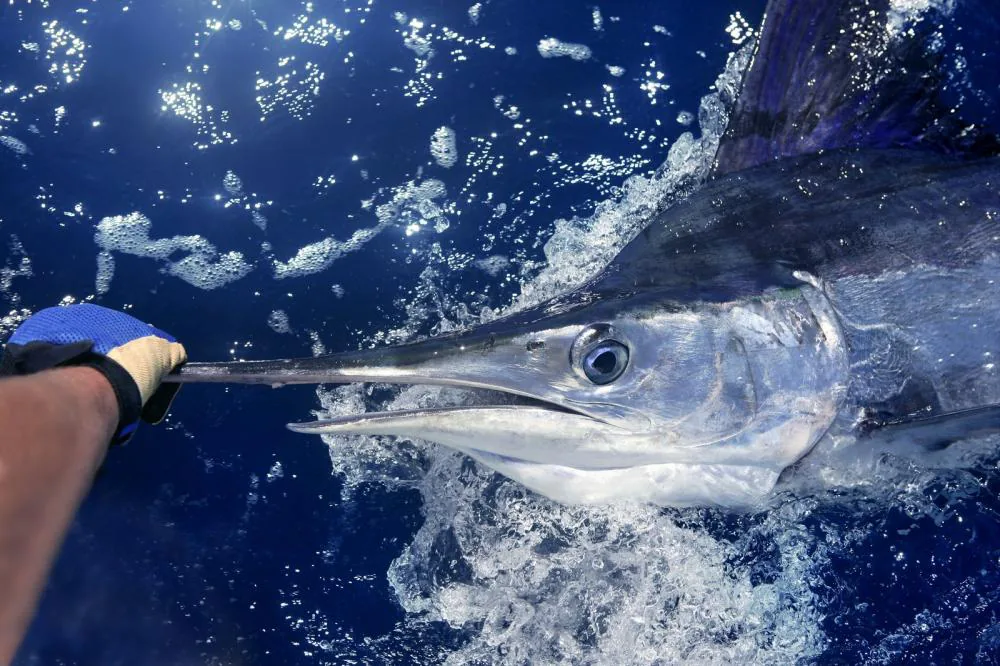
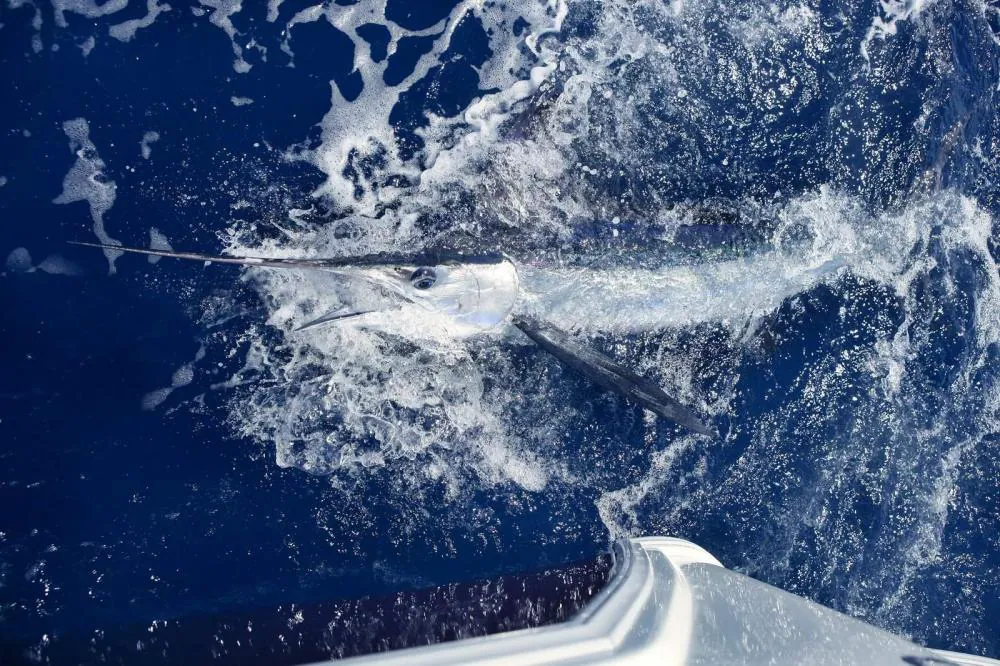
What makes striped marlin fishing in Cabo San Lucas special is that it is a hunting game, not a trolling lottery. With the SIMRAD SY50 omni sonar we find the fish — sometimes singles cruising the surface, sometimes a pack stacked on a sardine bait ball — and then we pitch a live bait in front of them. You see the fish light up, watch the bill come out of the water, and get the bite with your eyes before it happens with the rod. First-timers are ruined for blind trolling forever.
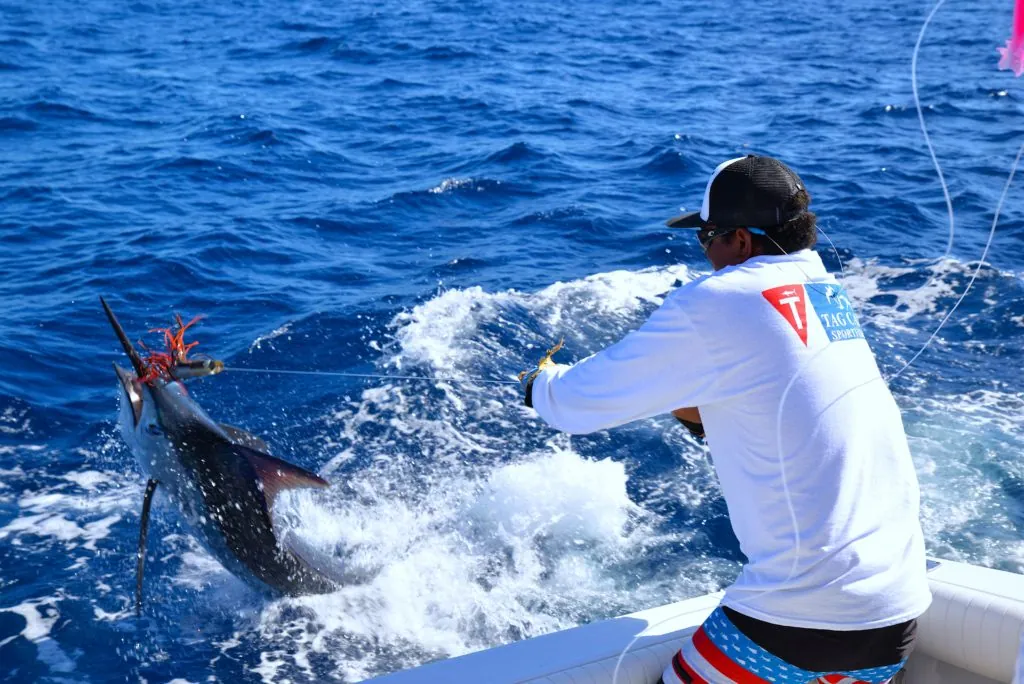
They are also the most athletic of the marlins on light tackle. A 150 lb striped marlin will greyhound across the surface in long, greyhounding leaps, tail-walk, and jump twenty times on a good fight. On the 30 lb stand-up gear we fish them on, every fight is a genuine contest.
Best striped marlin spots around Cabo San Lucas
Striped marlin are found by reading water, bait and sonar rather than running to a fixed mark, but these are the grounds we work most:
- Golden Gate Bank — 20 miles up the Pacific side, and the heart of the winter fishery. When the sardines stack up here, this is where the bait-ball action happens.
- San Jaime Bank — a little closer in, holds fish on the temperature edges and is often the first place they show in November.
- The Finger Bank — further north toward Todos Santos; worth the run when the Gate is slow or crowded.
- The 95 Spot and the 1150 — southeast toward San José del Cabo, good when the Pacific side is blown out by north wind.
- The Lighthouse and the grounds right off the Arch — striped marlin cruise past the harbour mouth itself; some of our fastest bites of the season happen inside a mile of the marina.
- The East Cape — La Ribera, Punta Pescadero and Cabo Pulmo hold striped marlin through the spring on the Cortez side.
Striped marlin season in Cabo: month by month
There is no month you cannot catch one — that is what makes Cabo the Marlin Capital of the World — but the fishing changes through the year. Here is what we see on the grounds.
January – March
Peak season
The best striped marlin fishing of the year. Sardine bait balls stack up on the Golden Gate and the fish follow — multiple releases per boat per day is the standard, with double-digit days for the boats that find the right bait.
April – May
Still excellent
Water climbs into the mid-70s and the bite spreads out — fish on the Finger Bank, San Jaime and starting to show on the East Cape. Fewer boats, warm sun, and consistent action.
June – July
Mixed with blues
Warm water pushes in and the striped marlin thin out but never leave. The fish we catch now are often bigger — 150 lbs and up — and this is when blue and black marlin start joining the spread.
August – September
Slowest months
The hottest water of the year, 84–87°F, and the quietest striped marlin fishing. They are still here and we still catch them, but most trips now mix in tuna, dorado and blue marlin.
October
The turn
Water starts sliding back down and the first waves of striped marlin arrive with the sardines. Late October can be surprisingly good, and it is when we start marking fish on the sonar again every day.
November – December
Season ignites
The banks light up. Bait balls form on the Golden Gate and striped marlin pile onto them — sight fishing at its best, with fish crashing bait right beside the boat. Book early; this is our busiest marlin window.
How we fish for striped marlin
The day starts with live bait — caballito or mackerel from the bait boats outside the marina before sunrise. Then we run to the grounds and start hunting: binoculars, the SY50 sonar sweeping 360 degrees around the boat, and a constant watch for tailing fish, frigate birds and bait on the surface.
When we find fish, the mate rigs a live bait on a circle hook and we ease into position for the pitch. The bait lands ahead of the fish, the marlin turns, and you watch the whole eat. On bait balls we slow-troll live baits around the edge or cast into the school — when it is right, multiple hookups at once are common and the cockpit turns to chaos in the best way.
We also raise them on lures and teasers. Pulling a spread of rigged bait, teasers and skirted lures covers water when the fish are scattered, and switching a teased-up marlin onto a pitched bait is one of the great thrills in sportfishing.
- Pitching live caballito or mackerel to sighted fish — the core of the Cabo striped marlin game.
- Sonar hunting with the SIMRAD SY50 omni to find fish below and around the boat.
- Slow-trolling live baits around bait balls on the Golden Gate.
- Lures and teasers with rigged bait in the spread to raise scattered fish.
- Circle hooks on everything — quick, clean releases, and we tag fish for research when the guest wants to.
Striped marlin gear and tackle
All tackle is included and rigged for the size class we expect. If you bring your own, this is what handles Cabo striped marlin:
- Rods: 6.5–7 ft 20–30 lb stand-up rods for bait fishing; 30–50 lb outfits for the lure spread.
- Reels: quality lever-drag reels in the 20–30 class with 400+ yards of line — a striped marlin takes line fast and jumps closer to the boat than you expect.
- Line: 20–30 lb monofilament, no braid on the bait outfits. Light line is the whole point — it is what makes the fight fair.
- Leader: 60–100 lb fluorocarbon, short and clean so the crew can grab it for the release.
- Hooks: 6/0–8/0 circle hooks matched to the bait, rigged to swim naturally.
- Lures: medium skirted lures in purple/black and blue/white, plus casting poppers and stickbaits for fish on the surface.
- You: polarized sunglasses are essential for watching the bite, plus sun protection, a long-sleeve shirt and a camera you can grab fast.
What a guided striped marlin trip looks like
We leave the marina around 6 am, pick up live bait on the way out, and run to whichever bank the water looks best that week. Most winter days we are among fish within an hour of the marina. Full days give the best shot at multiple releases; in peak season a half day can produce, but we will always recommend the full day for marlin.
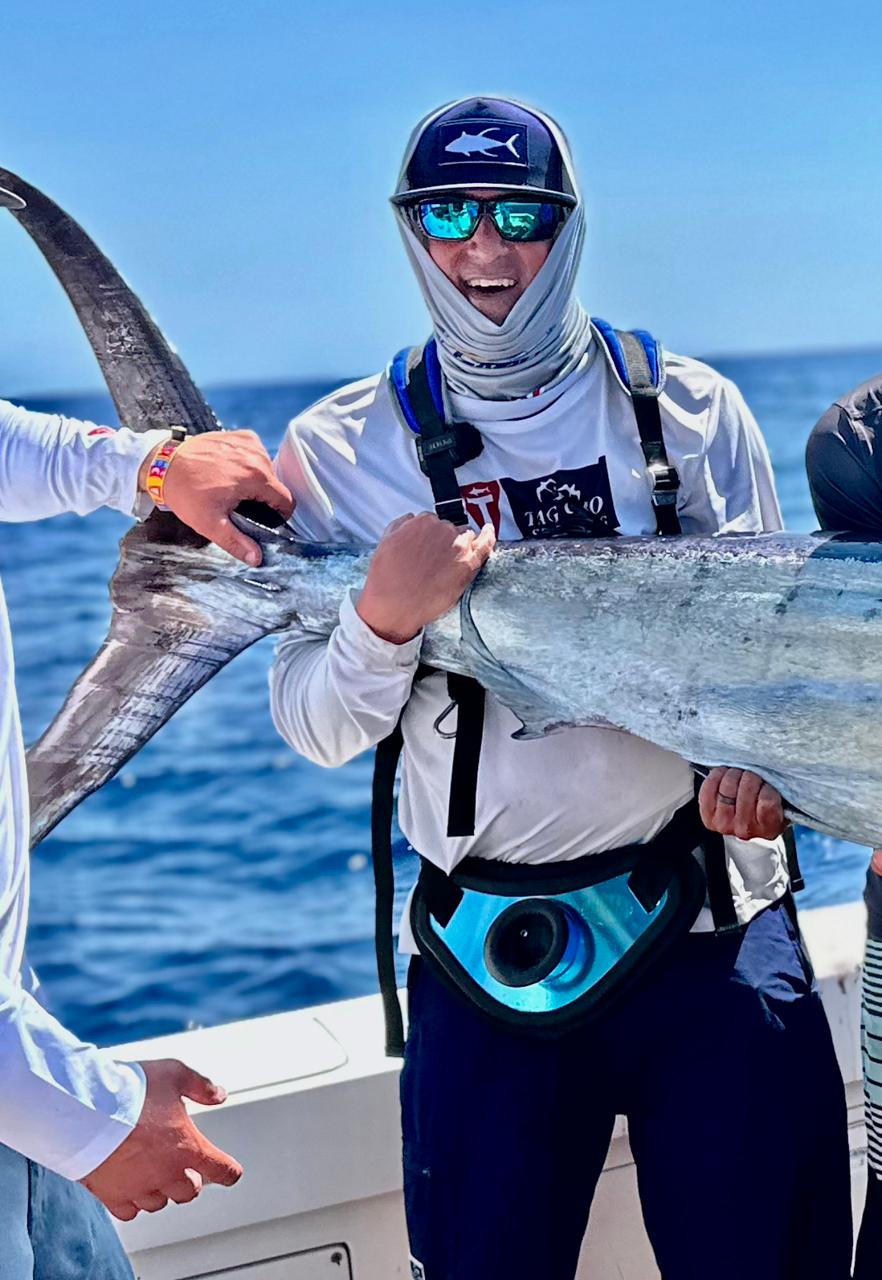
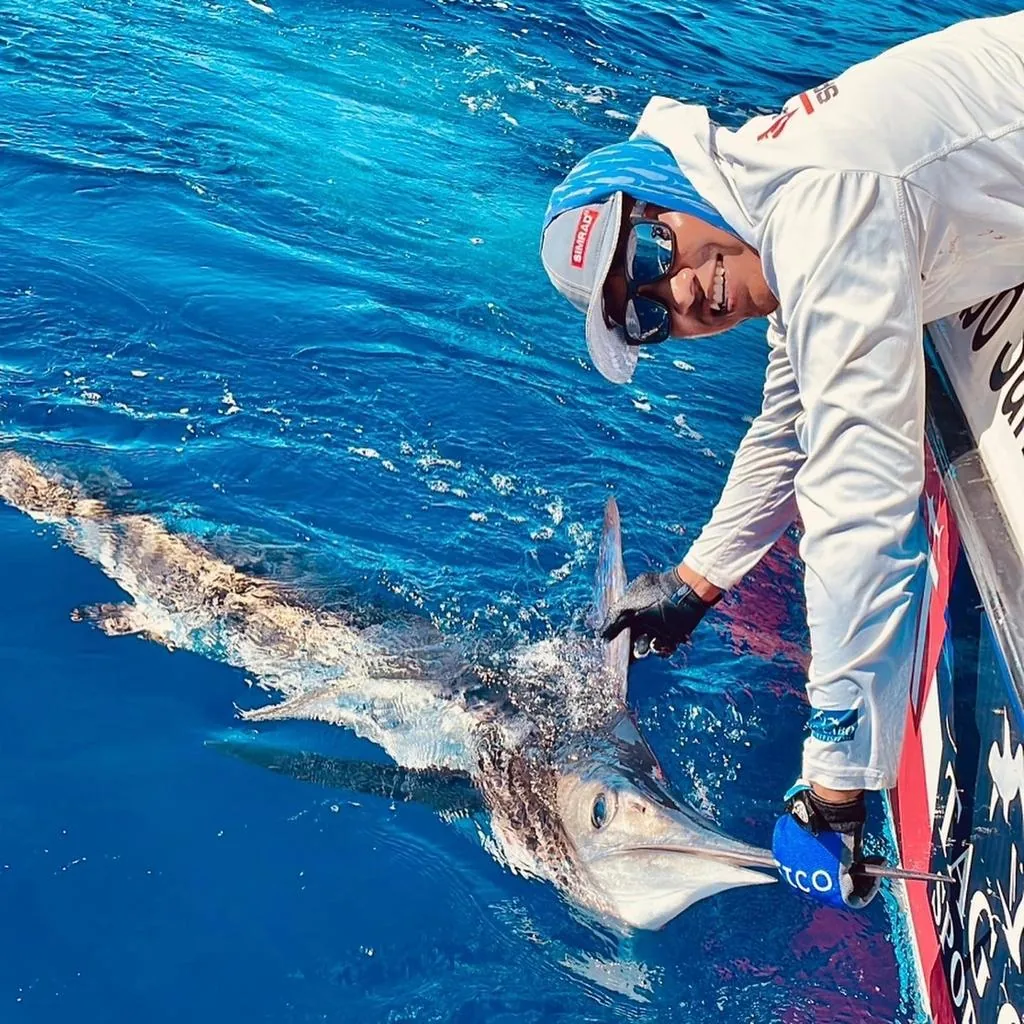
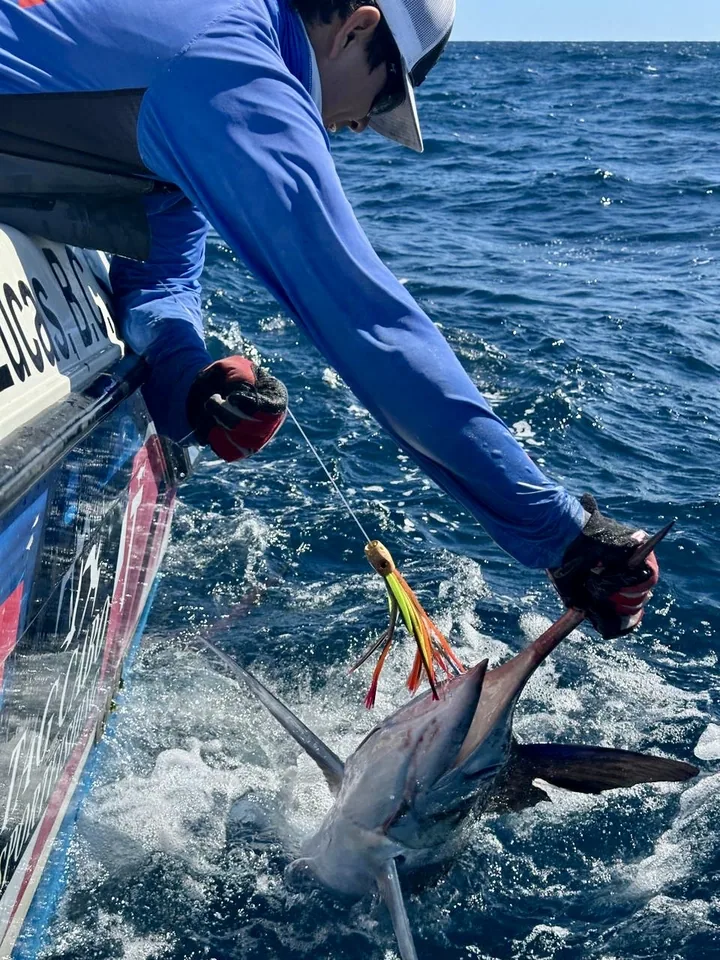
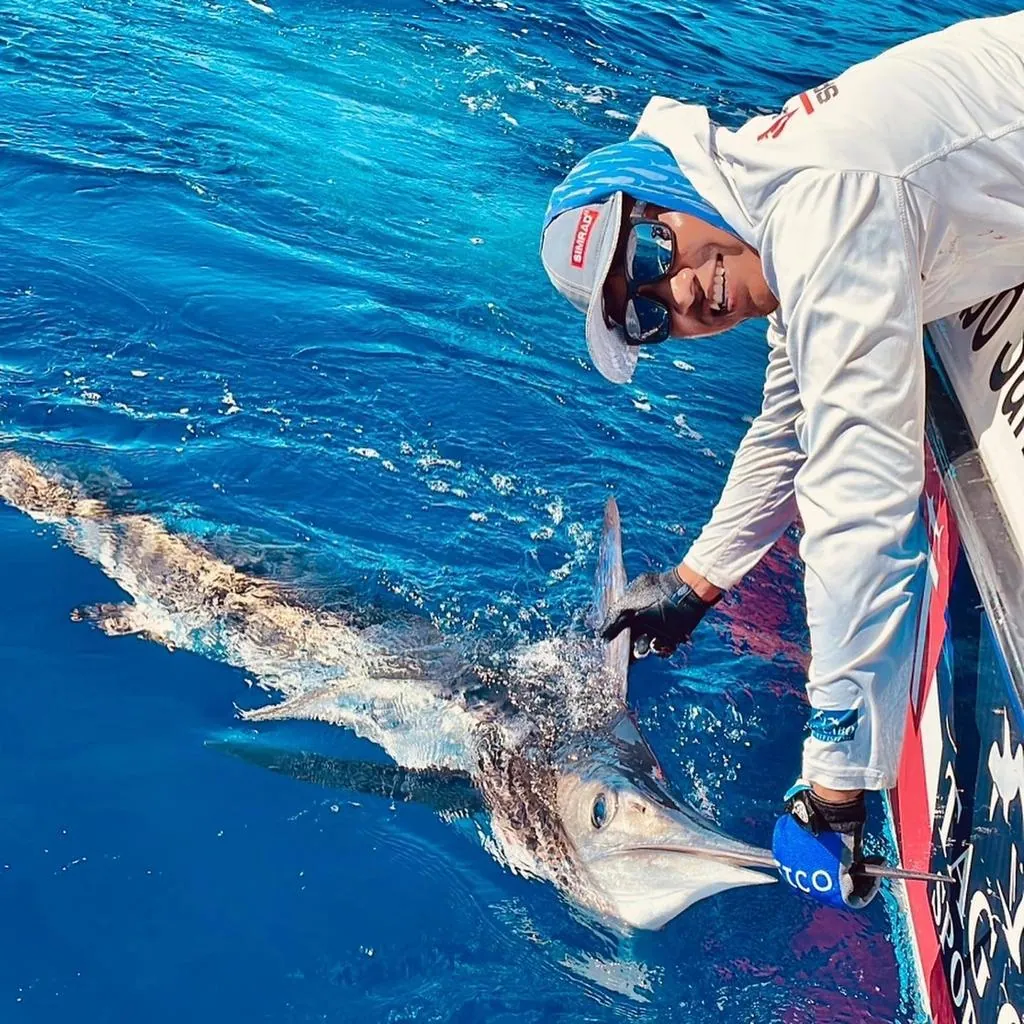
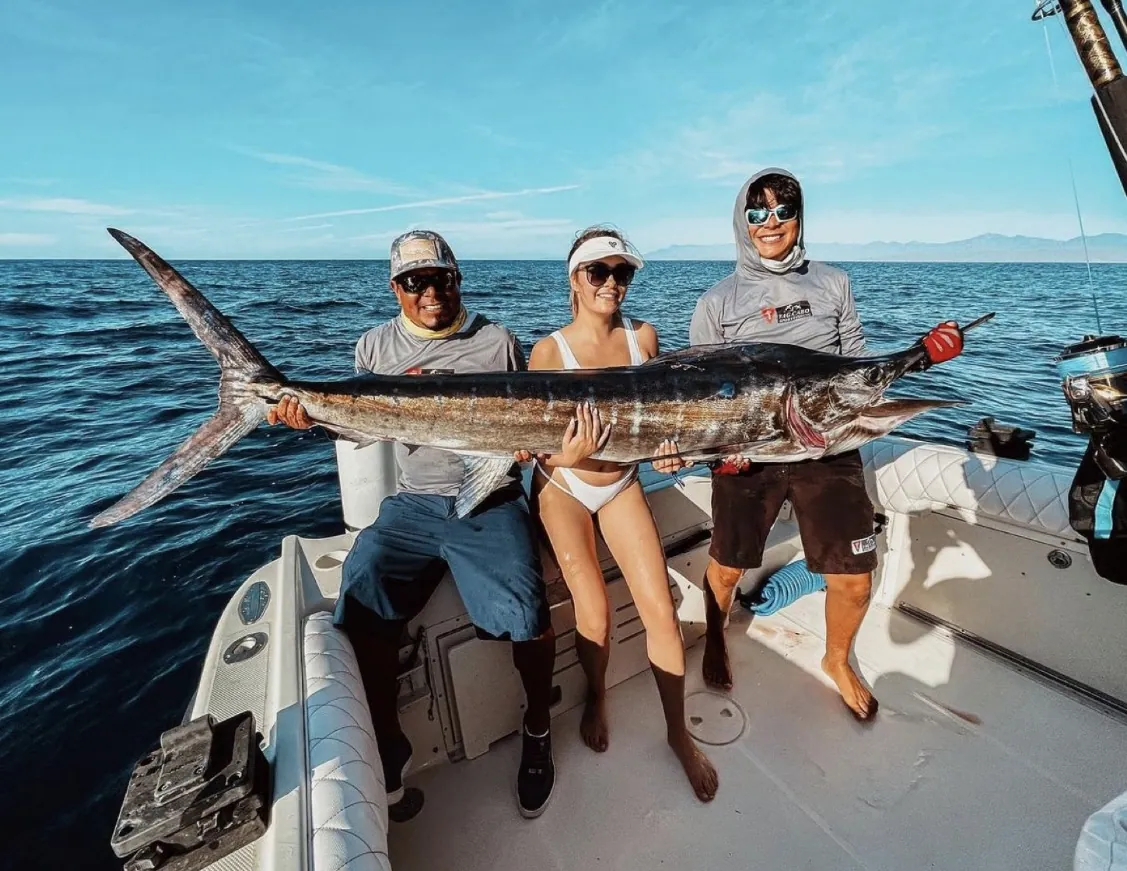
Striped marlin are a catch-and-release fishery on our boats. The crew handles the fish boatside, removes the hook, and revives it alongside until it kicks away strong. If you want a mount, we take measurements and photos for a replica — the fish swims free.
Included: captain and mate, all rods and terminal tackle, live bait, drinking water, ice, beers, Gatorade and burritos or sandwiches, plus two Mexican fishing licences (additional licences are $25 each). No hidden fees, and multi-day discounts are available.
Book a striped marlin trip
Tell us your dates and we will put you on the right boat and the right beach for the conditions that week. All tackle, live bait and two fishing licences included.
Check availabilityStriped Marlin fishing FAQs
- What is the best time of year for striped marlin fishing in Cabo San Lucas?
- You can catch striped marlin in Cabo all twelve months — the only place in the world where that is true. The best months for multiple fish per boat are November through March, when the sardine bait balls stack up on the Golden Gate Bank.
- How big do striped marlin get in Cabo?
- Most fish run 120–250 lbs. Summer fish tend to run bigger on average, and Baja has produced striped marlin over 250 lbs. On the 20–30 lb stand-up tackle we fish, every one of them is a serious fight.
- Do you keep striped marlin?
- No — striped marlin are strictly catch and release on our boats. We use circle hooks for quick, clean releases, revive every fish boatside, and tag them for research when guests want to. We can arrange a replica mount from measurements and photos.
- Which boat is best for a striped marlin trip?
- All of them. We catch striped marlin on every boat in the fleet, even the 25ft panga, because the winter banks are an easy run from the marina. The larger boats add comfort and range for the full-day hunts up the Pacific side.
- How many striped marlin will we catch?
- No honest captain guarantees numbers, but in the November–March peak, multiple releases per day is the norm rather than the exception, and double-digit days happen when we find the right bait ball. Off-peak, one to three fish is a good day.
- What makes fishing for striped marlin in Cabo different?
- It is sight fishing, not blind trolling. We hunt with the SIMRAD SY50 omni sonar and binoculars, find the fish, and pitch live bait in front of them. You watch the marlin light up and eat before the rod ever bends.
- Do I need a Mexican fishing licence?
- Yes, every angler aboard needs a CONAPESCA licence. Two are included with your charter and extras are $25 each; we handle the paperwork before you arrive.
Striped Marlin photo gallery
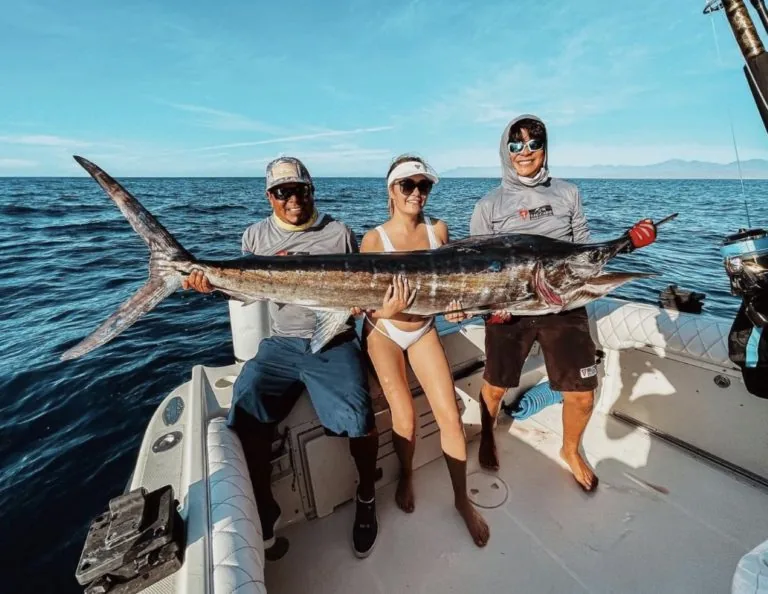
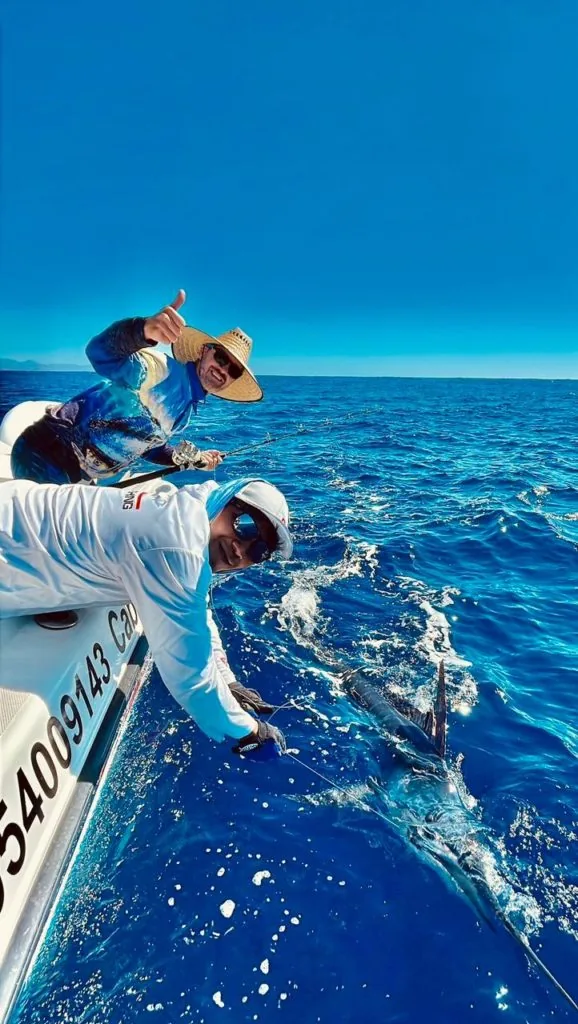
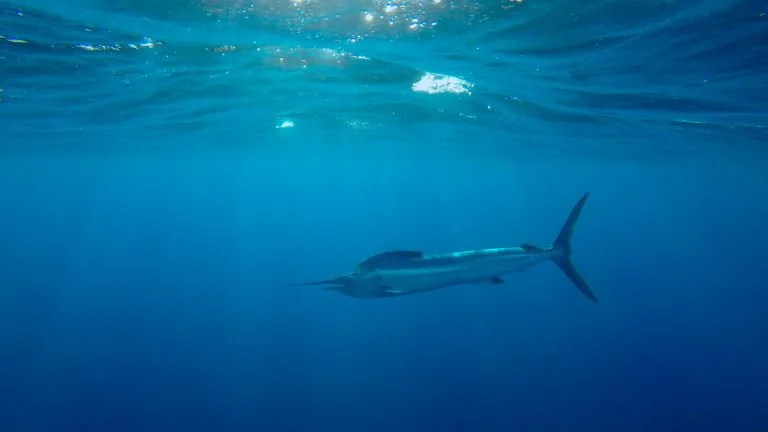
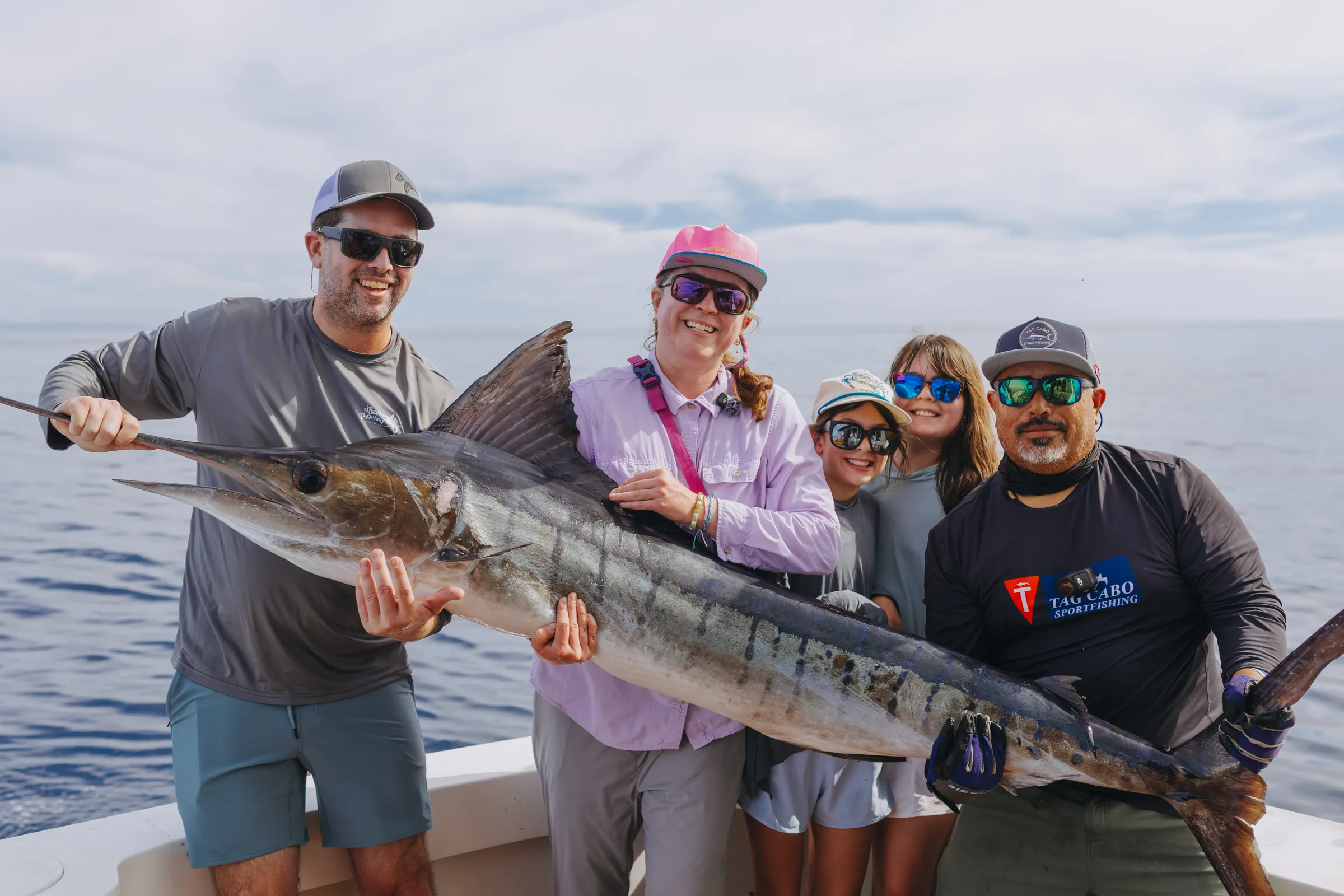
Striped Marlin articles
Mar 25, 2026 · 4 min read
How We Catch Striped Marlin in Cabo Using Sonar
How We Catch Striped Marlin in Cabo Using Sonar. While sonar is extremely useful, it works best when combined with an understanding of ocean
Mar 25, 2023 · 3 min read
Master the Art of Striped Marlin Fishing: Lures, Teasers, and Dead Bait Techniques
Striped marlin fishing in Cabo San Lucas/ In this blog post, we'll dive into the best ways to catch striped marlins using lures, teasers, and dead bait. By understanding the different techniques and strategies, you'll be well on your way to reeling in the catch of a lifetime.
Mar 20, 2023 · 5 min read
Catching Striped Marlin in La Baja California Sur: The Art of Live Bait Fishing
When a striped marlin is spotted on the water's surface, the pitching live bait technique is the go-to method for many anglers. Follow these steps to master the art of pitching live bait to striped marlin:
Mar 4, 2023 · 5 min read
Striped Marlin Fishing In Cabo San Lucas
The Striped Marlin thrives in clear waters with high visibility, preferring temperatures between 70 and 85 degrees Fahrenheit. When the water temperature drops below 68 degrees, they struggle to survive. They are often found in areas where water currents bring nutrients and prey to the surface, crea
Jan 24, 2023 · 2 min read
Striped Marlin Reproduction Cycle
Striped marlin (Kajiki marlin) reaches sexual maturity at a relatively young age. Females reach maturity at 3-4 years old, while males reach maturity at 2-3 years old.
Jan 12, 2023 · 5 min read
Tips for Striped Marlin Fishing Cabo San Lucas
fishing Cabo San Lucas is an excellent opportunity for catching a Striped Marlin. Find out everything you need to know about Cabo fishing for marlin.
Jun 8, 2018 · 2 min read
Planning On Fishing For Stripped Marlins? Things You Need To Know First
The striped marlin is considered by many anglers to be the ideal fish. It belongs to the Istiophoridae family of fish and is considered to be one of the most beautiful kinds of fish in the ocean.
Mar 8, 2018 · 13 min read
Game Fish 101: Striped Marlins Game Fishing
Game Fish 101: Striped Marlins Game Fishing With its elongated body, spear-point bill, and an extended, stiff dorsal fin, the Marlin fish belong to the Istiophoridae family of fish. The name “Marlin” is thought be a consequence of the resemblance of the fish with marlinspike; an implement that sailo