Wahoo Fishing in Cabo San Lucas
Year-round · peak Aug–Dec
Wahoo are the fastest fish we catch — a strike is a scream of drag before anyone can reach the rod. We target them high-speed trolling the banks and structure around the full moon in the warm-water months, running wire leaders because their teeth cut everything else.
Book nowAverage size
25–70 lbs
Best months
August – December
How we fish
High-speed trolling, wire leader, deep lures
Boats
Offshore fleet
Why anglers come to Cabo for wahoo
Wahoo are the drag-screamer of the Pacific — a striped missile that can hit a lure moving at fifteen knots and empty a spool before you clear the second rod. They are also one of the best-eating fish in the ocean, with firm white fillets that most of our guests take home to the grill. That combination of speed, size and table fare makes wahoo one of the most requested species we target from August through December.
Cabo San Lucas sits on the tip of the Baja peninsula where the Sea of Cortez meets the Pacific, and the wahoo stack up on the seamounts and current breaks a short run from the marina. The Gordo Banks, the 95 Spot, the 1150 and the Pacific-side ridges all hold fish when the water is warm — and unlike many destinations, you can leave the dock after breakfast and be setting the wahoo spread within the hour.
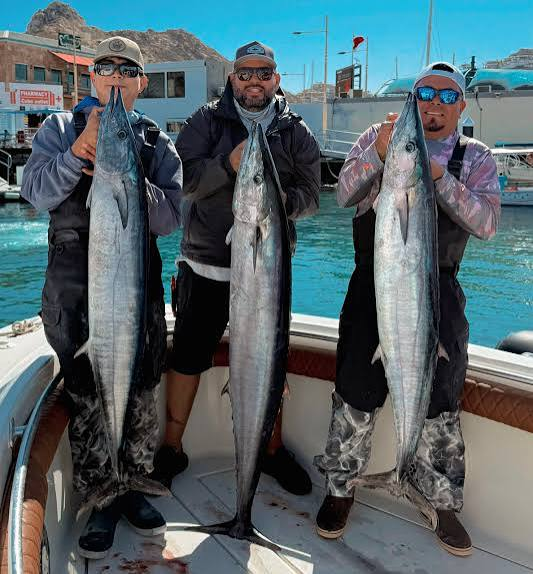
Wahoo here are solitary hunters that travel in small packs, so a hooked fish usually means more are around. Some of our best days have been triple and quadruple hookups that turned the cockpit into controlled chaos. A 40- or 50-pound wahoo on light drag is a genuine test, and the 60-plus pounders we see every season are legitimate trophy fish.
Where we fish wahoo around Cabo
Most of our wahoo come off the offshore banks and any current break that holds bait. The exact spot changes with the water — your captain reads the temperature breaks and bait marks each morning — but these are the grounds we work:
- Gordo Banks — the inner and outer bank north of San José del Cabo; the most consistent wahoo ground in the region once the water passes 78°F.
- The 95 Spot and 1150 Bank — seamounts on the Cortez side that concentrate bait and wahoo on the tide changes, often with tuna mixed in.
- Golden Gate and the Pacific ridges — when the current wraps around the cape, the Pacific-side banks can be loaded while the Cortez side is quiet.
- Iman and La Fortuna banks — East Cape structure we run to on overnight trips, famous for fall wahoo when the moon is right.
- Any temperature or color break offshore — wahoo hunt the edges; a two-degree break with flying fish is worth a dozen passes.
How we fish them: high-speed trolling and the moon
Wahoo fishing is about speed and the moon phase. We troll at twelve to fifteen knots — far faster than normal marlin trolling — running a spread of deep-diving lures and heavy marauder-style plugs that track straight at that speed. The fast retrieve triggers the wahoo's instinct to chase down fleeing prey, and it covers the miles of bank edge you need to find a pack.
The five days on either side of the full moon are the prime window. Wahoo feed hard at night under a bright moon, and the bite around dawn and the tide changes can be electric. If your dates are flexible, tell us and we will point you at the best moon.
We also catch wahoo slow-trolling live bait and casting iron to surface boils, and they regularly crash the marlin spread — but if wahoo are the target for the day, we rig for speed and run the banks hard.
One thing every wahoo angler learns: their razor teeth make short work of monofilament. Every lure in the wahoo spread runs a short single-strand or multi-strand wire leader, and we keep wired spare rods ready because the first strike is rarely the only one.
Wahoo gear and tackle
- High-speed trolling lures — Marauders, Bombers and heavy jet heads in dark purple/black and red/white for bright days, orange and pink early and late.
- Wire leaders — 90–175 lb single-strand or 7-strand cable, non-negotiable against wahoo teeth.
- 30–50 lb class trolling tackle with smooth drags — a wahoo's first run peels hundreds of yards and there is no time to adjust.
- Heavy swivels and ball-bearing snap swivels to keep the lures tracking at 12–15 knots.
- Everything is included on our boats — we supply the full wahoo spread, rigged fresh for the day's water. You only need to bring sun protection.
Wahoo month by month in Cabo San Lucas
January – March
Slow
Cool water pushes most wahoo south. We pick up the odd fish on the Pacific banks, but if wahoo is the priority, choose another window.
April – May
Picking up
Warming water brings the first wahoo back to the Gordo Banks. Not the peak, but a live-bait day on the bank can produce fish to 40 lbs.
June – July
Good
Consistent action on the banks as the water warms past 80°F. Wahoo mix with tuna and dorado — a great mixed-bag time of year.
August – October
Peak
The heart of wahoo season. Fish the full-moon windows on the Gordo Banks, 95 and 1150 for the best shot at multiple hookups, including 50–70 lb trophies.
November – December
Excellent
Late-season wahoo stay strong as long as the warm water holds. Big fish show on the fall moons and the fleets thin out — our favourite time to target them.
What a wahoo trip with us includes
Wahoo trips run on our offshore boats — the 28ft walkaround for small groups on a budget, up to the sportfishers for families and full-day comfort. Every trip includes the crew, fuel, full tackle and wahoo spread, live bait, two fishing licences, ice, water, beer and lunch.
We fillet and bag your catch at the dock, and wahoo vacuum-packs and freezes beautifully for the flight home. If you want to chase the fall full-moon windows, book early — those dates are the first to go.
Book a wahoo trip
Tell us your dates and we will put you on the right boat and the right beach for the conditions that week. All tackle, live bait and two fishing licences included.
Check availabilityWahoo fishing FAQs
- When is the best time for wahoo fishing in Cabo San Lucas?
- August through December is the peak, with the five days on either side of the full moon producing the most consistent action. Wahoo are caught here year-round in warm water, but the fall moon windows on the Gordo Banks are the classic Cabo wahoo bite.
- How big do wahoo get in Cabo?
- Most wahoo we catch run 25 to 70 pounds. Fish over 50 lbs are landed every season, and the occasional 80-plus pounder shows up on the banks in the fall.
- Is wahoo good to eat?
- Excellent — wahoo is one of the best-eating fish in the ocean, with firm white fillets that grill beautifully. We fillet and bag your catch at the dock so you can take it home or have it cooked at a local restaurant.
- Do I need special gear to fish wahoo?
- No — our boats carry the complete wahoo spread: high-speed trolling lures, wire leaders and 30–50 lb class tackle, all rigged fresh for the day's conditions. Everything is included in the trip price.
- Why is wire leader necessary for wahoo?
- Wahoo have razor-sharp teeth that slice monofilament and fluorocarbon instantly. Every lure in the wahoo spread runs a short single-strand or multi-strand wire leader — skip it and you will lose fish and lures.
- Does the moon really matter for wahoo?
- Yes. Wahoo feed aggressively at night under a bright full moon, and the dawn and tide-change bites around the full moon are famously hot. If your dates are flexible, ask us and we will point you at the best moon window.
- Which boat should I choose for a wahoo trip?
- Any of our offshore boats reaches the banks comfortably. The 28ft walkaround is great value for up to three anglers, while the 35ft Cabo Express and larger sportfishers add shade, a cabin and more cockpit for families or longer days.
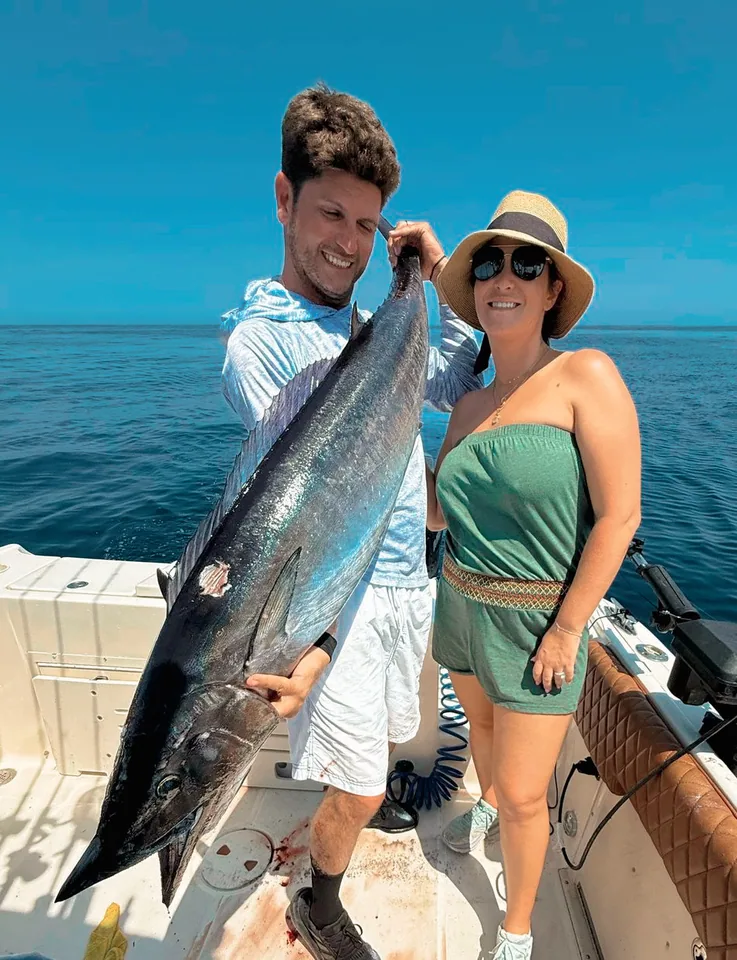
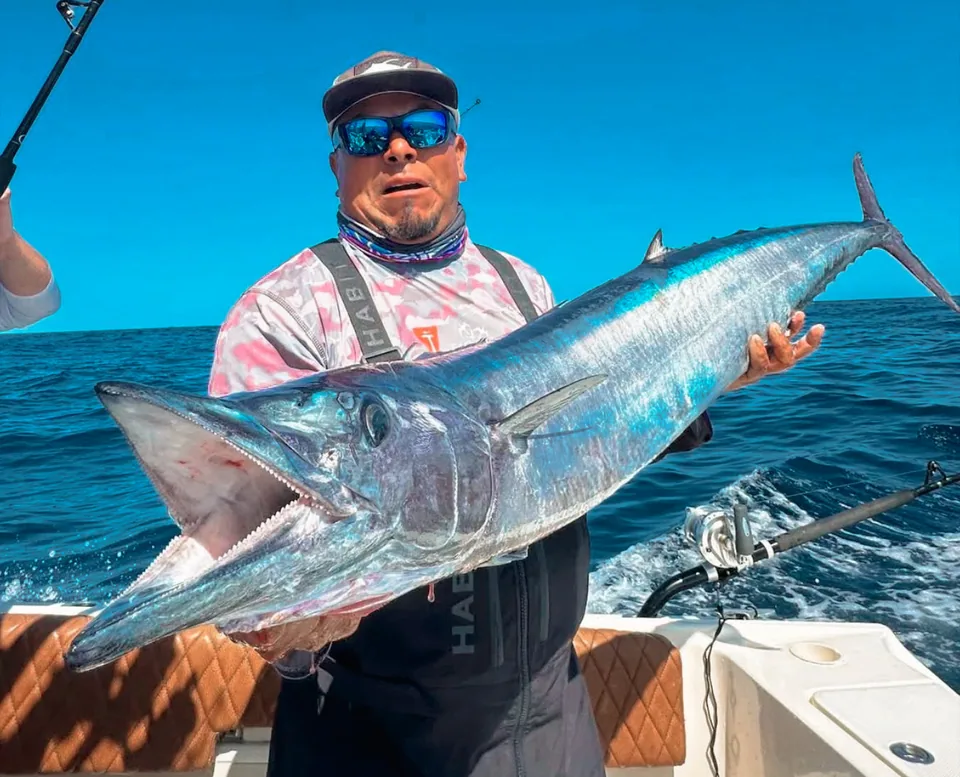
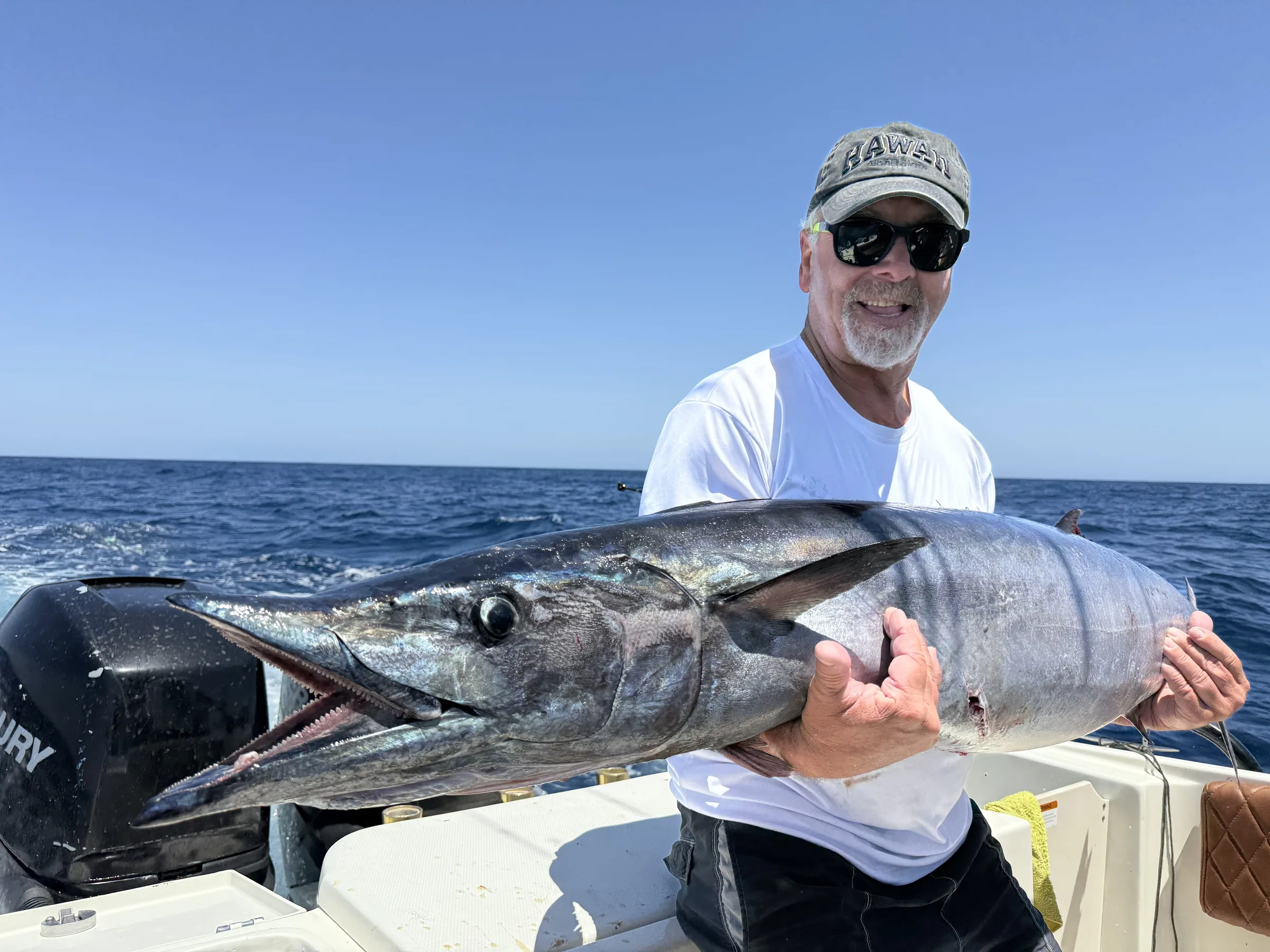
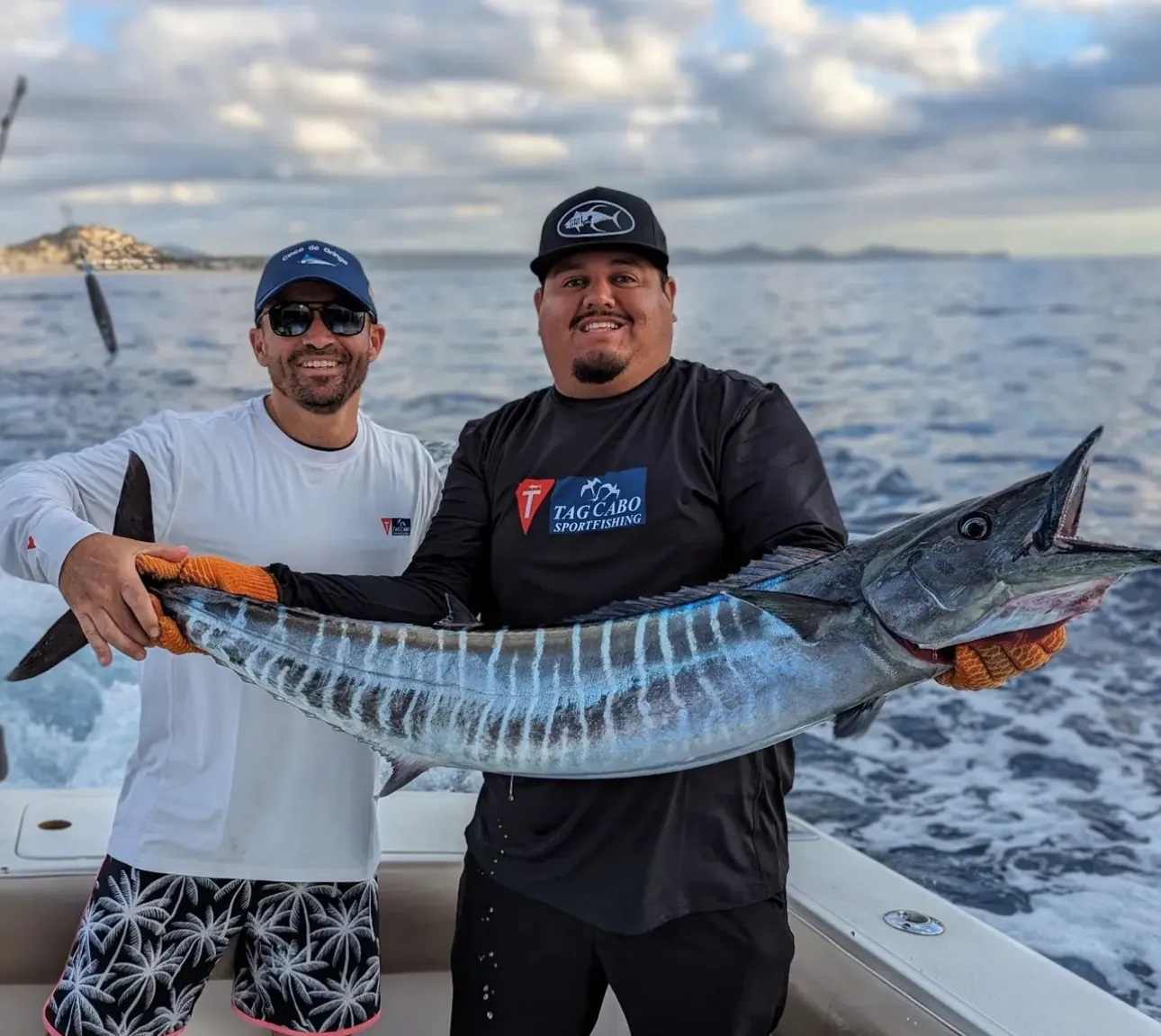
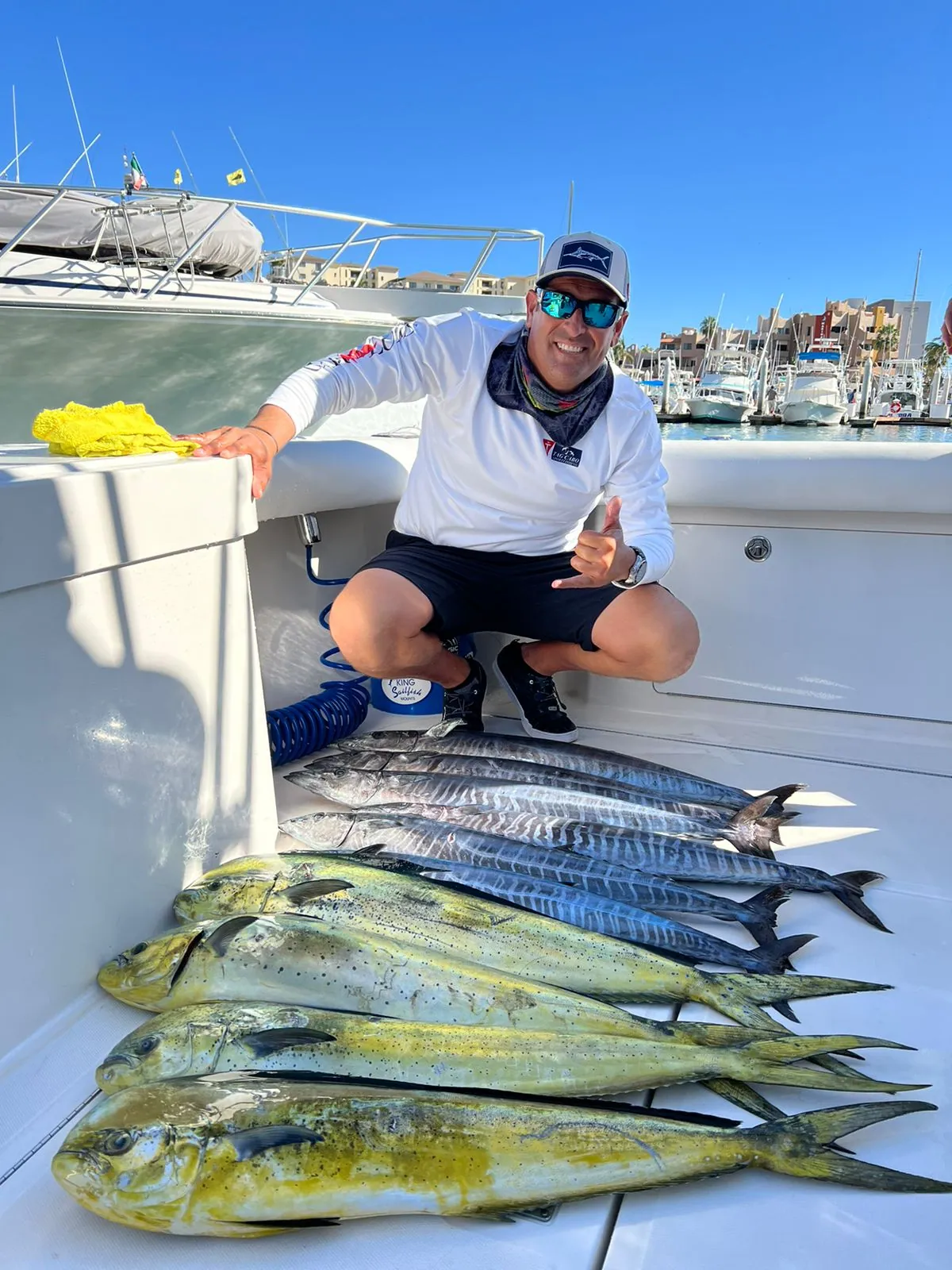
Wahoo photo gallery
Wahoo articles
Jul 12, 2024 · 4 min read
Best Water Temperatures to Catch Wahoos Around the World
Best Water Temperatures to Catch Wahoos Around the World. Wahoos are a thrilling catch for any angler, and understanding their preferred water
Feb 22, 2022 · 2 min read
Wahoo fishing in Cabo San Lucas
The International Game Fish Association world wahoo record at 83.5 kg (184 lbs) with the fish caught in coastal waters off Cabo San Lucas, Baja California Sur, in July 2005.