
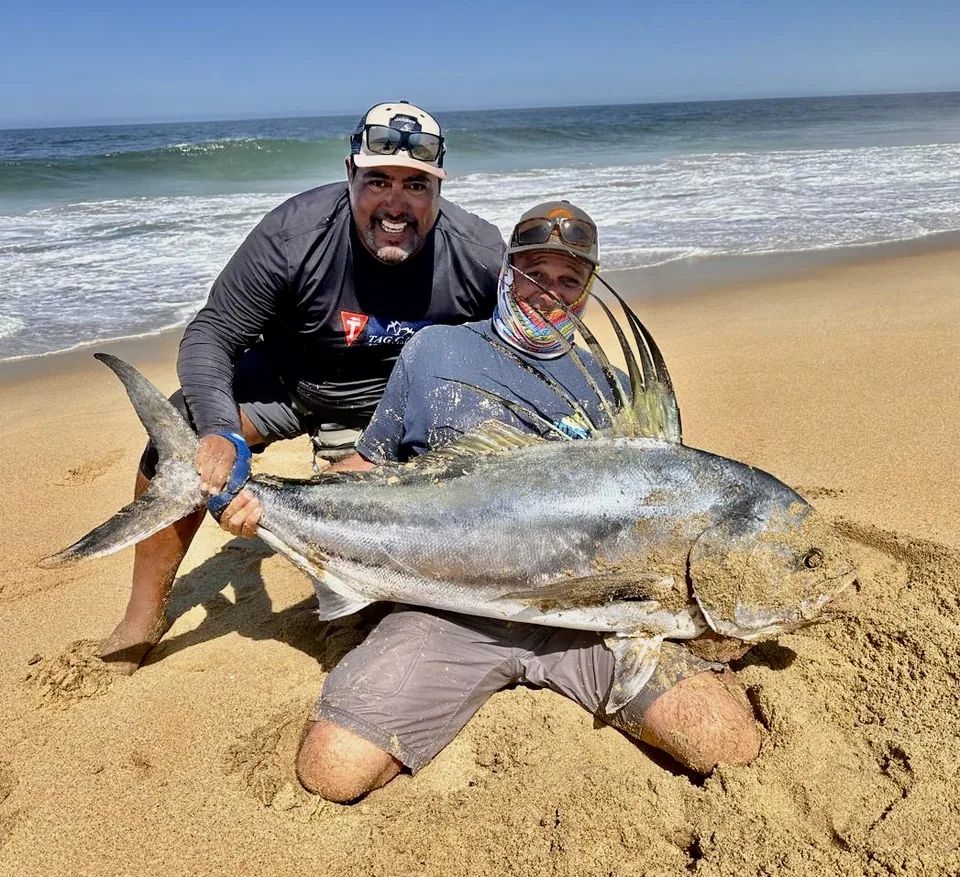
Surf fishing in Cabo San Lucas is one of the few places on earth where you can stand on dry sand and hook a 40-pound roosterfish. The Baja peninsula drops into deep water within casting distance of the beach, so gamefish that normally live offshore push right into the wash chasing mullet, sardines and sierra.
We run guided beach trips year-round across Los Cabos and the East Cape, with all rods, reels and lures provided. Your $450 USD per-person trip includes round-trip transportation, snacks, drinking water and beers. If taxi union restrictions prevent pickup at your resort, we depart from our downtown office instead. No boat, no seasickness, no long run offshore — just a drive to the beach and a lure in the water.
This page is also the most complete guide we have to fishing from the beach in Cabo: where to go, what you can catch month by month, the tackle that works here, the licence rules that apply from shore, and the safety details that catch visiting anglers out. Everything below comes from guides who fish these beaches all year — not from a brochure.
Book your guided surf fishing trip
Guided surf fishing
$450 USD per person
Round-trip transportation is included. If the taxi union does not allow pickup at your resort, meet us at our downtown office for your round-trip transfer. Contact us to confirm your date and pickup arrangements.
Book a surf fishing tripIncluded in your $450 trip
- Round-trip transportation
- Snacks
- Drinking water
- Beers
- All necessary fishing equipment
Our guided surf fishing trip: what's included
A guided trip removes the guesswork. We already know which beaches are holding bait and which are blown out by swell, and we can reach sand a rental car cannot. Trips start before sunrise, cover two to four beaches and run four to six hours.
- Round-trip transportation; downtown office departure if taxi union restrictions prevent resort pickup
- Off-road 4x4 access to remote beaches you cannot reach on your own
- Professional local guide: Martin Almazan
- All rods, reels, leader, terminal tackle and lures provided — bring nothing if you prefer
- Two Mexican fishing licences included; additional licences $25 each
- Snacks, drinking water and beers, with beach selection based on current conditions
- Photos of your catch and coaching on casting, retrieve speed and fighting fish in the surf
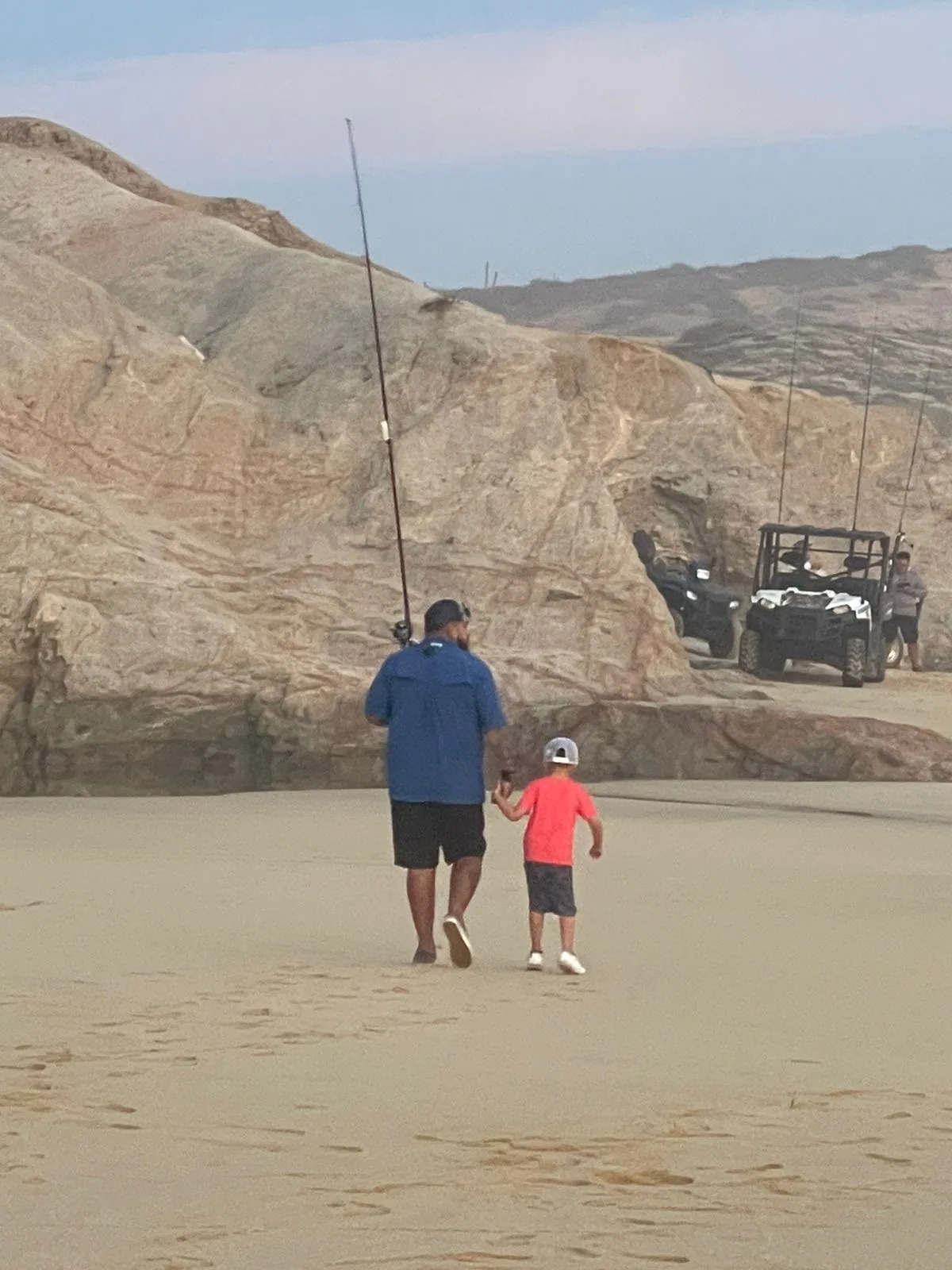
Ranch surf fishing with ATVs — when conditions align
We check water temperature and chlorophyll concentration to choose where to fish. When conditions are favorable at the ranch where we keep our ATVs, we fish there and use the ATVs to move along the shoreline, cover more ground and find the fish.
The ranch and ATV option depends on conditions; it is not guaranteed on every trip. When another stretch of coastline offers better conditions, we choose the fishing location accordingly.
Best surf fishing beaches in Cabo San Lucas and Los Cabos
Los Cabos is really two fisheries separated by Land's End. The Pacific side, from Solmar out toward Migriño, is bigger water with heavier swell and coarse sand — great for roosterfish and jack crevalle, unsafe for wading. The Sea of Cortez side, from Chileno up through San José del Cabo and the East Cape, is calmer, clearer and more forgiving for first-timers.
The single biggest factor in success is mobility. Fish move with bait, swell and water temperature, so the beach that produced yesterday can be empty today. Walk, drive and cover ground rather than committing to one spot. Wind matters too: the best sessions come when the breeze is at your back, blowing offshore, or when it is under about 10 knots.
- Solmar Beach (Cabo San Lucas, Pacific) — steep drop-off right off the sand, strong current, good early-morning roosterfish and jack crevalle. Never swim here; fish from dry sand only.
- Pedregal Beach (Cabo San Lucas, Pacific) — rocky points either side of open sand, holds snapper, cabrilla and jacks around structure. Best on a rising tide at first light.
- Migriño and the Pacific beaches north of town — long open sand, 4x4 recommended, the classic run-and-gun roosterfish beat from May through October.
- Chileno and Santa María (Corridor, Sea of Cortez) — reef edges within casting range, sierra and small jacks; check local swimming-zone rules before casting.
- Palmilla and the San José del Cabo hotel-zone beaches — calm, sandy and the easiest water in the region for a first beach session; reliable sierra and jack action November through March.
- San José del Cabo estuary mouth — bait pushes into the corners here and predators follow it in at first light.
- La Ribera and the East Cape — the most productive sand in the region for big roosterfish; wide beaches, easier wading and long stretches you can have to yourself.
- Punta Perpetua, La Tinaja and remote 4x4-only beaches — the least pressured shoreline in Los Cabos; access, not fish, is the limiting factor.
Species you can catch from the beach
Surf fishing in Cabo is a mixed-bag fishery. On a good morning you can land four or five species without moving beaches.
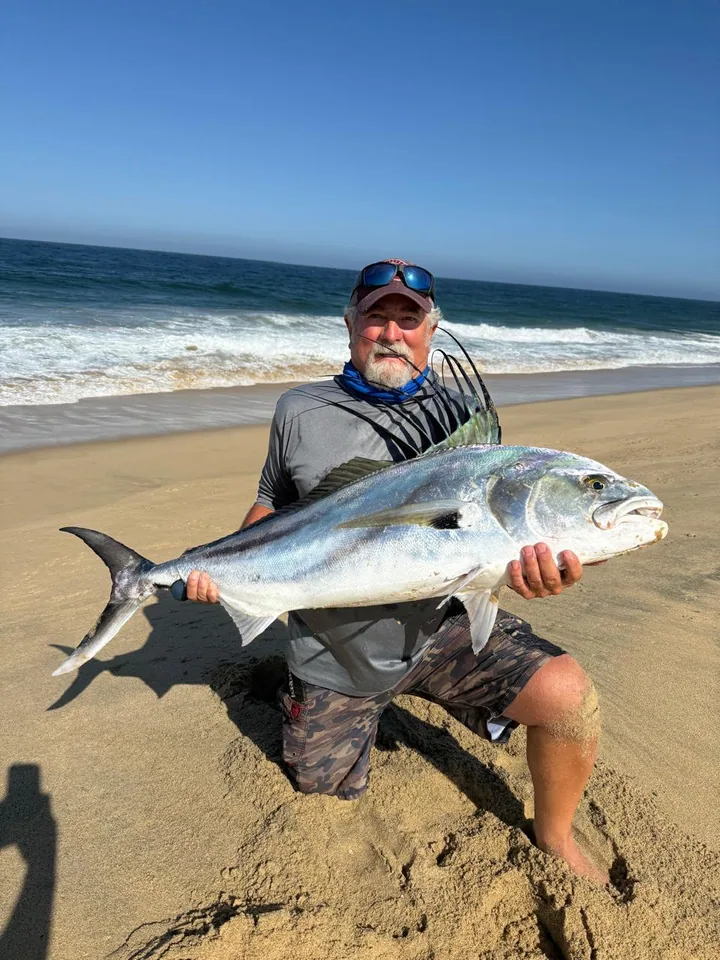
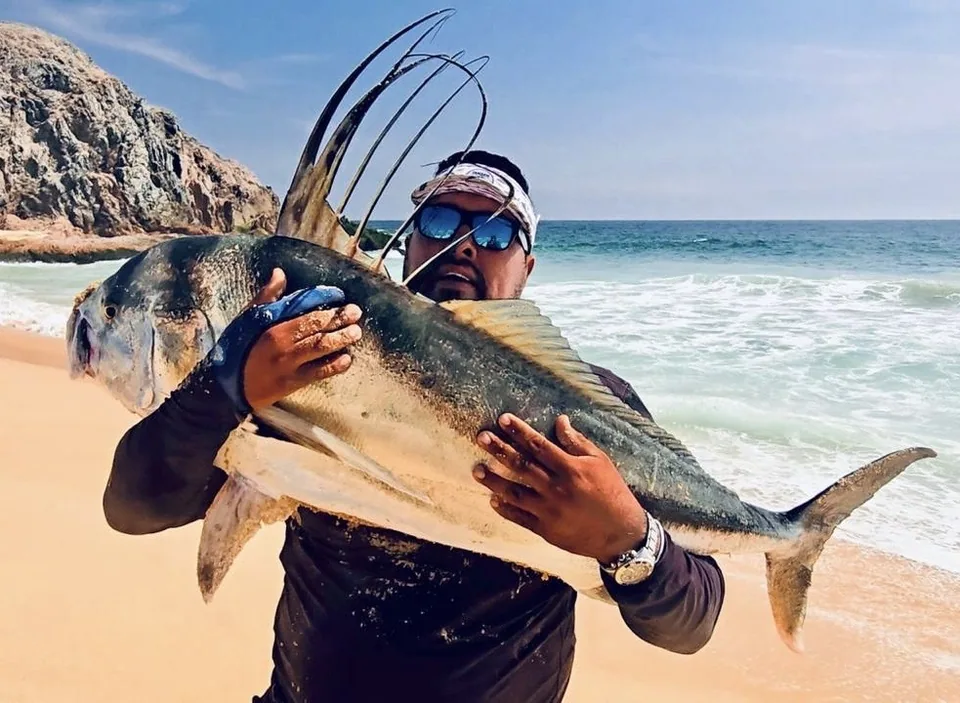
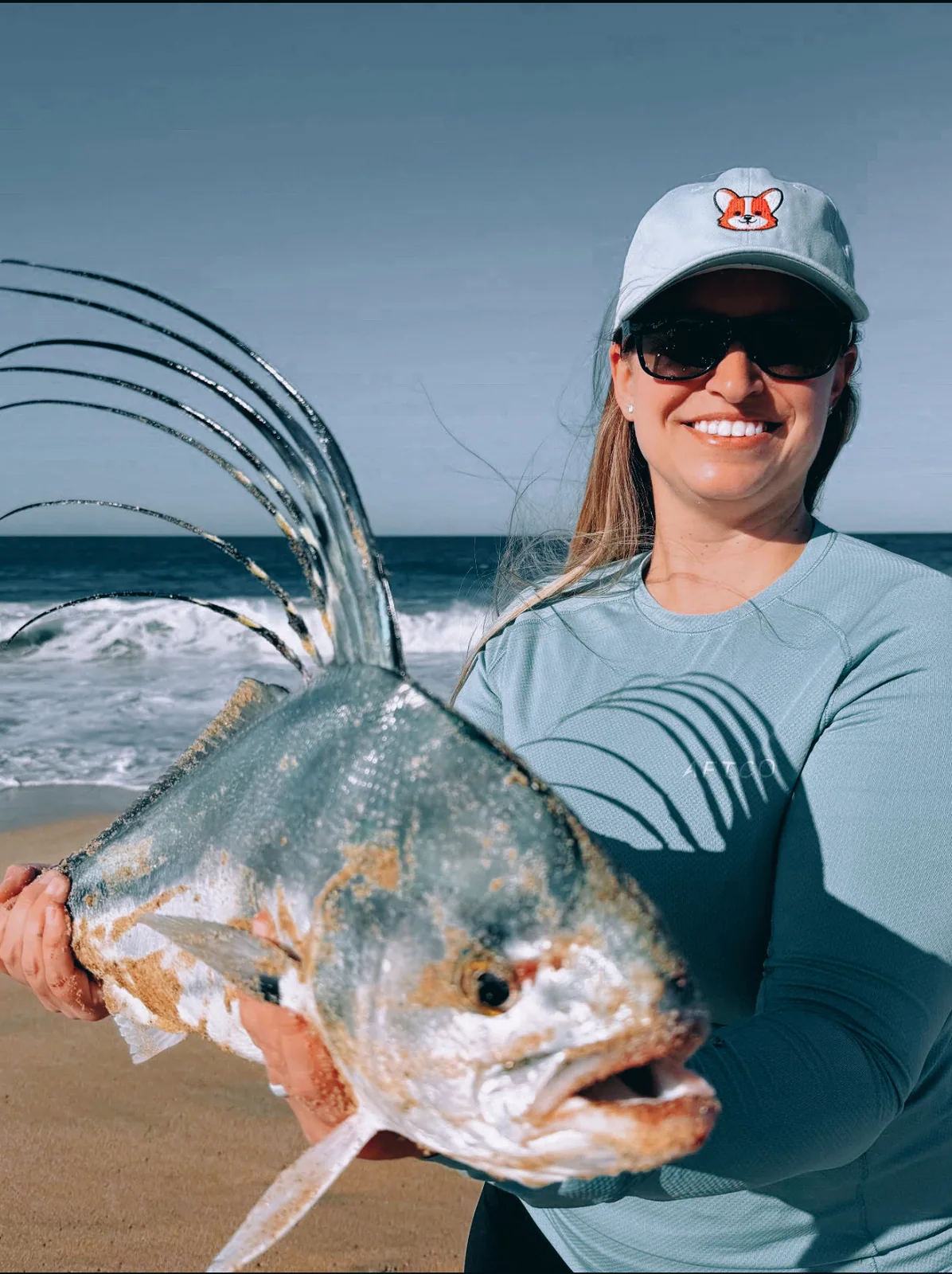
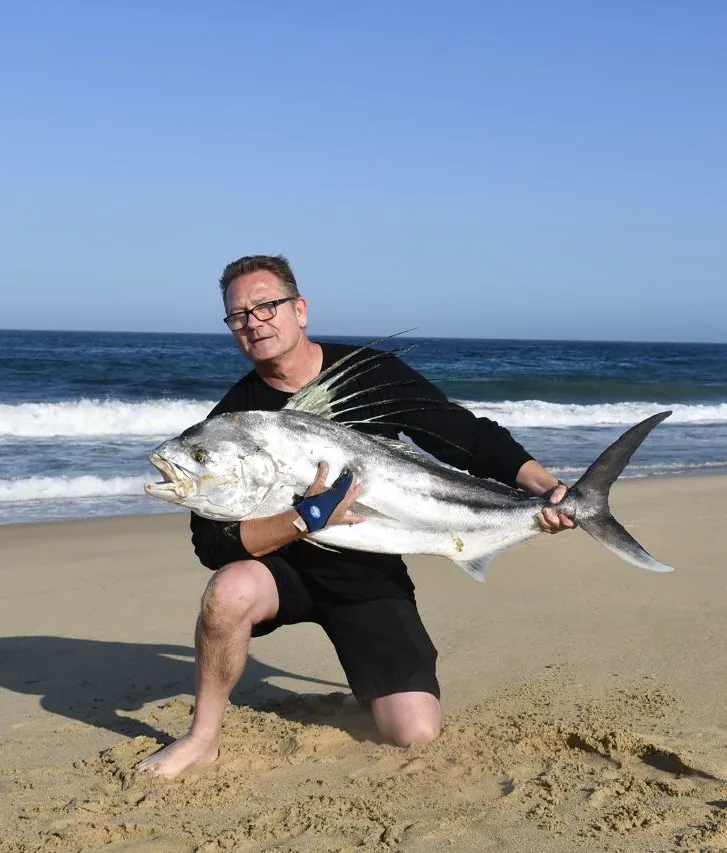
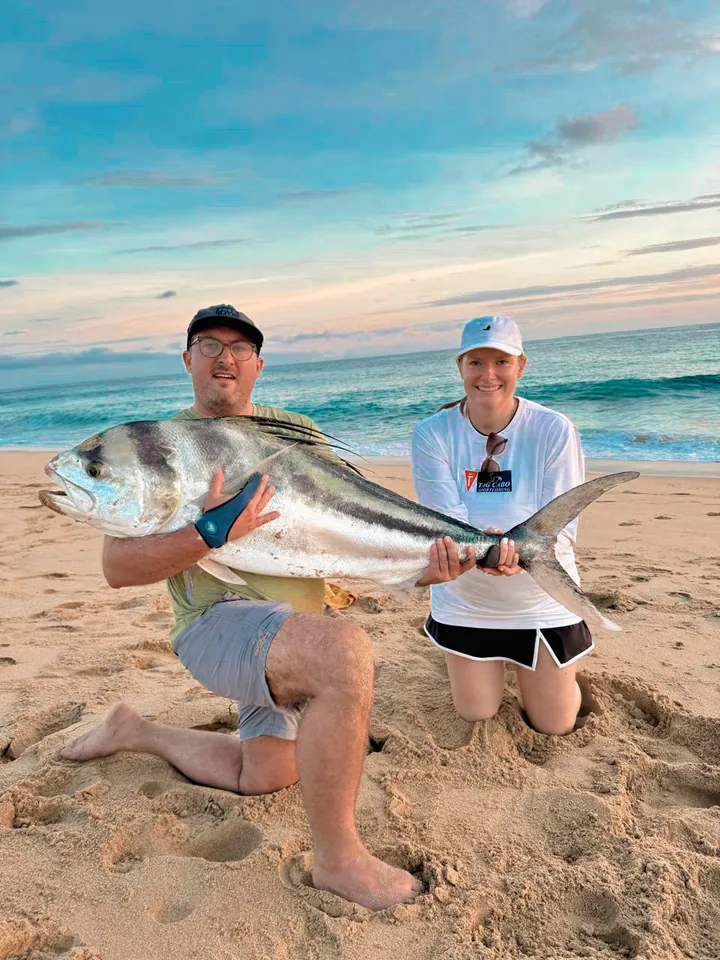
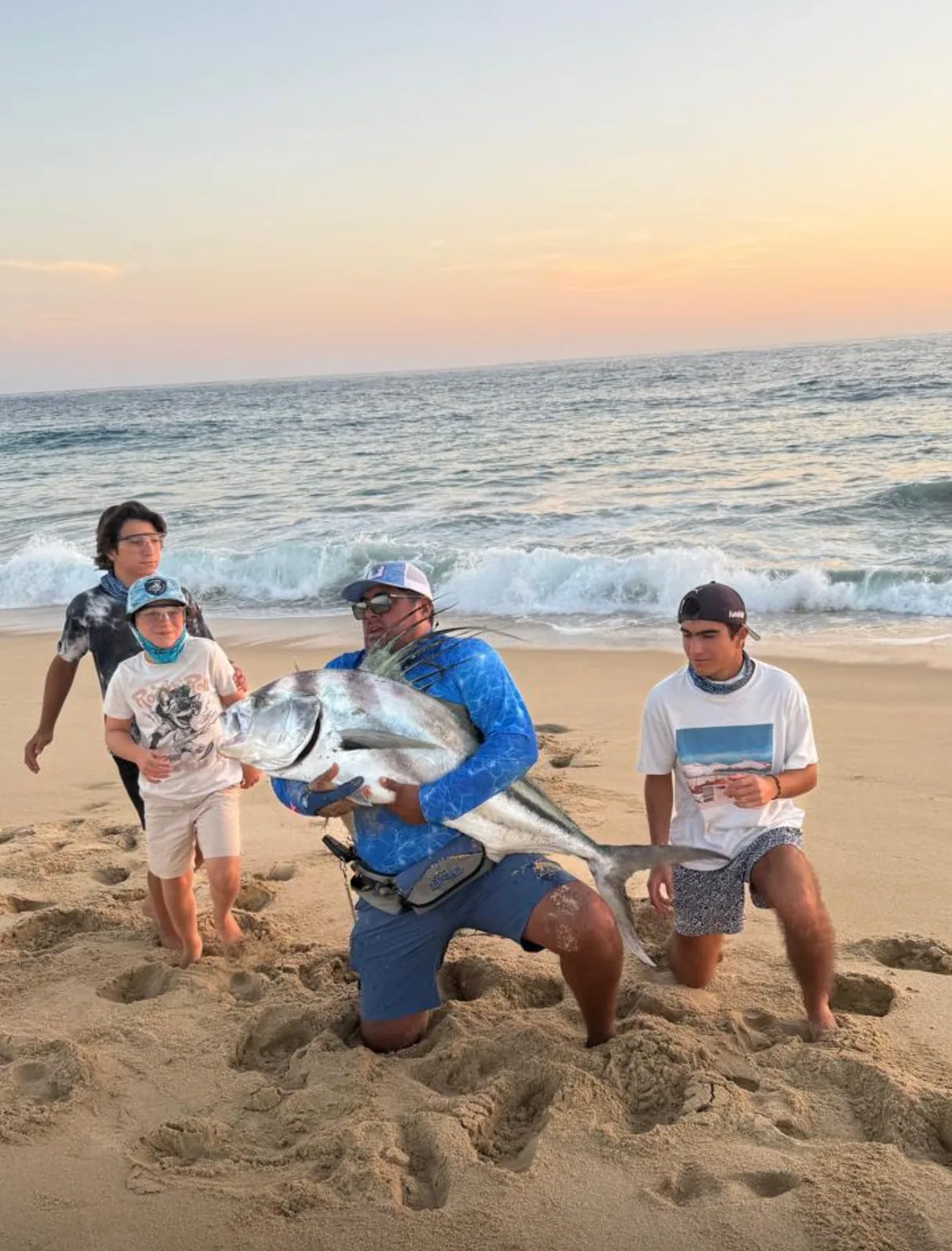
- Roosterfish (pez gallo) — the headline fish. 20–35 lbs is average from the sand, with trophies of 50–100+ lbs landed every season. They hug the shoreline in small packs hunting mullet, which makes this largely a sight-casting game. Catch-and-release only.
- Jack crevalle — 5–25 lbs, present nearly year-round, and pound for pound the hardest pull you will feel from the beach.
- Sierra mackerel — winter school fish, 3–8 lbs, hunting sardines in large packs. Nonstop action on spoons and small stickbaits, but their teeth are razor sharp: fish a wire or heavy fluoro bite trace or you will lose lures all morning.
- Snapper (cubera, dogtooth, red snapper, coconaco) — 10–30 lbs, tucked tight to rocks and ledges, deceptively fast, so fish heavy line and leader near structure.
- Cabrilla and grouper — ambush feeders on reef edges and drop-offs, usually around 10 lbs from shore, common on the Pedregal and Corridor rock beaches.
- Occasional visitors — robalo (snook) to about 30 lbs and the odd dorado push into the shallows to feed opportunistically.
- Ladyfish, needlefish and small trevally — constant light-tackle entertainment between the bigger bites.
Roosterfish and jack crevalle in the wash
From roughly June to September, when the water sits between 80 and 84°F, chlorophyll-rich green water builds along the Pacific surf breaks between Sunset Beach and Migriño and huge schools of mullet stack up in it. Roosterfish and jack crevalle follow them in.
When it happens, the mullet come out of the water in a silver sheet and the predators behind them will chase a bait so hard they beach themselves for a heart-stopping second before powering back into the surf. Getting one of those fish to eat an artificial lure in the middle of all that live bait takes accurate casting, a fast retrieve and split-second timing — and when it connects it is the hardest pull available from dry sand anywhere in Baja.
We track chlorophyll and water temperature before every trip so we are standing where the mullet are, not where they were last week.
Surf fishing seasons in Cabo, month by month
Cabo fishes from the beach 365 days a year, but what you target changes with water temperature. Water runs roughly 70°F in February and climbs past 85°F by September.
- December–March (70–74°F) — prime sierra season. Big schools push into San José del Cabo and La Ribera; light tackle, spoons and fast retrieves. Some jack crevalle mixed in, fewer roosterfish.
- April–May (74–78°F) — the transition. Roosterfish start showing on the Pacific beaches and East Cape as mullet return; jacks are everywhere.
- June–September (80–87°F) — peak roosterfish season. Mornings before 9am and the last hour of light produce the biggest fish of the year. Also peak heat — carry more water than you think you need.
- October–November (78–82°F) — the sleeper months. Warm water, thinning crowds, roosterfish still around and sierra beginning to return.
- Any month — first light and the last 90 minutes of daylight beat midday by a wide margin. A rising tide into the top of the tide is the most consistent window.
Tackle and lures for surf fishing in Cabo
Beach fishing here is closer to light offshore fishing than to typical surfcasting: fewer, bigger fish, long casts and hot runs. Everything below is provided on guided trips — this is what to bring if you are fishing on your own.
- Rod: 9–13 ft surf rod rated for 1–4 oz, medium-heavy with a fast tip for casting distance and lure control.
- Reel: 5000–10000 size spinning reel with a sealed drag holding at least 300 yards of line — sand and salt kill cheap reels in a week.
- Line: 30–50 lb braid for distance and hook-setting power at 80+ yards.
- Leader: 40–80 lb fluorocarbon; go to the heavy end anywhere near rock, and add a short wire bite trace when sierra are thick.
- Lures: 4–7 inch stickbaits and pencil poppers for roosterfish and jacks, casting spoons for sierra, soft-plastic swimbaits when the bite is finicky. Topwater lures that cast a long way and stay on the surface are the roosterfish standard — when a fish tracks the lure, speed up rather than slow down.
- Bait: we fish artificials that imitate mullet, sardines and mackerel. Fishing on your own, live mullet or cut mackerel near rocky ground will produce snapper, especially at night on a full moon and high tide.
- Sinkers: a casting sinker to anchor bait on the sand next to rocky structure is the simplest snapper rig there is.
What to bring and who this trip suits
No experience is required. Complete beginners land fish with us regularly — we teach the cast and the retrieve on the first beach, and the guide is beside you the whole session. Experienced anglers get the opposite service: local knowledge, access and the chance to sight-cast at trophy roosterfish.
Children who can handle a spinning rod are welcome, and so are non-fishing partners — the beaches we visit are worth the drive on their own.
- Polarized sunglasses — essential for spotting cruising roosterfish
- Reef-safe sunblock, a hat and a long-sleeve sun shirt
- Shoes you can run and walk long distances in; rooster fishing is a walking game
- At least three litres of water per person in summer
- A camera or phone in a waterproof pouch
- Nothing else — rods, reels, tackle, lures, licences and transport are covered
Licences, catch-and-release and beach rules
Every angler fishing in Mexican waters — including from the shore — needs a CONAPESCA sport fishing licence. They are inexpensive, available by the day, week, month or year, and enforcement does happen on the popular beaches. On guided trips your licences are handled for you: two are included with every Tag Cabo trip and additional licences are $25 each.
Roosterfish are catch-and-release for sport anglers, and we encourage releasing all large gamefish. Keep the fish in the water, support it horizontally for a photo, revive it facing into the wash and let it swim off on its own. Local bag limits allow up to 10 fish per day with no more than 5 of one species, and no billfish or roosterfish retained. If you land something you cannot identify, release it and ask afterwards.
- Never wade or turn your back on the water on the Pacific beaches — Solmar, Pedregal and Migriño have lethal shore break and undertow.
- Fish from dry sand on the Pacific side; save wading for the Sea of Cortez beaches and the East Cape.
- Not every beach is open to fishing — respect posted swimming zones at Chileno, Santa María and the hotel beaches, and stay off private access.
- Pack out everything, including cut line and lure packaging.
Why fish with a local guide
You can absolutely fish these beaches alone, and plenty of visitors do. The difference is how many mornings you burn finding fish. Bait moves constantly, the productive beaches change week to week, several of the best stretches need four-wheel drive, and the Pacific shore break punishes anglers who read it wrong.
A guide puts you on the right sand on day one, with tackle already matched to the species that are feeding, licences sorted and someone alongside you who has fought hundreds of roosterfish in this exact surf.
Frequently asked questions
- How much does a guided surf fishing trip cost?
- The price is $450 USD per person, including round-trip transportation, snacks, drinking water, beers and all necessary fishing equipment. If taxi union restrictions prevent resort pickup, transportation starts and ends at our downtown office.
- Will we use ATVs on the surf fishing trip?
- When water temperature and chlorophyll concentration are favorable at our ranch, we fish there and use our ATVs to move along the shoreline and find fish. The location and ATV use depend on conditions and are not guaranteed on every trip.
- When is the best time for surf fishing in Cabo San Lucas?
- June through September is peak roosterfish season from the sand, while December through March is the best sierra fishing. Regardless of month, fish the first two hours of daylight and the last 90 minutes before dark — midday is the slowest period on every beach.
- Do I need a fishing licence to fish from the beach in Cabo?
- Yes. Every angler fishing in Mexican waters needs a CONAPESCA sport fishing licence, including from shore. Daily, weekly, monthly and annual licences are available. Two licences are included on guided Tag Cabo trips and additional licences are $25 each.
- Can you catch roosterfish from the beach in Cabo?
- Yes — Cabo San Lucas and the East Cape are among the best places in the world to do it. Roosterfish of 20 to 35 pounds are common from the sand, with 50 to 100+ pound fish landed every season, mostly on the Pacific beaches and along the East Cape. Roosterfish are catch-and-release for sport anglers.
- What is the best beach for surf fishing in Cabo San Lucas?
- For roosterfish and jacks, the Pacific beaches near Solmar, Pedregal and Migriño, plus the East Cape sand around La Ribera. For calmer water, sierra and easier wading, fish the Sea of Cortez side around Palmilla, San José del Cabo and the Corridor beaches.
- Is surf fishing in Cabo safe?
- On the Sea of Cortez side, yes. On the Pacific beaches the shore break and undertow are dangerous — fish from dry sand, never wade and never turn your back on the water. Heat is the other real risk: start early and carry at least three litres of water per person.
- Do I need my own gear?
- No. All rods, reels, leader and lures are provided on guided trips. If you prefer your own setup, bring a 9–13 ft surf rod, a 5000–10000 size spinning reel holding 300+ yards of 30–50 lb braid, and 40–80 lb fluorocarbon leader.
- Do I need fishing experience to book a guided surf trip?
- No. Beginners are welcome and land fish regularly — your guide teaches the cast and retrieve on the first beach and stays alongside you. Experienced anglers get local knowledge, 4x4 access and sight-casting shots at trophy roosterfish instead.
- Can I surf fish on any beach in Cabo?
- No. Some beaches are designated swimming areas, some sit in front of private property and a few sit inside protected zones. Stick to the open fishing beaches, respect posted signs, and if you are unsure, fish with a local guide who knows which access points are legal.
Watch
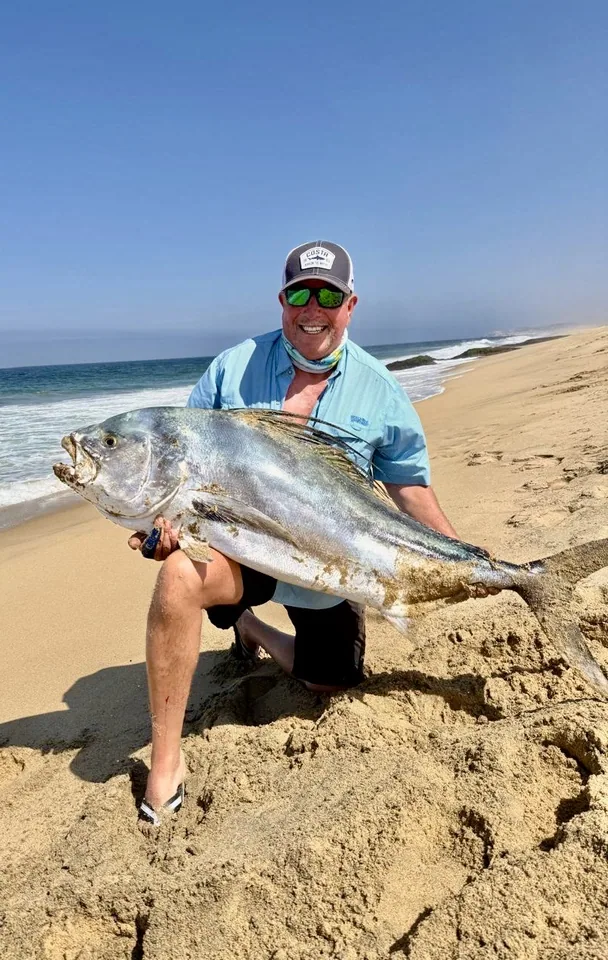
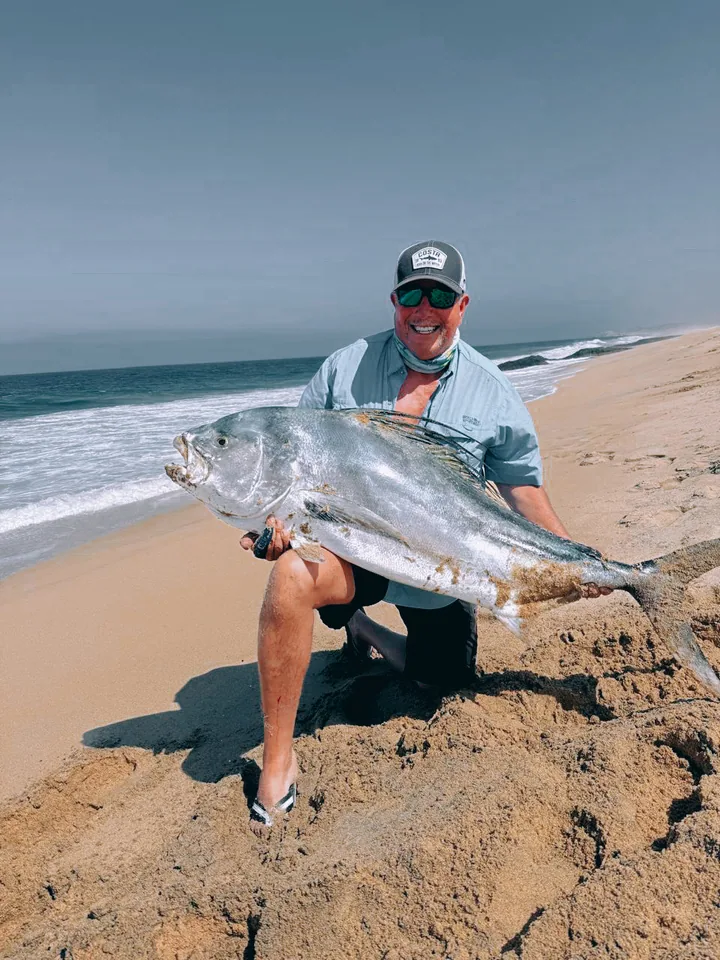
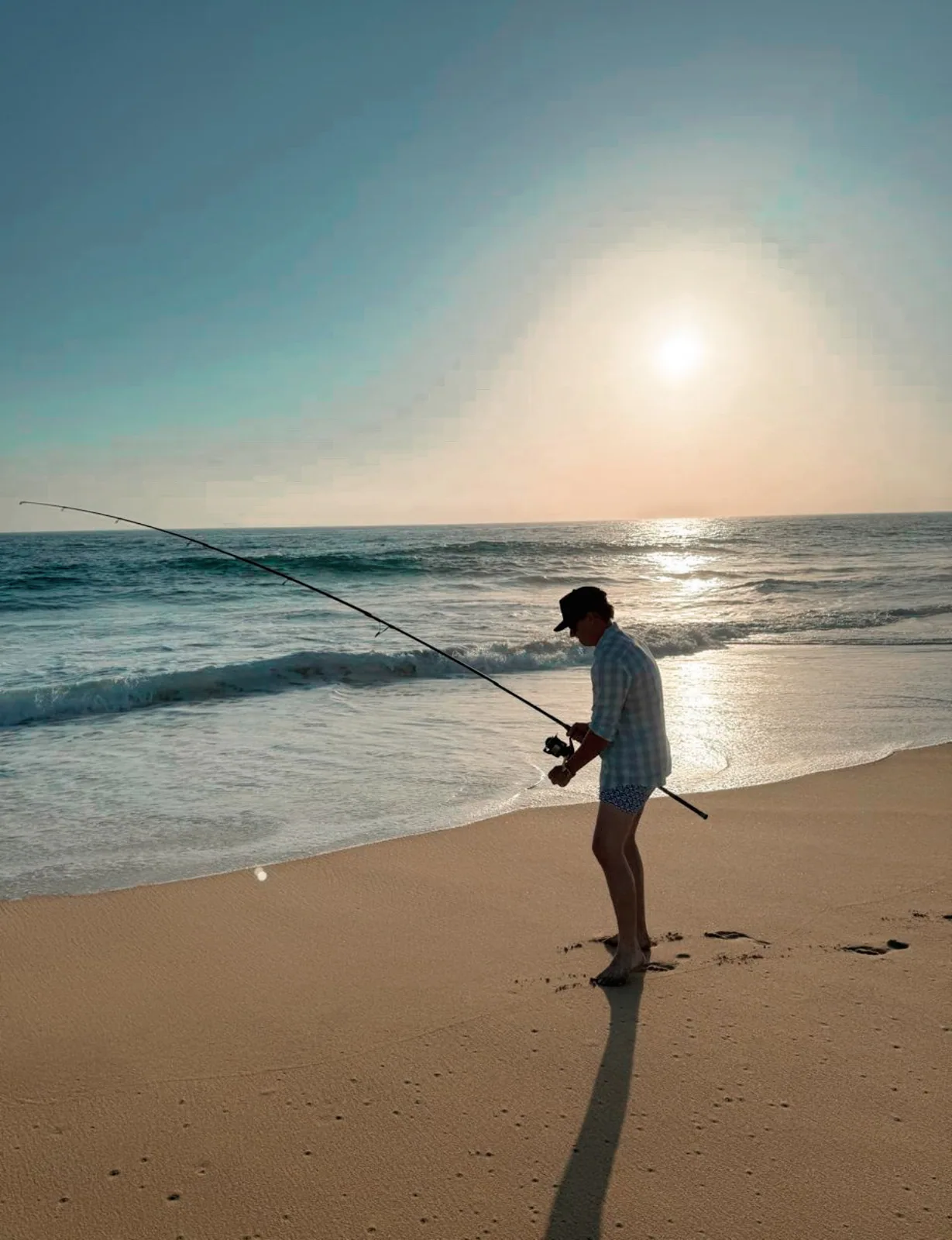
Surf Fishing in Cabo San Lucas photos
Read more
Surf Fishing the East Cape: Beaches, Tides & Access
Where to walk in, how tides set up and what the East Cape shoreline fishes like.
Surf Fishing in La Ribera
One of the most productive stretches of sand on the East Cape.
Winter Surf Fishing in Cabo & La Ribera
Cooler water, sierra schools and how the beach bite changes December to March.
Best Rigs for Beach Fishing in Los Cabos
The exact rigs our guides tie for roosterfish, sierra and snapper off the sand.
Using SatFish and Windy for Surf Fishing in Cabo
How we read water temp, wind and swell before picking a beach.
Camping and Surf Fishing in Baja
Remote beaches, 4x4 access and multi-day shoreline adventures.