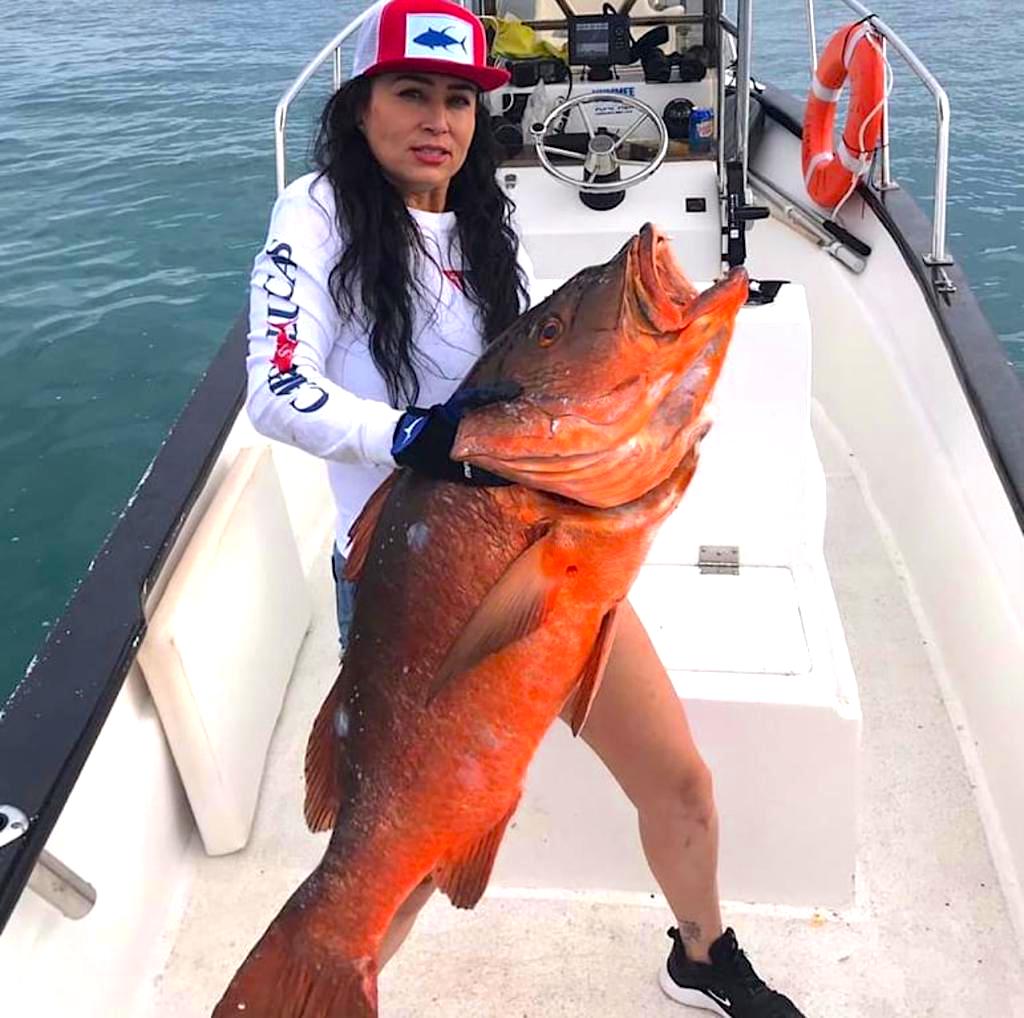
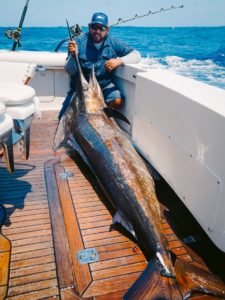
Cubera Snapper are the kings of the snapper family. These brutish fish can grow to over 100lbs and prowl their domains at night searching for unsuspecting prey. Cubera Snapper dwell on the deeper reefs, wrecks and rocks (from 25′-250ft) and require heavy tackle to boat. Cubera’s are armed with large thick scales, beefy lips, and large teeth preventing them from being preyed upon, and allowing them to eat any fish or crustacean that fits in their mouths.
Cubera Snapper in Cabo San Lucas
HOW TO CATCH CUBERA SNAPPER
Find rocky structure in 150ft or less of water and look on the fish finder to see if anyone is home. The biggest ones come on live bait so just drop a bait down on a likely spot. Fish right off the bottom. If you are fishing with a lure then set the hook immediately and pull like crazy. If fishing bait you have to let them eat it a little longer. However, if you wait too long they will already be in the rocks.
It is very important to remember that this is not a light tackle fish. When hooked, it is known to speed towards rocks to keep from being hauled into the boat. You need to make sure that you use a braided line as the snapper can weight up to 60-100 pounds, but on average, it weighs around 40 pounds and up to three to four feet in length.
The best time to fish for a Cubera snapper in Cabo San Lucas would be March, April, may, and part of June but the best month would be in April.
Cubera Snapper Reproduction
A female Cubera snapper will release their eggs into the sea where, within a day, they will produce larvae. Unfortunately, these larvae are also a feast for the nearby whale sharks so many do not survive to become baby Cubera snappers. They reach spawning maturity in two to four years. When the sperm and eggs are released in the water, they form a milky-white, dense cloud that reaches 40 feet in diameter. At each site, it is estimated that a half-billion eggs are released each year.
In Cabo San Lucas we deep drop for different species like groupers, snappers, yellowtails and striped marlin.
When we deep drop fish for striped marlins in Cabo San Lucas we usually start by locating the bait on our SIMRAD equipment. While not 100% necessary, the 3 KW elliptical AIRMAR transducer and SIMRAD NSS EVO3 made finding the fish in 150 to 300 feet deep a whole lot easier.
SUBSCRIBE TO OUR YOUTUBE CHANNEL FOR UPDATES ON WHAT IS BITING.
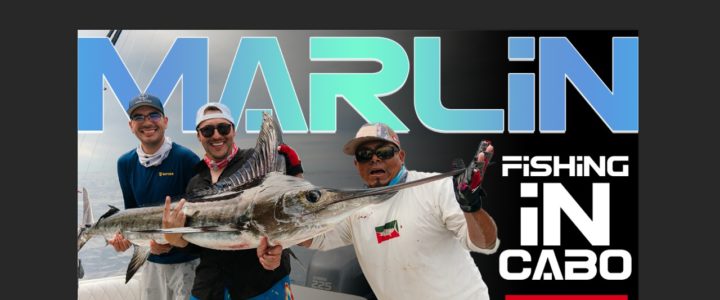
Striped Marlins.
This beautiful species of Marlin grow very large and strong which makes it highly popular as a game fish. They are in cabo San Lucas all year around and we usually fish for them trolling or live bait pitching but here and there the bait is at our local fishing banks like the Golden gate or the lighthouse at 150 to 300 feet deep.
When that happens we look for the bait on our SIMRAD like on the picture below.
Once we locate the bait fish usually mackerel we drop a weight with a sabiki to catch fresh bait since in Cabo San Lucas we always buy live bait from the bait guys in the morning but usually they catch it the night before and it does not look as good as the fresh one.
As soon as we catch fresh live bait we put it back into the water of course with a hook on it and the bait starts running straight down to were the rest of the bait is and usually right behind them are striped marlins feeding.
We like to use Shimano talicas 25s or 16s with 100lb test braid and 80lb test fluorocarbon leader with size 9 circle hook when targeting striped marlins since them reels are super light and strong to fight one of them acrobatic marlins.
Circle hooks – benefits and tips
Circle hooks have been shown to increase the survival of angler released fish. With their success already proven for many game fish species, these hooks are now used increasingly for many other common recreational species including bream, flathead and kingfish.
Many studies have shown that one of the most influential factors affecting the survival of fish released by anglers relates to where the fish was hooked. Specifically, survival has been shown to be greatly reduced for fish that are deeply hooked in the throat or beyond.
Benefits of circle hooks
Reduced deep hooking – improved survival of released fish and decreased loss of fishing tackle.
Improved hook-up and landing rates for many species.
The strike time is not as crucial for hook-up of fish.
Lighter leaders/traces can be used as the line is generally away from abrasive mouth surfaces.
Circle hooks bring about many benefits for anglers, but they do require a few minor changes to your normal fishing techniques.
Once you have drop the bait to the bottom were the rest of the bait is and you feel the line just taking off like crazy !
Give it about 10 seconds with a circular hook for the marlin to eat the bait than start putting drag on it slowly until the drag gets to strike position on your Shimano Talica and usually you will see a big striped marlin jumping out of the water and by them you will know that the fight its ON!
To book this experience contact us at Tagsportfishing@gmail.com or Click on the link Tag Cabo Sportfishing
Fish the surface any way you want, but always drop a jig down, whether you have marks on the fish finder or not. It takes extra time and patience, especially when fish aren’t visible, but it adds an important dimension by working the water column for fish that may be surface-shy due to fishing pressure or other reasons in our sometimes crowded spots during the peak summer months. In March 2021, deep jigging produced nearly as many yellowfin tuna as popping. Deep jigging on the tuna grounds makes sense. According to Shimano, the Butterfly Jigging System was developed in Japan in the early 1990s to catch bluefin tuna in depths of up to 500 feet.
These “slim” jigs have a unique action due to their slightly non symmetrical shape and thin profile. They sink like a rocket. The fast sink is a key element in performance since it allows the angler to retrieve it in fast, short intervals. If you had to wait for the jig to flutter down, it would slow the pump technique and destroy the violent action that gets reactive strikes. When retrieved in short strokes, they angle off in horizontal slices rather than vertically. This movement is fooling the bigger, more mature fish that previously would take only a well-presented live bait, in some cases. For the longer jig styles, the presentation differs slightly. Once you hit bottom, or the desired depth, make a long lift, lower the rod to create a slack line on the drop, and then retrieve.
The jigs are designed to work best with a fast-retrieve reel, heavy-duty parabolic rod and Spectra superbraid line. The outfit I use is a Stella 1400 or Shimano Talica 25 with 65- to 80-pound PowerPro Spectra tied to six feet of 100-pound P-Line leader and a Trevala TVC 66H rod when fishing 6- to 9-ounce jigs. Of course, lighter tackle can be used when appropriate. Other reels include Jigging Master, Avet HXJ, Accurate 500N, Saltiga 30T, Penn TRQ25N and the Fathom series. For spinning, the Shimano Stella series, Trevala, Black Hole Cape Cod Special and Fathom Blade rods are a good combination.
Start with an assortment of heavy-tackle plugs festooned with 3X treble hooks. You need to start with a lot of plugs because you’re probably going to lose a few. Jig locally made here in Cabo San Lucas by our amigo Felix lures.
The jigging method is simple and can be learned in minutes, and it is easy enough to work a jig all day without getting worn out. Shimano illustrates this method online at shimano.com, or you can do a Web search for “Shimano Butterfly Jigs.” Just drop the jig to the bottom or desired depth in free-spool (you may get a strike on the fall, so be prepared to engage the drag quickly). As soon as the line goes limp, reel in some line to keep it from snagging on the bottom. Now reel fast for several strokes, stop, swing the rod tip up and then lower as you reel again. Develop a “bouncing rhythm” motion using this fast but short retrieve. The jig will be doing all sorts of sideways and erratic movements that elicit a reactionary strike from a wide variety of game fish.
I call these “upside down” jigs, because the tethered hooks seem to be attached at the wrong end of the lure near the eye with a split ring/solid ring arrangement. One or two hooks may be used. The tethered hooks come with an attached thin cord with a loop on the end that you fasten to the solid ring on the jig.
Tie the leader or main line to the solid ring in between the tethered hooks if you are using two. This takes a little time to get comfortable with, because typically lures are tied on opposite the hook end.
Deep jigging can produce surprising results. For example, after a popping session on our 28ft Hydra Sport center-console from Cabo San Lucas, we decided to jig for grouper in 400 feet of water, only to hook a 130-pound yellowfin tuna instead. When you’re popping and jigging, you’re covering the water column and its myriad of game-fish possibilities.
Pop fishing or “popping” is one of the most exciting ways to fish as you can witness all the action close to the surface of the water. This style of fishing involves dragging a lure known as a popper across the surface of the water with a short sharp retrieving action.
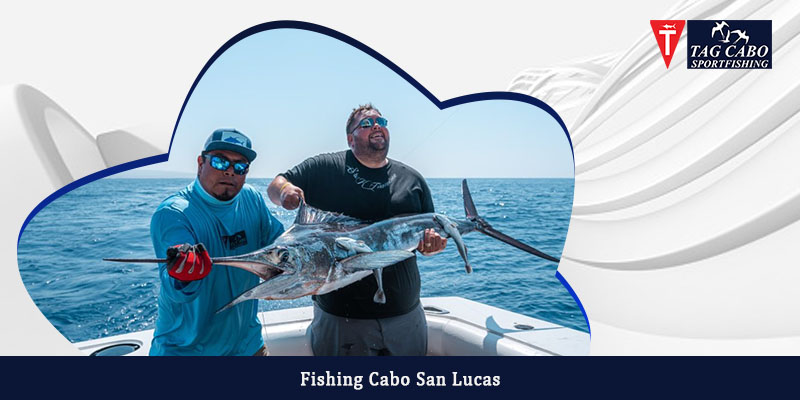
Blue marlin are sought and caught in warm waters around the world. Often, enthusiasts hope for the ultimate catch: a grander (a blue marlin weighing at least 1,000 pounds).As far as the IGFA is concerned, though, the current all tackle record for Black Marlin was recorded in Cabo Blanco, Peru, in 1953. It weighed in at the not-so-impressive (but still pretty large) 1,560 pounds (707.61 kg). The IGFA also states that the biggest recorded Blue Marlin weighed 1,402 pounds (635 kg) and was caught in Vitoria, Brazil in 1992.
Cabo San Lucas is famous all over the world for its epic Marlin fishing, partly thanks to the prestigious Bisbee’s Black and Blue tournament. This is one of the most famous and high-stakes fishing events in the world. Safe to say, Cabo’s the perfect place for it.
SUBSCRIBE to our youtube channel for updates on what, how and were we fish.
What is the best bait for blue marlin?
Rigged natural baits, such as Mullet, Mackerel, Bonito, Barracuda, extra-large Ballyhoo (“Horse Ballyhoo”). Lures are used most often, because they allow more ocean to be covered. In somewhat limited areas, such as along weedlines or around seamounts and other well-established grounds, live bait is usually preferred.
We at Tag Cabo Sportfishing, just like all serious anglers, dream about catching a “grander,” one of those legendary fish that weights over 1000 lb. The record for the biggest Marlin of all time goes to the enormous 1,805 lb “Choy’s Monster.” This beast of a fish was caught on a charter fishing boat out of Oahu, Hawaii, in 1970 and still stands today as the biggest Marlin caught on rod and reel.
The full story is that Blue Marlin can be found in water as shallow as 250 feet and anywhere deeper than 250. Blue Marlin are almost always caught by sport fishermen while trolling during daylight hours.
Blue Marlin is the most exciting species of fish to catch in Cabo San Lucas. Hands down Blue Marlin is the “boss” fish. Many competitive fishing tournaments are built around Blue Marlin fishing. Big-time Blue Marlin fishing tournaments around Los Cabos include the Los Cabo Billfish Tournament, the Bisbees offshore tournament and Bisbees black and Blue.
These are the tournaments for the “big boys” of competitive saltwater fishing. Fishing for Blue Marlin can also be the most boring and monotonous form of fishing known to man if you don’t know what you’re doing. Often trolling for hours on end without reward. Then boom! Marlin fishing has been described as “hours of boredom interrupted by seconds of sheer terror.”
If your looking forward to go after one of them beast in Cabo San Lucas contact us by clicking on the link Blue marlin in Cabo San Lucas
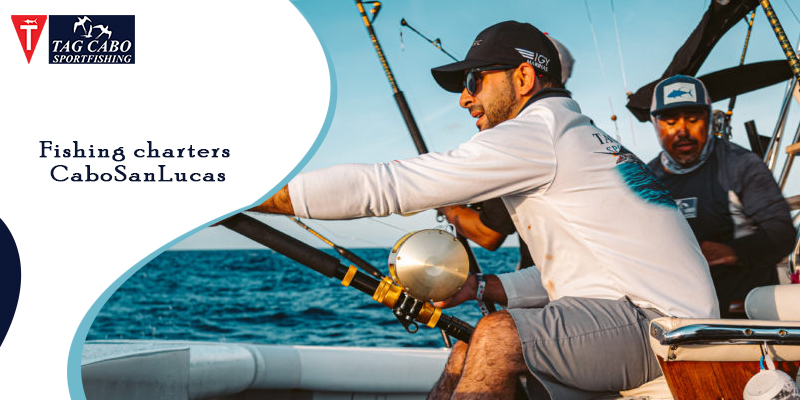
Recreational activities are a vital part of human life. Individuals going fishing constitute the single largest band of free time seekers. Moreover, fishing also has an added benefit over all other recreational activities as it uses the vital elements of nature for leisure & food. Furthermore, fishing with Cabo San Lucas fishing charters is now becoming a widespread activity in many areas.
What Is a Fishing Charter?
It is an expedition service provided by boat owners, professional anglers, & companies, allowing tourists on a water body for a particular period to fish. Fishing charters are frequently rented or might even be customized depending on the requirements of an individual or group.
The fishing charter is one of the best ways to experience fishing, even if an individual doesn’t have any fishing gear or any means of fishing. Moreover, the fishing charter service providers, like fishing charters Cabo San Lucas, help individuals make the most of their time in the course of the service. A few fishing charter service providers also help you seize the fishing moments with photographing or video services.
What are Types of Fishing Charter?
Now let’s take a look at the types of fishing charter you can choose from:
1. Bay Fishing
Generally, bay fishing utilizes light tackle & live bait to catch species like Redfish, Speckled Trout, Redfish, Drum, Black Snapper, Flounder, etc. The boats are usually smaller & can accommodate about four to six individuals depending on the boat.
Well, bay fishing with Cabo San Lucas fishing charters can be an excellent option for small groups or single families looking to catch fish. Sometimes, it is also called inshore fishing, even though inshore fishing might also mean fishing in the bay while staying inside a few miles of the beach.
2. Trolling
It is a fishing method where one or many fishing lines, baited with baitfish or lures, are drawn thru the water. You can troll inshore or miles offshore. However, the type of fish you might catch when trolling will rely greatly on how close you stick to land. On the other hand, boat sizes will differ based on whether you choose an offshore or inshore trip.
Inshore trolling: Three to four lines out use live bait or lures. The boat is in steady motion as it travels up & down inshore. You might charter larger or smaller boats for inshore trolling & costs will vary accordingly. Inshore trolling tours with fishing charters Cabo San Lucas typically target Spanish Mackerel, Bonito, Barracuda, King Mackerel, Jack Crevalle, etc.
Offshore trolling: It needs a longer trip to leave to the deeper waters & uses lures & live bait to target Sailfish, Mahi Mahi, Marlin, Back Fin Tuna, Wahoo, & King Mackerel. Generally, the boats are larger & might accommodate more individuals, depending on the boat size.
3. Bottom Fishing
It is done in the deep sea using cut or live bait, fishing reefs & wrecks. You might bottom fish year-round & catch a variety of fishes, like Groupers, Snappers, Amberjack, Lesser Amberjack, & Triggers. With Cabo San Lucas fishing charters, you will have the nearest deep-water access & you might actually bottom fish the reefs & structures along the inshore, so smaller boats might be used & long tours aren’t necessary.
Well, bottom fishing is possibly the most common type of charter fishing, & you might fish from several different sorts of boats, from a head boat to a smaller boat to a big private charter boat.
4. Specialty Charters
Split trips
It is also known as group charters & it allows groups of four or less to split a private charter with a second group. Well, this reduces the price of a private charter whereas still providing the customization & attention that are often missed on party boats, & you might make a few new friends during the process.
Split trips with fishing charters Cabo San Lucas do need a specific amount of flexibility as we’ll have to find a second group that wishes to fish on that day & at the same time as you, yet if you’re flexible, we might often manage.
Shark Trips
Shark trips, of course, catches shark in particular. You will fish within three to five miles of the shore, using anchor & chum & large baits, to catch Bull, Mako, Blacktip, Dusky, Tiger, Sandbar, & Spinner sharks.
Shark trips can be done during the daytime but are usually done in the evening or at night. Shark fishing with fishing charters Cabo San Lucas might make for a thrilling time on the water for those thrill-seeker addicts. However, you have a wide variety of boats to select from with shark fishing, & prices vary accordingly.
Overnight Trips
It involves chartering a bigger boat for several days to get 75 to 150 miles offshore where the actual big fish inhabit. Overnight trips can get the crews really excited. However, this sort of fishing charter is costly but normally yields the largest & most fish. You can target larger deep-sea fish like Yellow Fin Tuna, Marlin, & Swordfish. Well, it is perfect for groups seeking that once-in-a-lifetime trip experience!
Opt for Cabo San Lucas fishing charters if you want to go on an overnight charter fishing trip.
Conclusion:
Well, fishing charters are designed to make your fishing trip more relaxing & enjoyable. Moreover, fishing charters are an amazing experience for passionate anglers & new anglers alike. Therefore, we hope this above has filled you up with all the information regarding types of fishing charter & we also hope you will face no problems while selecting them now.
Are you wondering who can provide you the best fishing experience in Cabo? If you’re looking for an amazing fishing experience in Cabo, San Lucas, let Tag Cabo Sportfishing provide a good time. Here we offer a variety of options, from sports fishing to marine life exploring. For more information, call +52 624.168.9544.
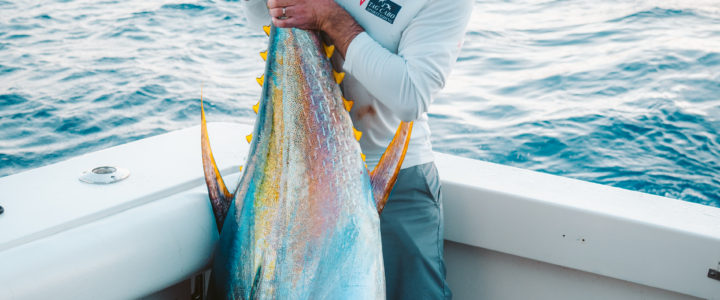
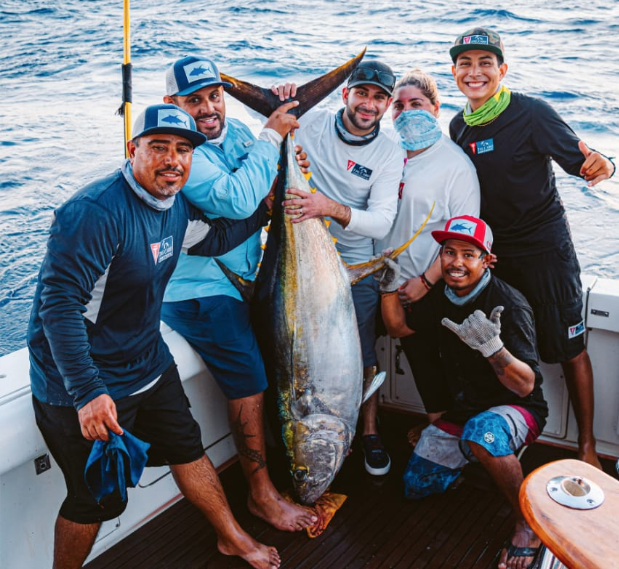
Knowledgeable captains have countless yellowfin tuna fishing spots in Cabo San Lucas, and since the fish migrate through our local banks all summer, you might find them anywhere on a given day. But the fish return to certain places like clockwork each year. These include the San Jaime bank.
Finding the fish usually isn’t hard – but catching them can be a different matter entirely. Yellowfin tunas spend the vast majority of their time far below the surface. If you’re lucky enough to intercept them on the rare occasion when they rise to feed on the surface, you are way ahead of the game. But what about the other 90 percent of the time, when you know the fish are there but they stay deep? How can you elicit a strike in those circumstances?
A sign of activity. Dolphin can often mark the spot for Tuna in the open ocean.
Whether you are fishing with lures or bait, chum is often effective on tuna of all sorts, and Yellowfin are no exception. You can either chum with live bait or chunks of cut bait. That helps keep the fish around the boat. For trolling, you can try tuna feathers, cedar plugs, and plastic skirted trolling lures.
According to research, yellowfins show an affinity for waters in the 72-82 degree Fahrenheit range, with larger fish preferring slightly cooler waters. By studying SST (sea surface temperature) charts you can hone down your search area significantly when looking for fish, and you’ll find the best fishing in areas of optimal water temperature.
Like terrafin app or satfish webpage are two great options that will help you look SST charts for about $100 usd per year.
Speaking of charts, any marine angler worth his salt knows the importance of structure. Reefs, shoals, ledges, humps, seamounts all attract bait, which in turn attract larger predators. When all else fails you can usually find a few fish around structure, regardless of how deep it is. Add any or all of the above and the action just gets hotter.
Put a variety of different baits in your spread. Tuna can be very finicky and it’s tough to “match the trolling for tuna with squidsatch” if you don’t know what they’re feeding on. Run a variety of baits – squid bars, spreader bars, daisy chains and single baits – and if you notice certain ones getting most of the action, switch out your other baits for more of the same.
While all this may seem frivolous on a public level, the sneak attack from above seems to work the best and when it comes to yellowfin tuna fishing nothing…and i do mean NOTHING…will pull the wool over their penetrating eyes more so than the deployment of a kite or helium balloon with a robbery flying fish.
To provide the best experiences, we use technologies like cookies to store and/or access device information. Consenting to these technologies will allow us to process data such as browsing behavior or unique IDs on this site. Not consenting or withdrawing consent, may adversely affect certain features and functions.
Functional
Always active
The technical storage or access is strictly necessary for the legitimate purpose of enabling the use of a specific service explicitly requested by the subscriber or user, or for the sole purpose of carrying out the transmission of a communication over an electronic communications network.
Preferences
The technical storage or access is necessary for the legitimate purpose of storing preferences that are not requested by the subscriber or user.
Statistics
The technical storage or access that is used exclusively for statistical purposes.The technical storage or access that is used exclusively for anonymous statistical purposes. Without a subpoena, voluntary compliance on the part of your Internet Service Provider, or additional records from a third party, information stored or retrieved for this purpose alone cannot usually be used to identify you.
Marketing
The technical storage or access is required to create user profiles to send advertising, or to track the user on a website or across several websites for similar marketing purposes.