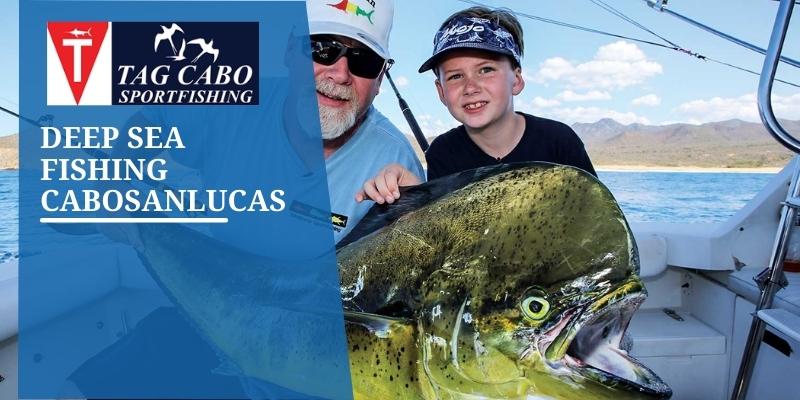
Precautionary practices to follow during deep sea fishing escapades

Precautionary practices to follow during deep sea fishing escapades

Precautionary practices to follow during deep sea fishing escapades

A fun way to have a great time is to take fishing charters to the open ocean to experience the thrill of deep-sea fishing. It’s a special chance to strengthen relationships with loved ones. Additionally, you may try something unusual or go on an adventure on the open seas.

The whole family will love deep sea fishing Cabo, but if safety measures are not done, mishaps could happen. To enjoy yourself on the greatest fishing charters in Cabo, it’s also critical to be informed of safety considerations for charter boats.

PRECAUTIONARY MEASURES YOU SHOULD TAKE WHEN DEEP-SEA FISHING

Everyone who uses a boat or goes deep sea fishing Cabo San Lucas must protect themselves. Offshore fishing trips can be an exciting challenge due to the size and strength of some sports fish species. Deep-sea fishing also requires preparing for challenging conditions. So, if you want to go on deep sea fishing Cabo, remember to always follow your captain’s instructions.

To guarantee that your recollections of the ocean are joyful, always abide by safe boating regulations and deep-sea fishing safety recommendations. Here are some guidelines to keep you secure and at ease while using Cabo fishing charters out at sea.

Use these recommendations to have a safe fishing experience.:

1. Put on a Life Jacket

Put on a life jacket first. The majority of life jackets today are pleasant, unlike the bulky, itchy, and constricting ones of our youth. No one will belittle you today for donning a life jacket. 

Here’s why: The only life jacket that will save you if you slip and fall, have a boat accident, or end up in the water in some other way is the one that is currently on you. Consider the life jacket to be your most crucial deep sea fishing Cabo San Lucas equipment purchase. Make sure it fits well and is at least moderately comfortable to wear.

The same goes for your entire fishing crew: Conservationists & marine patrol officers frequently recount incidents in which they lifted a child by the life jacket just to watch the child slide out.

There are many options available for adults, including the increasingly common inflatable life jackets as well as those that are integrated into fishing safety vests, hunting coats, and other likely-to-be-worn clothing.

Tip: If you’re bobbing in the water, tuck a whistle inside the pocket of your life jacket (many come with one), so you can easily call for assistance at a distance. Reflective elements can help rescuers as well.

2. Put in a Float Plan

Anglers should submit a “float plan” before going for deep sea fishing Cabo. It is just a fancy way of saying that you should write down where you’re going, who you’re going with, when people should expect you to return, what the towing vehicle, trailer & boat look like & where you’ll be parking the towing rig. Tell the authorities exactly when they should be notified if you are running late. If your schedule changes, don’t forget to inform the people you shared the plan with.

3. A Well-Kept Boat is a Safe Boat

Deep sea fishing Cabo San Lucas on an angling boat is safe. Maintain properly coiled lines to avoid tangles and slides. To ensure that you are not filling a boat with water, double-check the supply lines & drains for the live well and baitwell. The likelihood of a chaotic scramble incident is decreased if the landing net is conveniently stored. When not in use, knives’ blades should be covered and kept sharp.

4. Advice for Sharp Angles

To prevent hooking yourself instead of a fish, keep hooks & lures in bait boxes and keep those boxes closed. Just in case, learn 1 or 2 hook removal techniques. To shield your eyes from erroneous casts or hooks flung by fish, put on safety glasses. Handle fish carefully because their teeth & fins can also be harmful.

5. Never Fish Alone

Although it’s wise to avoid deep sea fishing Cabo alone, anglers are likely to do so at least occasionally. This makes it triple necessary to wear a life jacket and to create a float plan. When traveling, attach the engine-shut-off lanyard, or think about installing an electronic cutoff switch that will turn off the engine if you are more than a few meters away from it. If your boat doesn’t have a boarding ladder to help you crawl back in, consider adding one. New boats typically have them.

6. Plan Beforehand

The most unpredictable parts of the day or year often provide the best fishing. Avoid danger and be ready for it. It’s always a good idea to have safety supplies on hand, including the visible and audible signs needed by the Coast Guard, flashlight, maps, water, a smartphone or radio & electronic SOS devices. Make sure to carry them when you go deep sea fishing Cabo San Lucas.

Make sure the crew members’ medical supplies, such as oxygen tanks, and other devices, are on board if they have any medical concerns. Bring clothing that can withstand temperatures that are both hotter and colder than you anticipate, including waterproof sunscreen, full-coverage, sun-blocking clothing, a hat with a wide brim, additional layers & waterproof windproof outer layers. Put on non-skid shoes. Avoid drinking too much alcohol because its effects are amplified after a long day spent in the water.

Conclusion

Everyone who uses a boat or goes fishing has a duty to protect themselves. Fishing may be a fascinating challenge because of the size & strength of some deep-sea sport fish species. Deep-sea fishing also requires being ready for challenging conditions. So, we sincerely hope you follow these safety recommendations and enjoy yourselves.

Are you interested in going deep sea fishing with your loved ones? Then get in touch with Tag Cabo Sportfishing to plan your trip. Here, we put the satisfaction of our customers first and go above and beyond to fulfill that promise. You can mail us at tagsportfishing@gmail.com
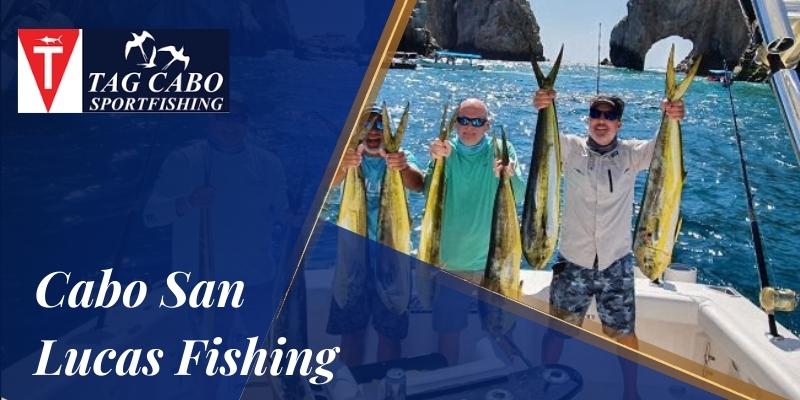
 

What Are The Common Fish Species Found In Cabo?

What Are The Common Fish Species Found In Cabo?

What Are The Common Fish Species Found In Cabo?

Cabo San Lucas is the hotspot of fishing enthusiasts every year. From events & tournaments in front of the ocean to boat trips and weekend trips, the place has got everything covered. Cabo fishing remains the major reason thousands of visitors flock into the state every year. The place hosts a variety of species of fish and innumerable options for boat rentals.

One thing that is certain is that you’ll have the time of your life here if you fancy fishing. We understand you might be curious to know what all species are available here. And that’s the reason we’ve brought this guide for you. Read on to know some of the most common species found in Cabo.

  • Striped Marlin

The tropical temperature makes Cabo a suitable environment for the striped marlin fishes to thrive. Mainly, these fishes loiter around the shores, hoping to find smaller bait fishes. The best part is they move around in the cluster. Due to this, the probability of getting your hands on a striped marlin is higher as compared to other species.

Popularly known as the marlin capital of the world, Cabo San Lucas fishing is a hotspot that hosts striped marlin all year round.

  • Dorado

Given its huge structure, Dorado gives even the most experienced fishers a tough time. They’re always energized, which is why they constantly maneuver, leap, and get away frequently. The name originates from a Spanish term that implies Golden. Their yellow gold and iridescent dark green color fluctuate when brought out from the water.

Although it’s available all year round, experts recommend summer months to experience Dorado fishing in the best possible manner.

  • Roosterfish

As appealing as the roosterfish are to look at, it’s equally thrilling to catch one. They have a reputation for being super aggressive, fighting ability, and amazing strength. Sport fishers always have eyes for roosterfish, given their gorgeous structure and unique nature.

For rooster fishing Cabo San Lucas the period from summer to fall is the peak time. These fishes can be found only in the waters of South and Baja.

  • Yellowfin Tuna

As the name suggests, these species can be identified by the striking yellow fins. They possess dark blue shades on the top and silver-colored bellies. They’re quite large structure-wise and are known to be strong swimmers. Cabo is their favorite destination to catch a generous amount of small fish and enjoy warm waters.

Trophy fishermen are attracted to this species due to their beauty, size, and deliciousness. Their ability to be used in a raw form makes them “sashimi-grade.”

  • Wahoo

It’s the most sought-after fish. And there are several reasons to justify its demand. Although they aren’t easy to get, you must be ready to handle their speed once you find one. Being very fast, they’ve made it into the list of most prized trophy fishes. Flaunting gorgeous tiger stripes, they can be identified by a long body with a blue top.

Wahoo fish is known to make the most palatable dishes used widely by gourmets and chefs. If you want to tackle their speed, you need to have a professional for Cabo fishing by your side.

  • Blue Marlin

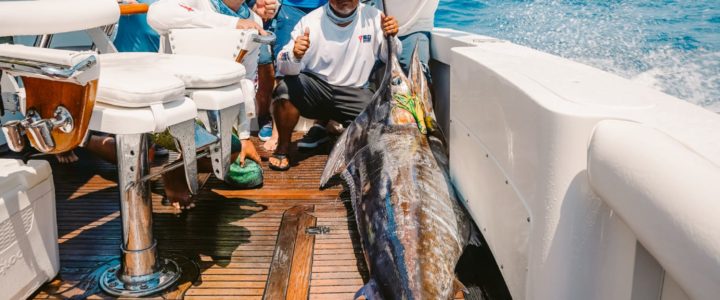
Blue marlin remains one of the major targets of Cabo fishers. What makes the fishing experience exciting and thrilling is the fact that blue marlins will give you a tough fight. Every level is highly challenging. A blue marlin weighing as high as 993 pounds was caught once.

It’s strongly recommended to hire a professional fishing guide. It is because they know the exact locations where blue marlin can be found. They’ll direct you to the location and assist you if you find one. The peak timing for Blue marlin in Cabo San Lucas remains from July into October.

  • Black Marlin

Black Marlins have a reputation for being the most good-looking fish found in Cabo. Their structure is quite long, and they come with striking features such as the spear of a snout. Not merely that, it’s also popular for being as fast as light. Black Marlins are going to fight with you till the end.

If you’re going for Black Marlin Cabo San Lucas fishing, plan somewhere between May into December, especially during the summer months. 

Conclusion

Cabo hosts a variety of fishes. Some of them might attract you, while others might seem way too scary. But, one thing that is certain is that you’re going to have a lot of fun here. If your adventure level is way too high, opt for deep sea fishing for the perfect adrenaline rush.

Are you looking for a reliable and skilled tour guide for fishing Cabo San Lucas? Look no further. Tag Cabo Sportfishing is here for you. Book luxurious fishing charters with as at a reasonable price. Our luxurious yacht is packed with all the amenities that you could ask for. Plus, our master chefs serve exquisite Italian, Chinese, Continental, and French cuisines on board. For further queries, you can contact us via mail at tagsportfishing@gmail.com or call us at 6241689544

Why Fishing Rods Break!

Why Fishing Rods Break!

Why Fishing Rods Break

Insight into what causes rods to break can help save yours

Fishing in Cabo San Lucas

Three Reasons Rods Break

1) The rod has been somehow damaged in transit or handling (in a way that doesn’t show).

When transporting your equipment make sure you don’t bang your rods because even if you don’t physically see the damage it will eventually break your rod and it will make you lose a fish that took you a lot of patiences and persistence to catch!   

2) High-sticking while fighting a fish,.

When you raise your rod to an angle that’s great than 90° from the ground, you’re putting a lot of stress on the rod and increasing the chances that it’ll break.

So be sure to keep the rod at an angle less than 90° when you’re fighting fish or trying to pull out your lure when it’s snagged.

3) Mismatched tackle, as when an angler fishes too large a reel or with line too heavy for a given rod.

basically don’t go after a 200 pound tuna with small tackle because you will lose the fish for sure and that hurts more that breaking the rod!

The biggest cause of rods snapping, in my experience, is due to angler error.” Not surprisingly, Stanczyk then cites high-sticking because that “puts the pressure in the tip part of the rod as opposed to the backbone; this causes the more-fragile tip to snap.”

For professional guided fishing trips in Cabo San Lucas reach out to us via email at tagsportfishing@gmail.com  


Fishing myths you need to know about

Fishing myths you need to know about

Fishing myths you need to know about

Any business with a devoted fanbase would eventually be riddled with myths and falsehoods. Any of these things may have been true. Others began with truth and have been perverted and changed through time to become more imaginary than real. Some were never genuine, but it’s an excellent discourse. Sports fishing is no exception. Even the best fishing charters in Cabo know about these myths and have dealt with people that follow them religiously.

Although a few facts have been established through the years (for example, you can always modify your approach when flying and never bring bananas to the boat), the majority of knowledge falls between moderately puzzling & complete nonsense.

The reality is that the volume of the capture is affected by a variety of factors, including venue, ambient circumstances, flight selection, and leader, as well as tippet size, to name a few. Cabo fishing charters have seen seasoned fishermen who have accomplished so much by understanding the reasons that led to the popularity of these myths.

Let us take a deeper look at some of the common fishing myths decoded by Cabo fishing charters:

MYTH: There are catfish as large as Volkswagens in the reservoirs, & they will devour people.

Objects underwater may look larger than they are. We at Cabo fishing charters have heard this myth so many times for years. All we can tell is that the biggest blue catfish, the largest of the 3 (native species of) catfish, weighs 101 pounds. That is one large catfish. Is it, however, large enough to consume a person? We don’t believe you need to be concerned about a blue cat looking after you. (Blues) can grow in size, but not as much as a few of the legends we’ve heard.

MYTH: All gar are alligator gar

Gar are classified into four species: Longnose Gar, Spotted Gar, Shortnose Gar, &, of course, Alligator Gar. Most people confuse the Longnose Gar with the Alligator Gar. The Alligator Gar, on the other hand, is a top predator. As per information acquired by the best fishing charters in Cabo, the present state standard weight is 215 pounds.

And Alligator Gar is uncommon. They are a kind of floodplain fish. In other words, they’ll be found in oxbow lakes & along the Mississippi River. So, while the majority of individuals are accurate that there is gar, they are not all Alligator Gar. Longnose&Shortnose are the most common species.

MYTH: Just by looking at it, you can tell the difference between a native Mississippi bass & a Florida bass.

The only way to tell the difference between a stocked Florida fish & the native fish is through genetics.

MYTH: Male white perch are black crappie.

Many old-timers used to say the same thing: if you capture a black – in color – crappie, it’s just the male white perch. There are two types of crappies: black crappies and white crappies. As a result, color isn’t the only method to discern the difference.

MYTH: The ideal days & times to fish are determined by solar-lunar tables.

Over the last thirty years, the best fishing charters in Cabo have been captivated by this. You have the almanac, the weather forecast, as well as the moon phases. They all say it’s going to be an amazing day to fish, a bad day to fish, or these are the greatest days to get out there.

We had an undergraduate scholar at Mississippi State who sought to match years of creel data from a fisherman with those predictions — to see whether those associations would hold. There was no discernible trend. There was no correlation between a good fishing day and the almanac or moon phases. People should go fishing whenever they can, according to our advice.

MYTH: A banana inside the boat is considered unlucky.

Some individuals fish for a living and believe that if you enter a tournament with a banana in your boat, you will lose. As observed by the best fishing charters in Cabo, anglers usually seek reasons why the fish did not bite

And if a banana winds up in a boat & we don’t have a good day – whether we’re fishing for crappie or bass — it’s all because of that banana. That is why the fishing enthusiasts assume that they failed to catch anything. Of course, it will not harm you. But if we’re going fishing, we won’t have one in the boat.

MYTH: At the same moment, all fish spawn.

Typically, the larger fish will spawn first. However, depending on the circumstances out there, various waves of fish will arrive during the duration of the spring. For example, a school of fish may travel up to spawn, followed by a cold front. When the water temperature begins to fall, the fish begin to retreat. If the conditions are favorable (again), another wave of fish will arrive and spawn.

MYTH: A spoonbill is a catfish

It is referred to as a catfish because it lacks scales, exactly like a catfish. Although it has cartilage & a skeleton, it is a paddlefish. It possesses a rostrum, & that rostrum has a purpose: it aids in a variety of activities, including swimming and eating. This isn’t a catfish. It is a distinct species.

MYTH: When a lake is fertilized, the fish cease biting.

When someone fertilizes their pond, or we fertilize a state lake, we are just increasing the number of plankton inside the water. Plankton is found at the bottom of the food chain. So all we’re attempting is to enhance carry capacity.

Cabo San Lucas fishing charters keep records of when a lake is fertilized, so we know what day we did it. We may not have polluted a lake in a month, yet we are still blasted because someone did not have a nice fishing day. They didn’t catch much fish & are hunting for an explanation. It is untrue. All we’re attempting to do is get that food chain started.

Conclusion:

Sports fishing is mostly a method of timing and elegance rather than physical muscle. Women are often far better students than men. Don’t allow all of your misconceptions to prevent you from having a fantastic time. Fishing is simple, inexpensive, and entertaining, and anybody can do it.

Are you looking for a great fishing charter experience? Tag Cabo Sport fishing in Cabo, San Lucas provides deep-sea fishing. Our fishing charters are equipped with everything you need for deep-sea & sport fishing. In addition, we have skilled guides who will assist you in finding and catching enormous fish such as Blue Marlin. Our deep-sea fishing charters are well-maintained, well-equipped, and well-designed. To avail our services today, give us a quick call at tagsportfishing@gmail.com or give us a quick call at +01-52624-168-9544.


Deep-sea Fishing in Cabo – Blue Marlin

Deep-sea Fishing in Cabo – Blue Marlin

Deep-sea Fishing in Cabo – Blue MarlinIf you love deep-sea fishing then Cabo San Lucas should be your destination. Deep sea fishing in Cabo is very popular and anglers from around the world come here. One of the best things about Cabo is that it offers fishing opportunities throughout the year. You can come here for all sorts of fishing opportunities, from onshore to offshore fishing.

One of the reasons deep sea fishing in Cabo San Lucas is so famous is because of a variety of fish games. Blue marlin is one of the most popular games for deep-sea fishing. It is large, tough to catch and a prized game.  

 Hire a deep-sea fishing charter to enjoy a fruitful day. The fishing guides will help you catch the fish with the right technique.

Find out more about blue marlin fishing here.

Blue Marlin Fish an Overview

Blue Marlin is one of the top 100 game fish species. A majority of the anglers agree that Blue Marlin is one of the toughest fishes to catch. There are other types of Marlins -stripped, white marlin, black and more. But the blue marlin is very popular because of its nature, size, and the challenge it offers.

Blue marlin is often found in warm waters and weigh around 1000 pounds. It is also one of the biggest fishes in the ocean. Additionally, it is also called Atlantic blue marlin because it is often found in the Atlantic Ocean. The fish can reach up to 14 feet and has a beautiful color. A combination of cobalt-blue and silver makes Blue Marlin different and very unique than others. Other than Atlantic, it is also found in Pacific and Indian ocean.

Deep-sea fishing in Cabo offers Blue Marlin fishing. It has an abundance of this fish species in its water.

Best Marlin Fishing Spot – Cabo San Lucas

If there is one place that is perfect for blue marlin fishing then its Cabo, Mexico. For one, it has a long season for marlin fishing. It starts with Spring and last throughout the summer. August, September and October are the best months for blue marlin deep sea fishing in Cabo San Lucas.

Cabo has some of the best fishing spots in the world. Catching a blue marlin will improve your record. Not to mention, the confidence boost it will give you. For the best experience, hire a fishing charter service. They will provide everything you need for fishing, from fishing gears to a luxurious boat. Plus, the fishing guides will also help you catch the game fish.

How to Fish for Marlin

Blue marlin are a large fish species and they dive deeper. And, they are very aggressive and fast, especially the females who can weigh more than the males. You have to remember that blue marlins can run fast and long. Also, they can leap high into the air, showing their acrobatics abilities.

Here are the techniques for catching a blue marlin:

  • Artificial Lures

One of the best ways to catch a blue marline fish is to use artificial lures. They are highly-efficient and cost-effective compared to live bait. Plus, you can easily get them. The natural movement of the artificial lures attracts the fish. You can also buy Marlin specific artificial lures. It will make fishing easier. Fly fishing is a very popular technique for deep-sea fishing and artificial lures works excellently with this method.

  • Live Bait

Using a live bait is also an excellent choice for marlin fishing. Expert says that they prefer smaller tuna fish as a bait. Make sure that you troll slowly when using a live bait or else it will die. A life bait is more attractive to predators like marlins. If you are an experienced angler, you will have no difficulty handling a live bait.

  • Blue Marlin Charters in Cabo

A deep sea fishing charter in Cabo can help you with your marlin fishing. They know the best fishing spots, have the best fishing gears and tools and devices. Also, the charter boats are fully-equipped to provide you the best experience. The experienced guides will help you catch the blue marlin with the right techniques. Most importantly, it will save you time and cost.

The Bottom Line

Blue marlin is a very popular game fish for deep sea fishing in Cabo San Lucas. It is a large fish and catching it will establish your angler credibility even more. And, Cabo is the best place for Blue Marlin fishing. Hire a fishing charter and enjoy the best deep-sea fishing experience in Cabo. Fishing season is always on in Cabo whether you want to fish for Marlin or any other deep-sea fish species.

Tag Cabo Sportfishing offers deep-sea fishing in Cabo San Lucas. Our fishing charters are designed to provide all the comfort you need for deep-sea and sport fishing. Along with that, we have expert guides who will help you find and catch large fish like Blue Marlin. Our charters are well-maintained, equipped and designed for deep-sea fishing.

Check out the details of our fishing charters here – https://www.tagcabosportfishing.com/cabo-yacht-charters/


Recreational fishing has been banned in Colombia !

Recreational fishing has been banned in Colombia !


Recreational fishermen will no longer be allowed to cast their fly rods and nets in rivers, reservoirs, ponds and open ocean, after Colombia’s Supreme Court declared sports fishing unconstitutional. The decision to outlaw an activity that lures amateurs and professional recreationists to many of Colombia remote rivers, high altitude lagoons, reservoirs and expense of oceans, is grounded in a legal assumption that fish, like other species, are sentient beings, and therefore, must be protected against animal cruelty.

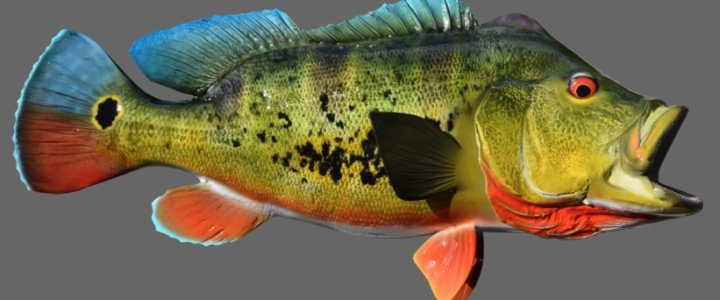
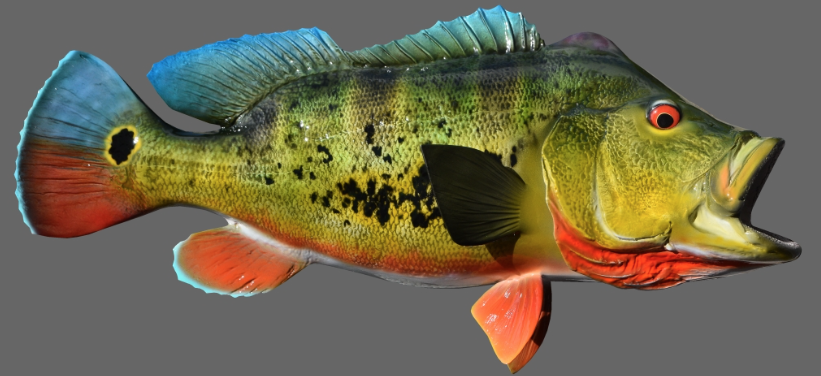
peacock bass

“Although there is no consensus as to whether fish are sentient beings, the truth is that by virtue of the precautionary principle, even in the absence of scientific certainty, when there are elements that preliminarily demonstrate the risk of damage to the environment (…), the intervention of the State is necessary,” reads the high court’s ruling.

The court further argues that sport fishing “violates the principles of environmental protection and animal welfare,” and results in the “deterioration of the nation’s hydrobiological resources.” The decision by magistrates to give precautionary protection to fish comes less than three months after the same nine magistrates voted to decriminalize abortion up to 24 weeks in a pregnancy, and decision that has angered pro-life activists.

Until the tribunal’s February 22 ruling, women in Colombia were allowed to abort when there was a risk to the life or health of the pregnant mother; proof of fetal malformations, or a pregnancy caused by rape or incest.

The six-month abortion timeline specified by the court, even for many pro-abortion advocates, is considered excessive and criminal given that babies can survive in an incubator if born after a 24-week pregnancy. The decision faced criticism from many politicians, including President Iván Duque, and former conservative president Álvaro Uribe, who in a rare confession on social media admitted that one of his two children was born prematurely.

“I am very sad with the court’s sentence. I have a son who was born after six months, we had to take care of him, but he was born perfect and is fine. Every day six-month-old children are born, even 5-month-olds. It seems to me, that this ruling offends a high percentage of compatriots. I am very sad,” said Uribe.

At a time in which Colombia introduces one of the most liberal abortion laws in South America, the U.S Supreme Court is preparing to overturn nearly 50-years of legal abortion access with Roe vs. Wade. Should this landmark case be overruled, as a leak of a draft opinion suggests, the health and welfare of millions of women in the U.S will be affected, regardless of where they stand on this contentious issue.

As the abortion debate rages in the U.S, in Colombia, the court’s ruling has consolidated the ideological ranks of the country’s presidential candidates, and issue, also at the forefront of public opinion.

The precautionary principle to add fish to a list of species protected from animal cruelty affects many communities that depend of recreational fishing as a source of revenue, especially in regions that have opened up to ecotourism since the signing of the 2016 peace accord with FARC. Many of the regions that attract recreational fishermen were once under control of the guerrilla, and include the departments of Vichada, Guaviare, Meta and Caquetá.

“We were beginning to recover from the pandemic with the arrival of skilled adventurers, the majority flying in from Bogotá in chartered aircraft and hiring guides to take them fishing in our pristine canyons and lagoons,” remarks Sergio Torres, a guide in La Uribe, Meta. “They spend good money to catch large fish, and are very environmentally aware,” he said.

Closer to Bogotá, the court’s ruling affects sailing clubs and boat rental companies that depend on weekend fishing outings to generate income and operate in the popular destinations of Laguna de Tota (Boyacá), Neusa, Sisga reservoir and El Prado (Tolima). “After the high-fliers spend their money here, taking a mature catfish out of a river to be eaten isn’t going to change the balance of nature,” believes Torres.

Several fishing associations, including the Association of Sports Fishermen of Colombia (Colpescar), are stunned by the court’s decision and say they may appeal the decision. “It seems there is an overreach, even ignorance about fishing itself,” believes Albeiro González, president of the Caldense Fishing League. “The chickens that we consume in a restaurant are also sentient beings, so does this mean that the law will be extended to more prohibitions such as eating chicken or beef?” said Bedoya.

The only good thing about all this is that we do sportfishing charters in Cabo san Lucas and not in Colombia! but if that ever happens down here we will be screw since sport fishing is one if not the biggest industry that provides for many down here in Cabo. 

For sportfishing trips in Cabo San Lucas contact us at tagsportfishing@gmail.com or click on the link fishing in Cabo